Federal trade policy debates this week have centered on efforts to secure and strengthen domestic supply chains for critical industrial inputs, including metals and processed materials that feed a wide range of manufacturing sectors. While these policies are not targeted specifically at plumbing and PVF products, the ripple effects are already visible in pricing and planning conversations within the industry.
Every workplace faces risks in daily operations. As a business leader, you are responsible for communicating the importance of risk management to your team. A strong workplace culture that focuses on reducing risks not only helps to protect employees, it can also strengthen workplace morale, bolster your business reputation, and set expectations.
Digital revenue penetration tiers show concentrated distribution patterns and progression across three measurement periods. Firms achieving more than 10% e-commerce revenue increased from 28% in 2023 to 33% in 2024 and 41% in 2025, representing a 13 percentage point gain over two years. The more than 20% tier grew from 13% to 19% and stabilized, while the more than 30% tier progressed from 8% to 10% before declining to 7% in 2025.
Winsupply Inc. and its national Winsupply Sourcing Services have facilitated the donation of over $266,000 worth of PPE by a half-dozen entrepreneur-led Winsupply local supply houses across the U.S. Winsupply entrepreneurs have identified worthy recipients – nursing homes, food banks, and homeless shelters – to receive dozens of pallets of masks, gloves, hand sanitizer, and no-touch thermometers.
In this episode of And So It Flows, Jennifer Harrison and Kaytee Gray from SupplyHouse.com discuss how digital merchandising and fulfillment are evolving to empower contractors with expert product information, simplifying decision-making in the field.
Data sources, even high-quality ones, do not inherently guarantee consistency. Two sources may provide data for the same category but define attributes differently, apply different units of measure, or populate fields in inconsistent ways. Even within a single source, definitions and data quality can vary over time or across product lines. Without a shared standard, organizations must repeatedly interpret, normalize, and reconcile that variability internally.
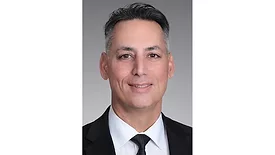
A licensed attorney, Berardi joins F.W. Webb with a legal background spanning more than 20 years. In his new role, he will oversee most legal matters for F.W. Webb.
At the American Supply Association's recent LEAD retreat, the need to transfer industry knowledge from retiring veterans to the next generation was highlighted as a critical issue in the PHCP-PVF sector. To address this, ASA's Business Intelligence Unit has commissioned a survey among its members, in line with the objectives of its Operational Excellence and Embracing the Future councils.
According to a report published by Bluefield Research, a water-focused market research firm based in Boston, Mass., by 2030, yearly investment in water and wastewater management will be more than $62 billion U.S. The firm attributes this to the explosion of AI-powered technology (driving the need for more data centers), the push to bring semiconductor manufacturing back to the U.S., energy transition, and national security.