As commercial building owners continue to navigate economic uncertainty, labor shortages and changing customer demands, retrofit and renovation work is becoming a key opportunity across the plumbing market. In this article, learn where the commercial market is headed and how manufacturers, wholesalers, and contractors can adapt.
Several attendees highlighted specific takeaways that stayed with them long after the event ended. Elainea Wiley of The Distribution Point reflected on one speaker’s reminder that it is not your manager’s job to manage your career.
Plumbing and PVF manufacturers announced another round of price adjustments in May, with most increases falling in the low- to mid-single-digit range, while select product categories, including press fittings, grooved products, valves, PVC fittings, and specialty piping systems, saw larger increases.
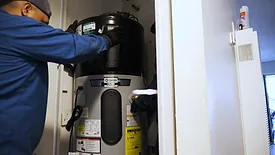
Unlike traditional high efficiency models, the Voltex 120V HPWH is designed to plug into a standard electrical outlet–eliminating the need for adaptors or restructuring.
Seventy years in, Winsupply occupies a unique position in the PHCP-PVF distribution landscape. It is, by every measurable standard, a national player. Yet, it operates in a way that looks fundamentally different from the centralized models that have come to define much of the industry’s consolidation era.
Combined revenue across this year’s Premier 150 once again underscores the immense scale of the channel, with distributors collectively generating hundreds of billions in annual sales.
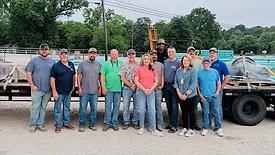
Rural Pipe & Supply is a first-generation, family-owned and operated business founded in 1999 by Tommy and Amanda Shaver. Headquartered in Jasper, Texas, the company operates two locations: Rural Pipe & Supply in Jasper and Rural Pipe & Plumbing Supply in Livingston, Texas.
 RSS
RSS