10 comparisons between hydronics and VRF/VRV systems
Water trumps refrigerant.

Hydronics has enjoyed success when used in cooling applications, primarily through chilled-water distribution systems in commercial and institutional buildings.
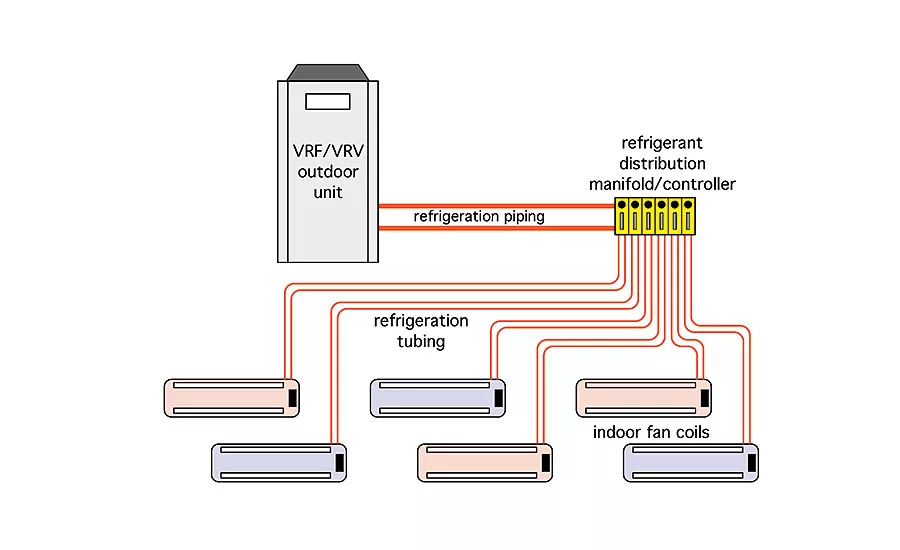
VRF/VRV systems use multiple interior heating / cooling terminal units that have refrigerant passing through them, as illustrated in Figure 1.
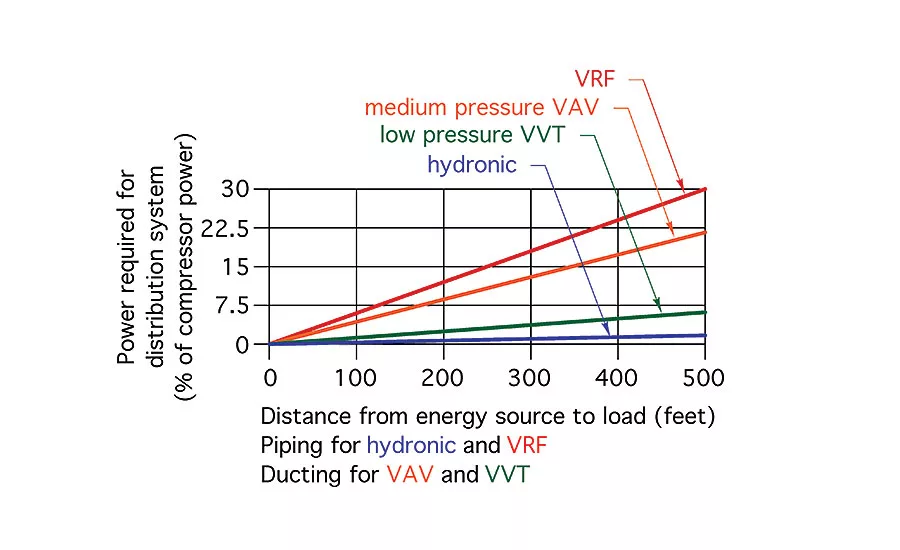
Figure 2 compares the energy required to move cooling effect through a building.
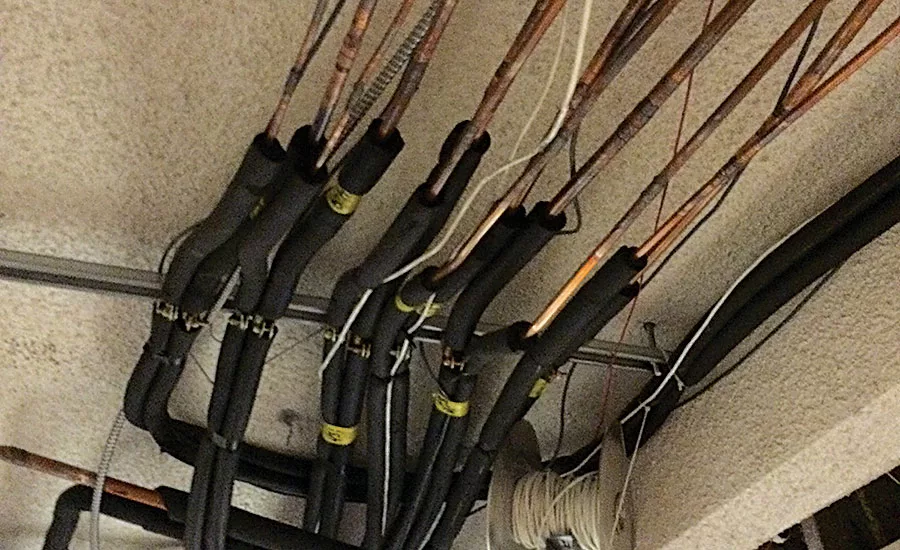
Figure 3 shows some of this tubing being installed in the hallway of a commercial building.
Hydronics has long been known for unsurpassed heating comfort.
It also has been used for cooling, primarily through chilled-water distribution systems in commercial and institutional buildings. This well-established and highly successful track record is, in part, based on the physical properties of water. It also is based on the versatility of hydronic systems in adapting to a wide range of applications.
No other heat transport material provides the versatility, safety, reliability, energy efficiency or environmental compatibility of water.
Over the last few years, a new method for moving thermal energy through buildings has appeared on the North American market. This approach uses refrigerant as the transport media throughout a building and is known as either a variable-refrigerant flow (VRF) system or a variable-refrigerant volume (VRV) system.
VRF/VRV systems use multiple interior heating / cooling terminal units that have refrigerant passing through them, as illustrated in Figure 1. The refrigerant flow rate through each terminal unit varies depending on the heating or cooling load that terminal unit is trying to satisfy.
Thinking it through: HVAC system designers, architects and building owners have many choices when it comes to heating and cooling buildings. The choice of system should consider upfront cost, operating cost, long-term serviceability, expandability, reliability, safety and environmental responsibility. With these criteria in mind, let’s examine the benefits modern hydronic systems offer relative to VRF/VRV systems.
Benefit #1: Hydronic systems can be used with many energy sources.
Hydronic heating and cooling systems are easily adaptable to a wide variety of current and future energy sources. These devices include boilers fueled by natural gas, propane or fuel oil, geothermal and air-to-water heat pumps, and renewable energy heat sources such as solar-thermal collectors and biomass boilers. Other potential heat sources include waste-heat recovery and off-peak thermal storage systems.
In some cases two or more of these heat sources can be combined in the same system. They can share the load based on the most favorable operating conditions for each source.
Likewise, many options exist as sources of chilled water for hydronic-based cooling systems. They include chillers and heat pumps operating on standard vapor compression refrigeration cycles, as well as gas-fired absorption chillers and even water drawn from large/deep lakes.
VRF/VRV systems are solely sourced by electricity.
Benefit #2: Hydronic systems allow for simpler future modifications.
When older commercial or institutional buildings are upgraded, their existing hydronic distribution system or portions of that system may be reusable in combination with a new central plant for producing heated and chilled water.
When VRF/VRV systems are used, the existing hydronic piping and all hydronic terminal units must either be decommissioned in place or removed from the building. All new copper piping and refrigerant-based terminal units must then be installed to each conditioned space. This can be highly disruptive to the normal use of the building.
Benefit #3: Hydronic systems reduce risks associated with refrigerant leaks.
It’s possible for a leak to develop in either a hydronic heating /cooling system or a VRF/VRV system. A leak in a hydronic system is generally easy to detect and the material leaking is water or a mixture of water and antifreeze. Well-designed hydronic systems provide numerous isolation valves that allow the portion of the system where the leak is to be isolated from the remaining parts of the system. Hydronic systems that distribute heating or cooling energy produced by a refrigerant-based source can be designed so the refrigerant-containing devices are confined to a mechanical room or located outside the building.
A leak in a VRF/VRV system is a serious and potentially dangerous matter. VRF/VRV systems contain much more refrigerant compared to hydronic systems served by a typical heat pump or direct expansion chiller. Under certain conditions, a single leak can be responsible for a complete loss of refrigerant from the system. Large refrigerant leaks can require immediate evacuation of the building and possible intervention of Hazmat teams.
Refrigerants such as R-410a are heavier than air. If a leak develops in the interior portion of a VRF/VRV system, the refrigerant could accumulate in the lower portions of rooms with highest concentrations near the floor. Such accumulation will displace air in the room. In spaces with minimal ventilation it is possible for refrigerant concentrations to reach values that could render occupants unconscious and ultimately lead to suffocation.
ANSI/ASHRAE standards 15 and 34 define specific refrigerant concentration limits based on pounds of refrigerant per thousand cubic feet of interior volume beyond which acute toxicity is expected. Those designing VRF/VRV systems should verify the amount of refrigerant that could be lost due a leak and the smallest space into which this refrigerant could accumulate are in compliance with this standard.
Benefit #4: Hydronic systems use less distribution energy.
Although proponents of VRF/VRV systems point out no circulators are needed to move refrigerant throughout a building, electrical energy still is required just to move refrigerant gas and liquid through piping. That energy is supplied as electrical input to the system’s compressor(s). The electrical energy consumption for moving refrigerant through a VRF/VRV system, per unit of heat or cooling energy delivered, is significantly higher than that required for a well-designed hydronic system as shown in Figure 2.
Figure 2 compares the energy required to move cooling effect through a building. It assumes the thermal energy is supplied by a vapor / compression source such as used in a VRF/VRV system. The vertical axis represents the percentage of the compressor power required to move (not create) the cooling effect generated by the refrigeration system. The horizontal axis represents the distance from the thermal energy source (e.g., boiler, outdoor unit, etc.) to the load.
The VRF/VRV system uses about 6% per 100 ft. of refrigerant line set compared to the hydronic system, which uses about 0.3 % per 100 ft. of distribution distance (e.g., 200 ft. total piping circuit length).
Benefit #5: Hydronic distribution systems are not dependent on specific refrigerants.
Hydronic systems are not subject to radical redesign or modification based on future changes in refrigerants.
Over the last two decades, highly successful refrigerants such as R-22 have been phased out of the North American market due to concerns over their global warming potential. Replacement refrigerants have been and continue to be developed. The properties of these replacement refrigerants have mandated changes in components such as refrigerant piping and the oils that are carried throughout the system with the refrigerant.
While it’s impossible to know what refrigerants will remain acceptable over the next 10 to 20 years, efforts to determine optimal future refrigerants continues. This could lead to breakthroughs that allow refrigerants such as carbon dioxide or propane to emerge as the new standards. Eventually, “legacy” chillers, heat pumps or VRF/VRV systems that rely on present-day refrigerants could be rendered obsolete. The tubing that carries present-day refrigerants throughout a building in a VRF/VRV system may not be suitable for future refrigerants or their associated oils. Upgrading a legacy VRF/VRV system might require replacement of piping, terminal units or other hardware, as well as recycling of refrigerant and oils. Such changes could be very costly.
Benefit #6: Hydronic systems allow easy integration of thermal storage.
Many heating and cooling systems can benefit from thermal storage. The high heat capacity of water makes it an ideal thermal storage material for both heating and cooling systems. The heated or chilled water may be produced by heat pumps or chillers at times when off-peak electric utility rates are in effect — which significantly reduces the cost of delivered thermal energy.
Water-based thermal storage also can be used in systems that have renewable energy heat sources such as solar-thermal collectors, air-to-water heat pumps or biomass-fueled boilers.
Thermal storage is easy to implement when a hydronic heating source and distribution system are used. In many systems, the water that stores thermal energy in a tank can eventually pass through the distribution system without need of any heat exchangers. This eliminates the cost and complexity of the heat exchanger(s) and the thermal penalty imposed by their use.
While it is possible to transfer heat from refrigerant to water using heat exchangers, it is not practical to recover that heat back into refrigerant under conditions which render it useful for direct-space heating.
Benefit #7: Piping options
Hydronic systems can use traditional piping materials such as copper tubing or steel piping. Modern hydronic systems also can use polymer-based piping materials such as PEX, PEX-AL-PEX, PERT and polypropylene. These piping products are less expensive and generally easier to install than the all-copper piping systems required with VRF/VRV systems.
Figure 3 shows some of this tubing being installed in the hallway of a commercial building. A multistory building with such a system could contain several thousand feet of copper tubing with hundreds of brazed or mechanical joints. Hydronic systems can use larger piping for mains and thus reduce the linear footage of piping and joints that needs to be installed.
Benefit #8: Hydronic systems allow for radiant heating and cooling
Hydronic radiant panel heating has long been recognized for providing unsurpassed thermal comfort. Warm water from a variety of heat sources can be supplied to these panels. They create interior surface temperatures and air temperature profiles that are ideal for human comfort. They operate silently with minimal air movement and deliver heat to spaces using a fraction of the distribution energy required for forced-air systems or VRF/VRV systems.
VRF/VRV systems are limited to air as the final means of conveying heat or cooling effect from refrigerant into heated spaces. As such they are not well-suited to interior spaces with tall ceilings or applications where internally generated dust would quickly clog air filters.
Benefit #9: Hydronic systems provide load versatility
In addition to space heating and cooling, hydronic systems can be configured to provide high-capacity domestic water heating, snow melting and pool heating. These ancillary loads can be prioritized to reduce the total thermal capacity needed.
VRF/VRV systems are not currently used for such ancillary loads.
Benefit #10: Hydronic systems provide long life expectancy
A well-designed and properly maintained hydronic heating or cooling system is a long-term investment. Although the life of the original heat source or chiller is typically 15 to 25 years, the distribution system (e.g., the piping, valves, heat emitters and terminal cooling units) usually can provide many decades of service. Many hydronic systems installed more than 50 years ago remain in operation today.
The 2015 ASHRAE Applications handbook lists the medium service life of air-to-air heat pumps and similar refrigeration-based HVAC equipment using fixed speed compressors and outdoor condenser units at 15 years. There is no specific listing for VRF/VRV /VRV equipment because of its relatively new use in the North American market.
To summarize: Water remains the gold standard when it comes to moving thermal energy through buildings. Hydronic systems can provide decades of reliable, safe and efficient delivery of heating or cooling from a wide variety of sources. They can expand as building configurations change and be retrofitted with different heating and cooling sources as energy markets change or the original heating/cooling sources reach the end of their service life.
Be sure to consider the points discussed above when evaluating options for future heating and cooling systems.
This article was originally titled “Water trumps refrigerant” in the December 2016 print edition of Supply House Times.
Looking for a reprint of this article?
From high-res PDFs to custom plaques, order your copy today!