That broader context makes what’s happening at Viega noteworthy, not because the company set out to “make a statement,” but because its executive leadership bench reflects something manufacturing often says it values but doesn’t always operationalize: building leadership based on capability, development and long-term performance, and ensuring strong talent isn’t overlooked.
The latest report from the U.S. Bureau of Labor Statistics shows the construction sector added 33,000 jobs in January, bringing total construction employment to more than 8.3 million workers nationwide. The gain represents one of the largest monthly increases since mid-2023 and was driven largely by hiring among nonresidential specialty trade contractors.
The upward pricing trend that carried into the new year is continuing through February and into March, with a steady stream of plumbing, hydronic, HVAC and PVF manufacturers announcing increases. While many adjustments are landing in the low- to mid-single-digit range, several manufacturers are implementing category-specific or “various” increases, with select product lines moving higher.
In a statement following President Donald Trump’s 2026 State of the Union address, ABC President and CEO Michael Bellaman emphasized that while the construction industry remains resilient, affordability pressures and policy uncertainty are weighing on contractors across market segments.
The ruling invalidates the administration’s across-the-board emergency tariffs, including the baseline 10% global duties that had applied to a wide range of imported goods, including those heavily relied on by the PHCP-PVF supply chain, such as imported components, castings, steel, aluminum, electronics and finished equipment.
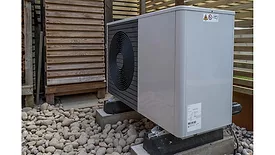
Incentive programs such as the federal Inflation Reduction Act tax credits and expanding state-level rebate structures have increased interest among building owners, engineers, and facility managers, nudging contractors to evaluate heat pump solutions more seriously.
Water conservation in commercial and multifamily buildings has traditionally been seen as an engineering or ownership issue, focused on codes and sustainability. However, with rising water costs, aging infrastructure, and complex systems, conservation now also emphasizes system performance, risk reduction, and operational intelligence, engaging plumbing distributors in the discussion.
Extreme weather is now colliding with already-tight freight capacity, volatile energy markets and a construction economy that increasingly demands speed, certainty and risk sharing. During the recent cold snap, Financial Times and Reuters reported U.S. natural gas prices surged to their highest levels in more than three years, driven by freeze-offs that curtailed production just as heating demand spiked.
Wholesale distribution has always operated on relatively thin margins. Public benchmarks typically place gross margins anywhere from the high single digits to the low-30% range depending on product mix, with net margins often falling between 3% and 10%. In plumbing and PVF, those margins vary even more dramatically by category — with commodity products leaving far less room for error than engineered or value-added offerings.