Supreme Court strikes down Trump emergency tariffs
6-3 ruling limits executive trade authority, but PHCP-PVF distributors still face layered tariff exposure and refund uncertainty.
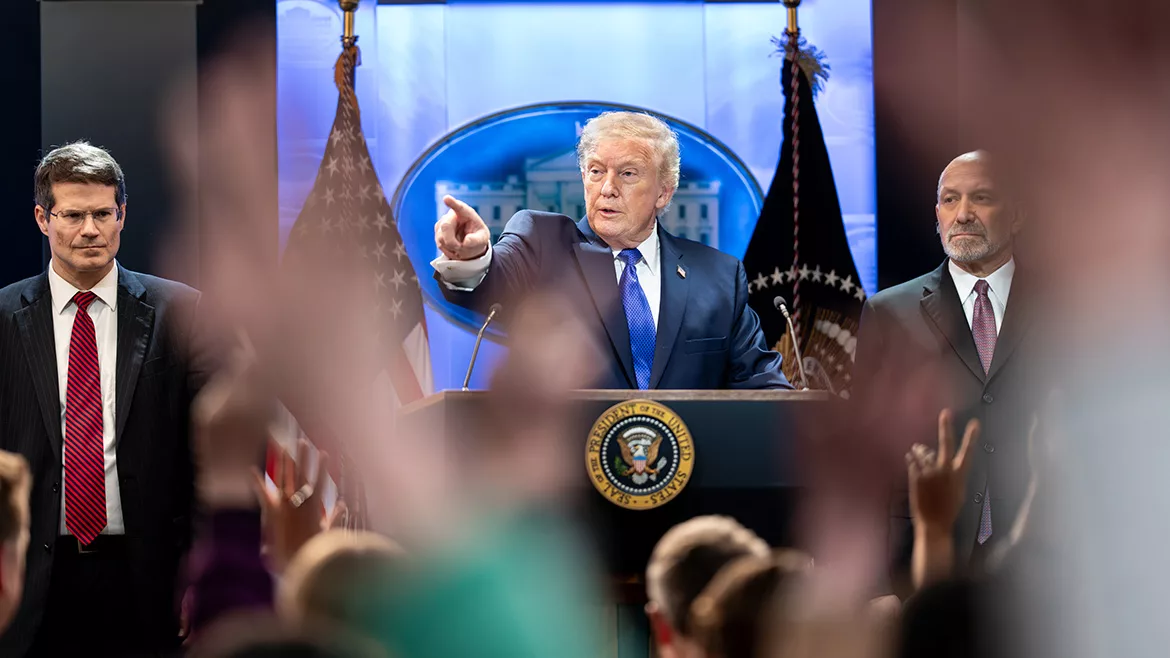
In a 6-3 decision that reshapes the limits of executive trade authority, the U.S. Supreme Court ruled that President Donald Trump exceeded federal law when he imposed sweeping “emergency” tariffs under the International Emergency Economic Powers Act (IEEPA). The Court determined that IEEPA does not grant the president unilateral authority to impose broad-based tariffs, reaffirming Congress’s constitutional role in setting duties and taxes.
The ruling invalidates the administration’s across-the-board emergency tariffs, including the baseline 10% global duties that had applied to a wide range of imported goods, including those heavily relied on by the PHCP-PVF supply chain, such as imported components, castings, steel, aluminum, electronics and finished equipment. The decision represents a legal milestone, but not necessarily an economic reset.
Within hours of the ruling, Trump announced a new 10% global tariff under Section 122 of the Trade Act of 1974, signaling that tariff policy remains central to the administration’s trade agenda despite the Court’s decision. Section 122 allows temporary tariffs for balance-of-payments purposes, though it carries time limitations and procedural requirements distinct from IEEPA.
Industry response: Ruling is narrow, tariff exposure remains
American Supply Association (ASA) Vice President of Advocacy Steve Rossi noted that although the Supreme Court’s ruling on Executive Branch authority under IEEPA has increased uncertainty, Section 232 and Section 301 tariffs remain in effect.
“In addition, the President has announced that a 15% global tariff (with certain exceptions, including energy and critical minerals) will be imposed through Section 122 of the Trade Act of 1974 – which is authorized for a 150-day period,” Rossi added. “After that period ends, it remains to be seen what steps the President or Congress will take on tariff policy."
Similarly, Alex Ayers, Vice President of Government Affairs at Heating, Air-conditioning & Refrigeration Distributors International (HARDI), echoed that message, emphasizing that the ruling does not dismantle the tariff framework most impacting HVACR and plumbing distributors.
“It is important for distributors to understand what remains unchanged,” Ayers said, pointing to the President’s press conference remarks that “all national security tariffs under Section 232 and existing Section 301 tariffs … remain in place, fully in place, and in full force and effect.”
HARDI’s most recent State of the Channel Report found that imports across the HVACR industry carry an effective tariff rate of approximately 14%, underscoring the continued cost exposure facing distributors. HARDI also highlighted compliance complexity, pointing out that shifting tariff authorities may introduce new administrative burdens for importers, manufacturers and distributors attempting to forecast inventory costs and manage pricing strategies in a fluid trade environment.
Broader distribution community responds
So far, reaction across the broader distribution and business community has echoed this ASA’s and HARDI’s cautious tone.
The U.S. Chamber of Commerce publicly welcomed the ruling, calling it positive news for businesses seeking predictability and urging policymakers to restore clarity and stability to trade policy. The Chamber emphasized that tariff volatility in recent years has contributed to higher costs for businesses and consumers alike and encouraged a reset toward policies that promote economic growth and supply chain certainty.
Meanwhile, a coalition known as “We Pay the Tariffs,” representing small businesses affected by import duties, called for “full, fast and automatic” refunds of tariffs deemed unlawful. The group has argued that many small importers absorbed significant cost increases under the emergency tariffs and should be reimbursed promptly.
While reporting on industry reaction, Reuters similarly noted that while business groups broadly welcomed the Court’s constitutional clarification, they remain concerned about implementation details, particularly how refund claims will be processed and whether alternative statutory authorities will simply reimpose comparable duties under different legal mechanisms.
Refund questions
If emergency tariffs are ultimately rescinded and refunds issued, some importers could recover previously paid duties. However, with the administration pivoting to alternative tariff authority and longstanding Section 232 and 301 tariffs still intact, material costs tied to steel, aluminum, electronics and imported finished goods are unlikely to disappear overnight.
With the PHCP-PVF channel already balancing higher interest rates, moderated construction activity and inventory discipline, tariff volatility adds another layer of planning complexity. Distributors must evaluate inventory exposure, supplier pricing adjustments and contractor demand sensitivity in a market where trade policy can shift rapidly.
Legal analysts suggest the Supreme Court’s decision reinforces constitutional guardrails on executive trade powers. For the plumbing and mechanical supply chain, the broader takeaway may be that while one tariff mechanism has been curtailed, trade policy uncertainty remains a defining factor in 2026.
John Ferguson, head of the Future of Trade initiative at Economist Impact, described the ruling as “a significant check on executive power,” but cautioned that the broader uncertainty surrounding U.S. trade policy remains unresolved.
“While Liberation Day has been struck down, we are no closer to a predictable, rules-based global trading order,” Ferguson said. “Trump has already signaled he will pursue tariffs through other means, and the tools available to him — Section 301, Section 232 — are broad enough to cause serious disruption on a sector-by-sector basis.”
Ferguson added that refund prospects remain uncertain and litigation could stretch for months. “For supply chain leaders, the message hasn’t changed: uncertainty is the new constant.”
Supply House Times will continue monitoring developments, including refund guidance, congressional response and potential impacts on imported plumbing, hydronics and HVACR products critical to the PHCP-PVF market.
Looking for a reprint of this article?
From high-res PDFs to custom plaques, order your copy today!