Heat pumps: Volatility now, opportunity ahead
What changing specifications, incentives, and system integration mean for distributor inventory and training decisions.
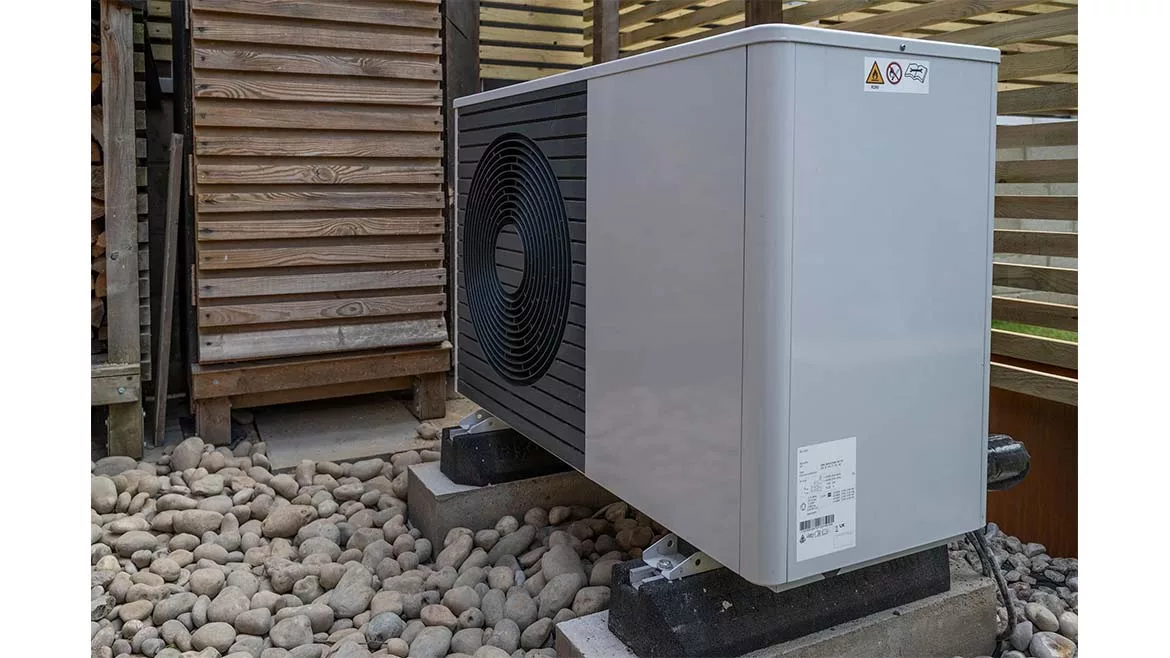
Heat pumps are quickly moving from curiosity to concrete business consideration. Once perceived as a niche residential HVAC technology, modern heat pumps are now reshaping conversations across commercial, industrial, and multifamily applications — and distributors must decide how to engage. The disruption is not merely technological; it’s strategic. Success will hinge on understanding how heat pumps intersect with contractor demand, inventory risk, manufacturer collaboration, and evolving market drivers.
That opportunity, however, is unfolding against a nuanced market backdrop. After several years of steady growth, U.S. heat pump shipments softened in late 2025, with year-over-year volumes declining, according to data from the Air-Conditioning, Heating, and Refrigeration Institute (AHRI). For distributors, that short-term pullback reinforces the importance of disciplined inventory management and close alignment with contractor demand. It also serves as a reminder that market transitions rarely move in straight lines, particularly when higher interest rates and broader construction slowdowns are shaping buying behavior.
At the same time, longer-term indicators remain firmly positive. Global HVAC distribution markets are projected to grow at roughly a 6.3% to 6.7% compound annual rate through 2030, with heat pumps representing a meaningful share of that expansion as electrification, efficiency standards, and system integration continue to reshape how buildings are heated and cooled. For wholesale leadership teams, this contrast between near-term volatility and long-term growth reinforces the need for a measured, strategic approach — one that balances caution today with positioning for where contractor demand is heading next.
Fueling that longer-term momentum are electrification initiatives and decarbonization goals that have pushed heat pumps into mainstream planning conversations. Incentive programs such as the federal Inflation Reduction Act tax credits and expanding state-level rebate structures have increased interest among building owners, engineers, and facility managers, nudging contractors to evaluate heat pump solutions more seriously. Even as shipment data fluctuates, these policies and market forces continue to influence specifications and project planning. The central question for distributors is no longer whether heat pumps matter, it is how to make them matter profitably within their local markets and customer bases.
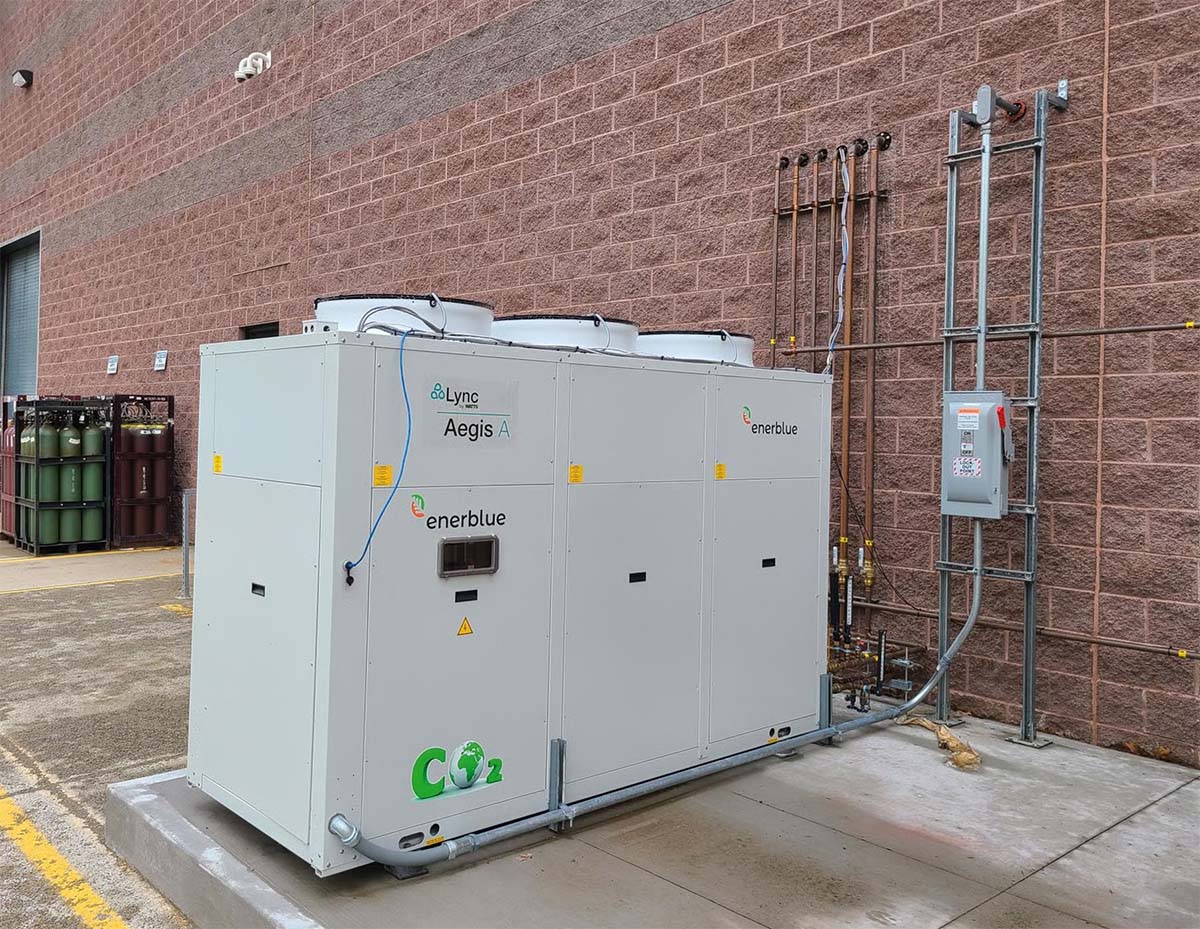
The Aegis system reflects a growing trend in commercial HVAC — using electrified, high-efficiency technology to reduce emissions and operating costs. Photo courtesy of Lync
Understanding market movement through contractor signals
In distributor conversations across regions, the most reliable barometer of demand is contractor behavior. In areas where electrification incentives are strong, contractors increasingly encounter specifications that include heat pump systems, or hybrid configurations adding electric heating alongside legacy gas systems. This shift is not uniform as some markets lag due to cost sensitivity or lack of trained labor, but the tone of contractor inquiry has changed. Heat pumps are now part of the technical conversation, not an afterthought.
This contractor curiosity aligns with broader adoption patterns across North America. Recent market research projects the global heat pump market to grow substantially through the end of the decade as efficiency drives and sustainability goals accelerate. Such forecasts reinforce that this is a long game where patience and positioning pay dividends, even if short-term shipments show fluctuation.
Beyond residential comfort: Commercial and systems integration
One of the most profound shifts for distribution leadership is the expansion of heat pump applicability beyond traditional residential comfort conditioning. Heat pumps are now regularly specified for water heating, waste heat recovery, district energy systems, and other commercial applications. This expansion is directly tied to innovations that elevate performance.
Manufacturers are pointing to specific technological advances that multiply the utility of heat pumps in broader markets. Jake Bucklin, product manager at Lync, Watts Water Technologies, notes that modern CO₂-based systems like Lync’s Aegis can produce hot water reliably up to 170°F — a threshold that opens doors for applications ranging from food service steam to healthcare sterilization. According to Bucklin, “As more facilities focus on electrification, hot water production is quickly becoming one of the most impactful areas for reducing carbon emissions and operating costs.”
Similarly, Rob Tanner, marketing director at Applied Equipment for Johnson Controls, highlights how advanced heat pump chillers are used in industrial waste heat recovery, capturing energy from low-temperature sources and redirecting it into usable heat. “The Department of Energy estimates 20-50% of industrial energy is lost to waste heat,” Tanner explains. “Today’s heat pump chillers can capture energy from sources as low as 40°F and raise it to 140°F, supplying heat for space heating, water heating, or pre-heating boiler feedwater.”
For distributors, these expanded use cases matter because they connect heat pumps with the hydronic systems and process piping components that are core to PHCP-PVF portfolios. Distributors with cross-training in hydronics and HVAC are uniquely positioned to support integrated system solutions rather than isolated equipment sales.
Inventory strategy in a transitional category
Stocking heat pump inventory is more complex than traditional boilers or furnaces. Unlike legacy combustion equipment, heat pumps come in a greater diversity of configurations — variable speed, air-to-water, CO₂-based, and hybrid systems with backup heat sources. This diversity increases both stocking challenges and opportunities.
For many small to mid-sized distributors, a selective inventory approach is proving effective. Rather than carrying a full suite of models and sizes, some branches focus on core residential and light commercial units that reflect the strongest local contractor demand. Others stock complementary hydronic accessories like buffer tanks, controls, and expansion vessels, while arranging direct shipment of larger heat pump modules through manufacturer partner programs.
Whatever the model, the essential requirement is alignment. Branch managers and district leadership must coordinate closely with outside sales teams and manufacturer reps to monitor project pipelines and order trends. Being the first to advise contractors on lead times or substitution options is often more valuable than carrying multiple seldom-used SKUs.
Differentiating through training and support
Training is emerging as one of the most potent ways distributors can differentiate beyond inventory. Heat pump systems, especially hybrid and water-to-water variants, have installation and commissioning requirements that differ from traditional HVAC or hydronic equipment. Contractors who lack familiarity may hesitate to specify or install these systems, even when incentives exist.
Distributors who invest in manufacturer-led education, hands-on demos, and lunch-and-learn sessions are building deeper loyalty with contractor partners. Well-trained contractors specify correctly, install confidently, and are less likely to return products due to avoidable issues; a direct benefit to distributor margins and relationships.
This strategic investment in training also strengthens the distributor’s role as a technical advisor. Today’s contractors often look to their supplier for clarity on specification nuances and operational trade-offs, particularly when a project includes hybrid heat pump systems alongside boilers or furnaces.
Navigating incentives and the sales conversation
Government and utility incentives remain influential in heat pump sales conversations, but the landscape is complex. Federal tax credits, state rebate programs, and changing utility rate structures can be difficult for contractors and end-users to parse. Distributors do not need to become policy experts, but they do need to equip their branch and sales teams with a working understanding of how incentives can alter project economics.
In some regions, utilities are even offering reduced electricity delivery rates for homes and buildings that use heat pumps during winter peak months, a factor that can change the total cost of ownership calculus for end customers.
Being able to frame the high-level value of incentives and rate benefits helps distributors support contractor sales efforts. When push comes to shove, contractors are more inclined to specify equipment that they understand and can confidently communicate to owners. Distributors that facilitate that confidence are not just suppliers become strategic partners.
Risk management and operational readiness
As distributors expand into heat pump support, they must also manage risk. Warranty handling across multiple manufacturers, alignment on commissioning responsibilities, and clarity on support expectations are vital. Strong relationships with manufacturer reps are invaluable here; these partnerships can reduce friction when questions arise in the field.
Operational preparedness also requires internal alignment. Counter staff need basic heat pump fluency, outside sales teams require application insight, and leadership must ensure that strategies align with overall business goals rather than chasing trends.
For executive teams, pilot programs and incremental capability building are prudent. A limited rollout allows a distributor to learn without overcommitting, refine training programs, and gauge contractor adoption before scaling. This approach is especially important in markets where heat pump adoption is still emerging rather than established.
As distributors expand into heat pump support, they must also manage risk. Warranty handling across multiple manufacturers, alignment on commissioning responsibilities, and clarity on support expectations are vital.
Positioning for the future
Heat pumps will not supplant traditional heating systems overnight. Gas boilers, furnaces, and hydronic water heaters remain core categories that will drive a large share of revenue for years to come. The shift underway is not a replacement story but an expansion story where electrified systems become part of a broader mechanical ecosystem.
Distributors who can balance portfolio strength with thoughtful adoption strategies, heat pumps represent a growth frontier. They signal an industry in flux, with more emphasis on efficiency, system integration, and lifecycle value. Those who engage thoughtfully, guided by local market signals and strong contractor partnerships, can turn this evolution into a measurable business advantage.
As heat pump technology continues to evolve, the focus is increasingly on higher output temperatures, smarter controls and integration at scale. Beyond temperature capability, Bucklin noted that AI and predictive algorithms are transforming how heat pumps interact with building operations, optimizing performance based on weather, occupancy, and grid signals. Modular and scalable system architectures are also emerging, simplifying integration into complex facilities and allowing for future expansion.
Tanner pointed to the broader trend of digitalization. “Digitalization is transforming both equipment and building operations. Intelligent platforms like OpenBlue can process a million data points per minute, unlocking unprecedented levels of insight and then putting that data to work to reduce costs, drive uptime, maximize reliability and streamline workflows.”
Looking forward, these advancements position heat pumps not merely as HVAC equipment, but as versatile infrastructure capable of powering all-electric buildings, industrial processes, and district energy systems. As efficiencies continue to rise and integration with renewables, waste heat, and smart controls improves, heat pumps are poised to become a central tool in achieving energy resilience and sustainability across commercial and industrial sectors.
Looking for a reprint of this article?
From high-res PDFs to custom plaques, order your copy today!


