Supply House Times logo Supply House Times
search
cart
facebook instagram twitter linkedin youtube
  • Sign In
  • Create Account
  • Sign Out
  • My Account
Supply House Times logo Supply House Times
  • NEWS
    • ASA NEWS
    • Company News
  • PRODUCTS
    • Interactive Spotlights
  • COLUMNS
    • Natalie Forster: From the Editor
    • Alicia Branham: Marketing Matters
    • Brad Williams: Succession Planning
    • Melissa Rasico: Luxury Plumbing Lounge
    • Letter from ASA President
    • Guest Columnists
    • Safety Columnists
  • MARKETS
    • Codes & Legislation
    • Heating & Cooling
    • Industrial PVF
    • Plumbing
    • Radiant & Hydronics
    • Solar Thermal | Geothermal
    • Technology
    • Women in Industry
  • BATH & KITCHEN PRO
    • Bath & Kitchen News
    • Bath & Kitchen Products
  • SPECIAL EDITIONS
    • B.I.G. Book Directory
    • Premier 150
    • Rep Locator Directory
  • MEDIA
    • Podcasts
    • Videos
    • eBooks
    • Webinars
  • RESOURCES
    • Radiant Comfort Report
    • Industry Calendar
    • Industry Links
    • Custom Content & Marketing Services
    • Market Research
    • Supply House Times Store
  • EMAG
    • EMAGAZINE
    • ARCHIVE ISSUES
    • CONTACT
    • ADVERTISE
  • SIGN UP!
Bath and Kitchen ProASA NewsBath & Kitchen News

Are disposers suitable for septic systems?
By Carol Baricovich
Septic System Disposers
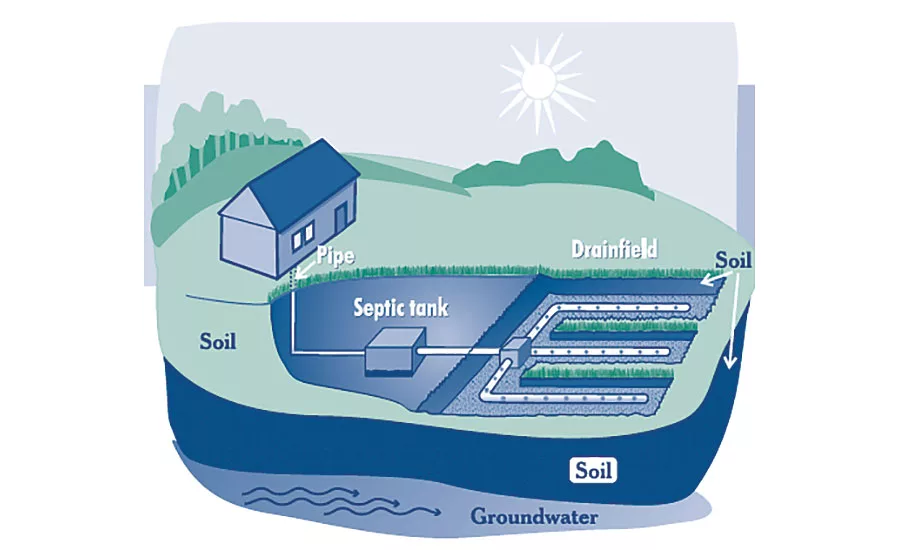
Figure 1. Typical Septic System. “Homeowner’s Guide to Septic Systems.” US EPA. Revised March 2005.
Septic System Disposers 2
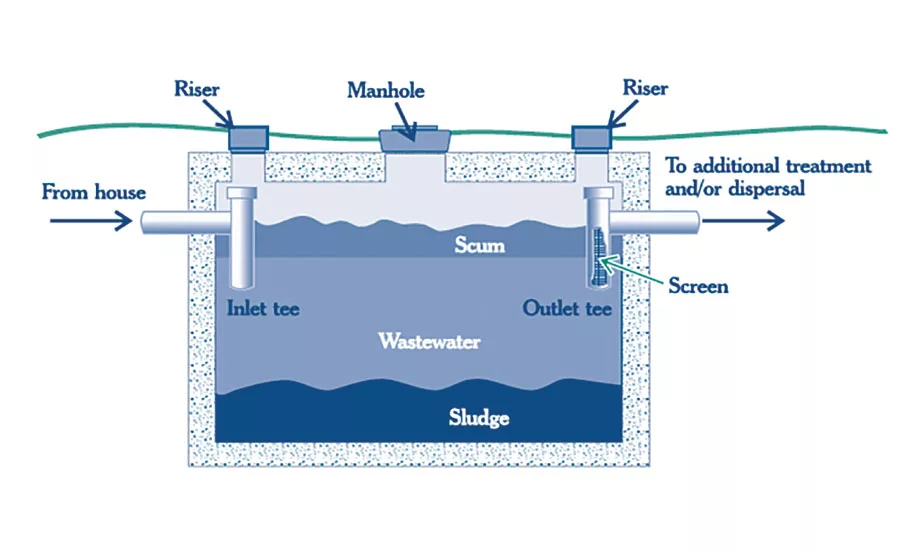
Figure 2. Septic Tank. “Homeowner’s Guide to Septic Systems.” US EPA. Revised March 2005.
InSinkErator
Carol Baricovich, Director - Global Brand Communications and Government Relations, Marketing/Business Development - InSinkErator
Septic System Disposers
Septic System Disposers 2
InSinkErator
June 28, 2016

Overview

Food waste disposers are installed in more than 60 million homes in the U.S.  Most homes are connected to centralized sewage collection and treatment systems, but many use an onsite sewage treatment system, known as a septic system.

The U.S. Environmental Protection Agency estimates 20% of U.S.¹ homes are on septic systems and 10-20% fail every year.² These failures potentially threaten public health and groundwater quality, so the EPA, local authorities having jurisdiction, and other organizations offer advice to prevent failures. This advice includes cautioning homeowners about using food waste disposers, some suggesting that homeowners eliminate or limit the use of a disposer.³ According to one report, no single organization collects data to evaluate the extent of failures. 

Based on information available from the National Onsite Wastewater Recycling Association and the National Environmental Services Center at West Virginia University, no data exists implicating food waste disposers for septic system failure.


Background

Septic systems are essentially comprised of two components installed in series – 1) a solids holding tank and 2) a drain field. As wastewater flows into the tank, solid and particulate matter settles out, and the remaining water and soluble organic material flows into the drain field where it slowly leaches into the groundwater through perforated piping spread over a large area. About half the organic material remains in the solids holding tank where it continues to break down, but eventually the solids must be removed by a pumper. The wastewater entering the drain field flows over biofilms growing on the surface of the pipes and undergoes biological decomposition.

See Figure 1 (above) for a Typical Septic System. See Figure 2 (above) for a Septic Tank.

Septic systems may fail for various reasons. The main culprit is improper design and maintenance. Some systems go without maintenance until it is too late and needs to be overhauled. If septic systems are properly designed and maintained, will food waste disposers overload the tank or drain field?

According to the 2013 U.S. American Housing Survey, six million homes on septic systems have a food waste disposer in the kitchen. More than five million of these disposers were manufactured by InSinkErator (based on internal estimates) and no homeowner has lodged a complaint or claim that their disposer caused a septic system failure.

No data exists to support the notion that disposer use leads to increased maintenance and septic system failure. 


Organic Load

Disposer use does add organic material to wastewater. This incremental amount is best measured as Total Suspended Solids (TSS) and Biochemical Oxygen Demand (BOD). Table 2 (see page 106 in our digital edition) quantifies the concentration BOD and TSS of septic tank effluent which enters the drain field. It shows the incremental load of BOD and TSS from disposers is nominal, with or without an effluent filter.


Degradation of Organic Matter

Officials are concerned that food waste does not break down in the tank. However, food waste is readily converted to methane during anaerobic digestion with sewage solids at wastewater treatment plants. Septic tanks are unheated and unmixed anaerobic digesters.  Even though septic tanks are slightly cooler than anaerobic digesters,5 decomposition of organic matter still occurs, just at a slightly slower rate.


State Regulations for Food Waste Disposers

Only 12 states require designs for septic systems to include the additional loading from kitchen appliances.

California Building Standards dictate systems be designed to accommodate solids loading from disposals, but do not specify the incremental requirement. Some states (CT, KY, NE and RI) specify increasing tank size while others (GA, IL, ME, MA and MN) specify increasing the tank volume from 30-200%. In New York state, the health department stipulates increasing the capacity to that of an additional bedroom.


In Conclusion

Given that state requirements for increased tank volume and drain field size are at least as much as the incremental loading quantified by wastewater professionals, it is reasonable to state that as long as a septic system is properly designed, sized and maintained, the use of a disposer is appropriate for a septic system.

¹ American Housing Survey. 2013. http://www.census.gov/programs-surveys/ahs/data/2013/ahs-2013-summary-tables/national-summary-report-and-tables---ahs-2013.html.

² http://water.epa.gov/infrastructure/septic/

³ http://www.epa.gov/sites/production/files/2015-06/documents/septicsmart-week-flyer091113.pdf

4Wood, Yvonne A. and Brad D. Lee. “Septic System Failure.” http://www.ucanr.org/sites/ceinyo-mono/files/111944.pdf. Accessed 2/9/2016.

5Crites, Ron and George Tchobanoglous. 1998.“Small and Decentralized Wastewater Management Systems.” WCB/McGraw-Hill. p. 314.

KEYWORDS: American Supply Association EPA food waste disposer

Share This Story

Looking for a reprint of this article?
From high-res PDFs to custom plaques, order your copy today!

Director - Global Brand Communications and Government Relations, Marketing/Business Development - InSinkErator

Recommended Content

JOIN TODAY
to unlock your recommendations.

Already have an account? Sign In

  • Stock financial index show successful investment on property business and construction industry with graph and chart for presentation and report background.

    2025 predictions: Twelve trends supply houses should know

    As 2024 ends, I’ll review last year’s predictions and...
    Plumbing
    By: Brad Williams
  • Background of aerial view of Industrial container port part of shipping in nighttime with a blue overlay.

    2025 Next Gen ALL-STARS: Top 20 Under 40 PHCP-PVF Professionals

    The future of the PHCP-PVF industry is being shaped by a...
    Plumbing
    By: Natalie Forster
  • Premier 150: The top PHCP-PVF Distributors of 2026

    Premier 150: The Top PHCP-PVF Distributors of 2026

    Combined revenue across this year’s Premier 150 once...
    Industrial PVF
    By: Natalie Forster
Manage My Account
  • eMagazine
  • Newsletters
  • Manage My Preferences
  • Online Registration
  • Subscription Customer Service

More Videos

Popular Stories

Rob Micklus, Chris DellaSala, John McKeown and Bob DellaSala

2026 Manufacturers Rep of the Year: Keystone Sales & Associates

Price Increase Image

PHCP-PVF Price Increases: June 2026

Best Sales Rep Just Retired

Your Best Sales Rep Just Retired. Now What?

2026 Premier Rankings

Events

December 30, 2030

Webinar Sponsorship Information

For webinar sponsorship information, visit www.bnpevents.com/webinars or email webinars@bnpmedia.com.

View All Submit An Event

Poll

Identifying Daily Time Loss Areas for Your Team

Where does your team lose the most time each day?
View Results Poll Archive

Products

The Water Came To A Stop

The Water Came To A Stop

See More Products

Download the FREE 2025 Water Conservation, Quality & Safety eBook

Download the Fifth annual Bath & Kitchen Pro eBook

Related Articles

  • Moen Senior Marketing Manager Cassy Osborne

    End users of food-waste disposers value craftsmanship

    See More
  • InSinkErator food-waste disposers

    InSinkErator food-waste disposers

    See More
  • Times are changing for the bath and kitchen industry

    See More

Related Directories

  • InSinkErator

    InSinkErator, is the world's largest manufacturer of garbage disposals and instant hot water dispensers for home and commercial use. Over 85 years ago, InSinkErator revolutionized the way food waste was discarded in the kitchen, and it continues to be a category leader.
×

Stay in the know on the latest PHCP-PVF industry trends.

Get tailored content delivered your way.

JOIN TODAY!
  • RESOURCES
    • Advertise
    • Contact Us
    • Directories
    • Store
    • Want More
    • Plumbing & Mechanical
  • SIGN UP TODAY
    • Create Account
    • eMagazine
    • Newsletter
    • Customer Service
    • Manage Preferences
  • SERVICES
    • Marketing Services
    • Reprints
    • Market Research
    • List Rental
    • Survey/Respondent Access
  • STAY CONNECTED
    • LinkedIn
    • Facebook
    • Instagram
    • YouTube
    • X (Twitter)
  • PRIVACY
    • PRIVACY POLICY
    • TERMS & CONDITIONS
    • DO NOT SELL MY PERSONAL INFORMATION
    • PRIVACY REQUEST
    • ACCESSIBILITY

Copyright ©2026. All Rights Reserved BNP Media, Inc. and BNP Media II, LLC.

Design, CMS, Hosting & Web Development :: ePublishing