U.S. shale boom calms global oil prices, retains availability
The stabilizer.
|
The world is becoming increasingly dependent on America’s three-year-old fracking boom that has lifted U.S. oil production by about three million barrels per day to the current total of more than eight million barrels.
Simultaneously, Canada has added another one million BPD almost exclusively from the tar sands of Alberta’s Athabasca region. Building the trans-Canada XL oil pipeline obviously would accelerate Canadian crude shipments to U.S. Gulf Coast refineries, building America’s daily crude oil availability to more than 10 million barrels per day, likely topping today’s leaders, Russia and Saudi Arabia.
This is of particular importance as the Middle East and North African oil fields have retracted by an estimated 3.5 million BPD due to civil wars in Libya, disturbances in Iraq, civil war in Syria, ideological tribal strife in Nigeria and sanctions imposed against Iran. Also, with Europe depending on Russia’s oil and natural gas pipelines for 30% of its crude oil, sanctions or other economic punitive actions against Russia would wreak turmoil on the European economy, which already is teetering on the edge of a new recession.
According to reliable energy experts, the breakdown in oil supplies previously indicated would rise from the current $100 per barrel for West Texas Intermediate and about $108 for Brent crude to an estimated $150 to accommodate universal crude oil needs were it not for America’s fracking surge.
While China continues to represent the pivot point for the up/down direction of oil pricing as the world’s largest user, Beijing’s economic direction will magnify the price movements forthcoming in this year’s second half. U.S. demand, which is hanging in at around 19 million barrels per day, already has closed the import gap to 25% of its total consumption, down from 60% as late as 2005.
Although there are divergent schools of thought regarding the direction of oil pricing in the next few years, there is unanimity that the balance of pricing power has shifted from the turbulent Middle East, North Africa and Russia to how quickly and voluminously the U.S. oil production capability and refining potential can be brought to market.
With U.S. stockpiles mounting in the intermediate timeframe, a near-term price drop, especially in light of a Southeast Asian demand cut, could find U.S. central inventories in a temporary overstock mode. This could become even more severe if Iran and Iraq, containing the second- and third-largest global oil reserves, resolve the geopolitical pressures that have reduced their exports.
However, a realistic longer-term outlook, which envisions a worldwide demand growing from the current 90 million barrels per day to 120 million BPD within the next decade, would indicate global prices sharply on the upside, with the U.S. and Canada’s maximum output becoming the global center of gravity in the oil world.
As exploration costs soar, a faint thunderclap already being heard is the cutback in capital expenditures by oil giants Exxon Mobil, Chevron and Royal Dutch Shell as they wait for assurance of expanding economic demand and the acceptance of higher prices with it.
Let’s go exploring
According to the U.S. Energy Information Agency’s insight into upstream oil and gas spending (property acquisition, production expenditures, exploration and development), such outlays ran from under $200 billion in 2000 to an astronomical $650 billion-plus in both 2012 and 2013. The strongest growth in upstream expenditures has occurred since 2010 when they reached $600 billion with the next three years following this unprecedented mark.
While fracking technology really took off during 2004, the back-off from the $500 billion level in 2008 paused only in the midst of the fiscal recession — dropping to $400 billion during 2009 and then leaping forward 50% the following year.
These awesome expenditures may well be superseded in the years ahead as the fracking revolution has embraced natural gas as well as oil. During the early stages of the upgraded fracking technology, gas was flared off since climatic demand did not seem a requisite for storage. It's only the realization that the world desperately needs America's natural-gas glut, an expedient greatly magnified by the current war-like Russian muscle-flexing that LNG opportunities are being exploited.
Although the breakneck speed with which the approved building of export terminals being launched by several major energy producers is now in progress, it likely would take the greater part of a decade before conversion of natural-gas liquefaction and tanker ships can satisfy the needs of Europe, Japan, the United Kingdom and other potential customers.
It's estimated that prospective fracking potential has as of yet not even approached the 10% mark. The other 90% includes two-thirds of American government land area, which has not been approved up to this point.
If even a portion of this as yet unapproached and unpermitted area is allowed for exploitation, the funds needed for such an immense undertaking could see annual outlays in excess of $1 trillion or more for funds secured from financiers around the world.
Pipeline upgrades
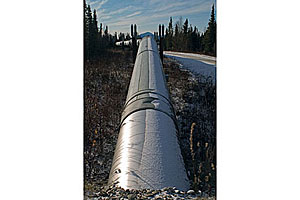
While the current U.S. administration dithers over the trans-Canada Keystone XL pipeline and refrains from a maximum infrastructure update/upgrade to piping systems that desperately need a national approach, increasing fatal accidents are attributable to massive fossil-fuel (oil and natural gas) and electrical distribution systems that haven’t been repaired in more than 50 years and are suffering from partial disintegration.
Private pipeline operators are becoming increasingly involved in fixing the most immediate problems in their particular geographical areas and points of interest. A significant example of that is the reversal of the Gulf Cost pipeline from the nation’s overloaded inventory center to refineries in southern Louisiana and the greater Houston area. But these limited operations hardly dent the major problems of infrastructural shortfall.
In addition to the current oil and natural gas maze of pipelines being increasingly out of kilter with the current production of these fossil fuels from fracking, especially in the most recently tapped-into regions in the Southwest and mid-Atlantic regions, today’s pipeline material has greatly been improved upon, a major factor in assuring safety and facilitating the greater efficiencies of flow from source to ultimate refinery locations.
It is a matter of record that all the fatalities and injuries resulting from pipeline malfunction were iron pipe installed in 1956 or earlier. Professional analyses further found that roughly 16% of the nation’s gas distribution infrastructure was installed before 1960 and that as of 2011, 3% of the nation’s distribution-level miles were still iron.
There are many reports of increasing leaks as time wears on, but it becomes increasingly expensive and arduous to generate this patchwork transmitting structure. This only magnifies the fact that nothing short of a massive government-backed multi-billion-dollar overall approach becomes increasingly mandatory as the acceleration of such national infrastructure is acknowledged to be supremely urgent.
Power generation and an ongoing developing energy outburst are with us here and now. Safety and accident prevention, as well as greatly increased efficiencies demand attention. Private businesses and industries do the best they can to patch and extend existing pipeline structures, but they are falling behind as energy production geometerically expands.
While oil and gas availability in Europe is putting the Russian fossil-fuel reserves in an increasingly dominant position, that alone should influence the priorities of the current Washington administration.
HELPFUL LINKS:
Looking for a reprint of this article?
From high-res PDFs to custom plaques, order your copy today!


