Dan Holohan: A copper mystery
We’ve lived in this little house in Bethpage, New York, since 1977. Bethpage was once home to Grumman, which built fighter planes, canoes, campers, buses and the Apollo Lunar Module. How’s that for a mix?
And Bethpage also is in the Bible! There’s a town to our north called Jericho (also in the Bible). And to our south there’s another town called Wantagh. I think Wantagh is a Native American word for “high taxes coming.” Wantagh used to be called Jerusalem (the Bible again!) and Bethpage sits about equidistant between those two places.
So, the Gospel of Mark, New Testament: There’s a part just before Palm Sunday where Jesus is traveling past Bethpage (spelled Bethphage in the Bible). He tells one of his disciples to go into that town, where he will find a donkey. “Bring it to me,” Jesus says. And, of course, the rest is history.
The significance of this story, however, is that when Jesus Christ, Himself, was looking for a jackass, he came to my hometown of Bethpage.
Which brings us back to Grumman.
During all the years they were building all those war planes, canoes and whatnot, they also were dumping dangerous liquids into the ground. But this was during a time when no one knew those liquids were dangerous. Or, if they suspected they might be, they figured the earth could just suck it all up. After all, didn’t the dangerous stuff come out of the earth in the first place? Sure it did so no worries.
What a time that must have been. I can recall my father changing the motor oil on his old Buick and telling me, a lad of seven, to dump the oil down the storm drain. “That’s where it came from,” he’d say. “It came from the ground. And don’t spill any of it in the street. Put it down the sewer.”
Which is ironic because I also recall a truck that came down our pebbled streets every week to spray oil all over the place? That was to keep down the dust. It was the healthy thing to do.
All of this was normal. So was asbestos. So were cigarettes. All normal.
Unfortunately, we now have an underground toxic plume that extends for miles in all directions. It sits just above the aquifer that provides our drinking water and it’s heading for the Great South Bay. The Bethpage Water District had to shut two of its wells because the water in those wells is now radioactive. It got to be that way because Grumman used to use radium on its cockpit instruments so the numbers would glow in the dark. That was a fine idea at the time and I’m sure the pilots appreciated it, but did Grumman really have to dispose of the leftover radium by dumping it into the ground?
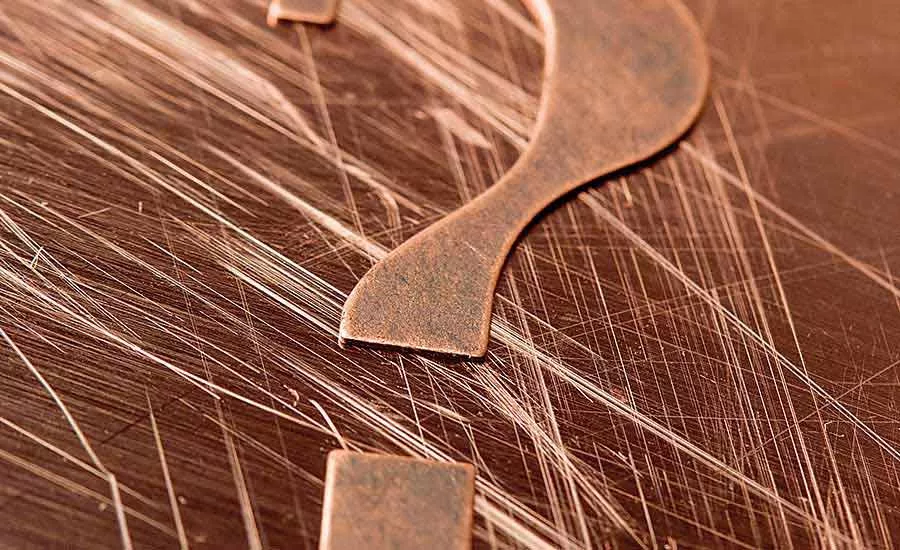
And there are other nasty things under our houses, which brings us to the copper tubing, which is failing in lots of houses. No one knows for sure why this is happening.
Hitting close to home
In our house, this one cold-water line, installed in 1991 when we added a dormer, failed three times and in the exact same spot. It grew these insidious pinholes right in the middle of the pipe and nowhere near a fitting. Water dripped slowly down onto our kitchen ceiling, causing the cabinets to come loose.
We gutted the ceiling when we had the kitchen rebuilt and we saw even more pinholes. All of that copper is gone now, replaced by PEX.
But here’s the thing: In our house, the problem only was on the cold-water lines and only on the copper tubing installed in 1991. The original copper installed in 1950 was fine and there’s never been a problem with the copper baseboard or the copper tubing in our heating system.
So bad batch of copper? No one knows. The problem runs rampant throughout the town and not just on tubing that’s from the 1990s. And it’s not stray electrical current. I know it’s not because we had that looked into and took measures to ensure this wasn’t the cause. The pinholes just laughed at our efforts. It’s not an electrical thing.
It’s also showing up in neighboring towns now and no one can figure out why. Officials speculate it may be the water treatments they’re using to deal with the contaminated plume under our houses. The stuff they were adding was making the water less alkaline and more acidic, so they’re now adding lime to the mix, which should bring the pH level back to where it was in the 1980s when the copper was fine, but they say it will take quite some time before we’ll know if this works.
Adding to this mystery is this: None of the outside copper-service lines are getting pinholes. It’s only the pipes inside the houses and despite what we’ve experienced, 70% of the leaks are on domestic hot-water lines, not cold-water lines.
Newsday reported our neighboring water district hired Marc A. Edwards and his team out of Virginia Tech to see if they could figure out what was causing the pinholes in 15% of the houses they serve. Mr. Edwards is an expert on water treatment and corrosion. His research on elevated lead levels in Washington, D.C.’s municipal water supply changed the city’s recommendations on water use in homes with lead service pipes, and it also started a congressional investigation into the Centers for Disease Control and Prevention, which admitted it had published a report that was scientifically indefensible.
Mr. Edwards also was one of the whistleblowers in the Flint, Michigan, water tragedy, so this gent is qualified to explain pinholes in copper.
But then Newsday quoted Mr. Edwards as saying, “Even though the cause of pitting is unclear that this time, it is possible that a change in corrosion control might reduce the frequency of pitting.”
So his guess is as good as ours.
Does anybody know the answer?
Stan Carey, the chair of the Long Island Water Conference and the superintendent of another neighboring water district, said, “What everyone has to understand is there are a lot of things that are contributing to it and they may not even be able to put their finger on the cause.” Which makes me smile because if you don’t know what’s causing it, how can you say that it’s a lot of things? And why does everyone have to understand that.
How about you? Are you having similar problems with copper tubing? From what I’m reading, there’s no one agency or industry association looking into this problem right now. Some are commenting, but none are delving deeply. And Mr. Edwards, who knows more about this stuff than anyone else, doesn’t have a definitive answer. It could be the quality of the water? We’ll just have to wait and see if the change in pH works.
Or it could be what Grumman put into the ground directly above our aquifer that’s doing the damage. We’ll have to wait and see.
Meanwhile, the level of cancer in our neighborhood is definitely rising. Tony, the guy next door, had prostate cancer. Katie, who lived across the street, had colon cancer. Barbara, the young woman next door to Katie, died from breast cancer. The Lovely Marianne fought breast cancer last year and survived. And it’s not just on our block.
Coincidence? No one knows. No one is looking into it right now. We’ll just have to wait and see. And maybe the pitted copper pipes are the least of it. Maybe those pipes are the canary in the coal mine. We’ll just have to wait and see.
Why don’t we move, you ask?
Well, because this is home, the place where we raised our daughters, the place that holds our memories. We shouldn’t have to move. The people who put the plume under our house should be working harder on finding a solution, even though they moved away from here years ago. Right now, they’re arguing with the government over who should pay for the cleanup, which could take 100 years and cost billions of dollars. Surprised?
We’re also not moving because we’re old and the damage is already done. And as I said, when Jesus went looking for a jackass, he came to my hometown. He knew just where to go.
Amen.
Looking for a reprint of this article?
From high-res PDFs to custom plaques, order your copy today!