In her first editor's note, Hannah Belloli-Oster shares how a carpenter father, a journalism degree, and a few career leaps led her to Supply House Times, and why she's excited to learn alongside the industry she now serves.
Public comments submitted to the Office of the U.S. Trade Representative (USTR) by PPI emphasized that USMCA continues to deliver meaningful benefits for all American manufacturers and workers by supporting stable supply chains, providing investment certainty for companies operating across the United States, Canada, and Mexico, and long term industrial growth.
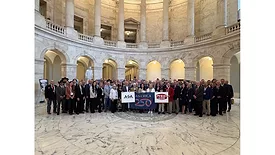
Among the primary topics discussed during congressional meetings was the need to strengthen workforce development initiatives and expand pathways into the skilled trades.
The House Agriculture Committee reported the long-awaited Farm Bill, which incorporates provisions of the Healthy H2O Act — legislation ASA has championed that enables rural residents, particularly those relying on wells, to test their water and apply for grants to fund corrective measures, including third-party-certified end-point filtration devices.
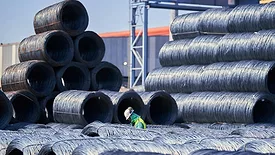
In the United States, the current steel tariff structure is rooted in Section 232 of the Trade Expansion Act, which imposes duties of up to 25% on imported steel, with some increases reaching 50% in recent policy adjustments. These tariffs were designed to safeguard domestic manufacturing and national security interests, but they primarily target raw steel and certain derivative categories, leaving gaps that global suppliers have learned to navigate.
Announced March 4, the initiative, Real Water Technical Assistance (RealWaterTA), refocuses federal resources on technical support and practical guidance for water systems, particularly those facing operational, financial or regulatory challenges.
Between tariff rulings, state product bans, federal efficiency standards and mounting workforce challenges, the PHCP-PVF channel is operating in an environment where regulatory shifts can alter inventory planning, product availability and pricing strategy almost overnight.
Now in its sixth edition, the report delivers a concise but comprehensive view of market performance, competitive shifts, and forward-looking demand trends—built on HARDI’s proprietary data, industry surveys, and expert analysis.
Emergency preparedness for plumbing systems in healthcare is vital, as they must remain operational and hygienic during regular use and crises. Water availability, pressure, and quality directly affect infection control and patient safety.
 RSS
RSS