Universal Design, Green Issues
ASA showroom manager have an affinity for “WaterSense” products.
Is “universal design” an effective marketing term or would “comfort design” be more acceptable to a wider audience? Will cities of the future have no sewers but find ways to recycle human waste safely?
These were among the questions considered at a Showroom Managers Council Meeting in June hosted by the American Supply Association. The meeting drew showroom managers from New Jersey, Ohio, Texas, Missouri, Massachusetts, Virginia, New York, Indiana and Illinois to learn more about universal design and “going green” from two expert presenters.
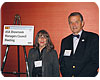
Elaine Ostroff, Hon. AIA, director of Access to Design Professions and founding director of Adaptive Environments, and Gunnar Baldwin, water efficiency specialist at TOTO and a charter director of the Alliance for Water Efficiency, were the featured speakers.
Ostroff stressed the importance of choosing the right words to communicate universal design.
“I’m not sure the term universal design [should be] used to market [the products],” she said. “It’s for in-house. People always know when there is a code word like ‘special ed kids.’” Instead, she suggested showroom staff should focus on the comfort and safety of the products for all users rather than labeling them for aging or disabled users.
Baldwin shared his view of the future: Cities with no sewers or buildings with independent waste treatment systems.
“There will be no off-site discharge,” he noted. “We will have learned how to recycle human waste safely.”
In addition, he said, graywater will be the only source of water for landscaping and irrigation. Storm water will be filtered and returned to underlying aquifers. Potable water will be very expensive. Bathrooms will be even more luxurious but more efficient. Wastewater treatment employees will be redeployed to manage and maintain multiple specialized neighborhood systems.
A pre-meeting survey of attendees conducted by ASA found that 75% of the showrooms represented are seeing more interest from customers in fixtures that will provide help for “aging in place” and 73.3% carry products with the WaterSense label.
Universal
design goes beyond the codes, addressing human-centered concerns.
A 30-inch high countertop is good for food preparation and can provide
support if it also extends over pull-out drawers.
Double-door refrigerators are easier to open and roll-out shelves
improve accessibility.
Provide places to grab in the bathroom, especially around the tub and
shower.
When marketing universal design, don’t focus on addressing the needs
of the handicapped but rather stress the amenities, comfort and safety.
Don’t remind people about their limitations. Instead, show them how
these products can be used to make life easier. Install a flat-screen
television in the showroom to present the product in context. Let people
identify with how the products are being used.
Educate your staff and contractor customers on how to market this
concept more effectively. Words make a difference.
In Japan, universal design has been embraced as a business
opportunity, referred to as the “silver market.”
The term “comfort design” may be acceptable to more people than
“universal design.”
About
8% of the electricity used in the United States is for the delivery and
treatment of potable water. That is the average - in California, 19% of the
electricity used is for water delivery. Also in California, 32% of the natural gas
consumed is for treating water and wastewater.
Saving water saves energy and reduces our carbon footprint.
Running a hot water faucet for five minutes consumes as much energy
as using a 60-watt bulb for 14 hours, according to EPA WaterSense.
Green plumbing fixtures and fittings reduce the volumes of potable
drinking water used and the resulting sewage produced, reducing environmental impact.
Water efficiency should be redefined in terms of gallons actually
used to do the job vs. gallons per minute or gallons per flush.
“High efficiency” toilets offer the most conventional, well-tested
toilet option to contribute to reducing potable water use by 20%.
Toilet height has been increasing. Today the average toilet height is
16-1/8 to 16-1/2 inches vs. 14 inches tall.
While the toilet may be considered the largest water user in a home,
other fittings and fixtures can also reduce potable water use.
The WaterSense label should be on display in your showrooms. It
serves as an identifier like Energy Star.
Look beyond the volume of flow or flush to see the big picture. If
the reduced flow of water means more detergents or chemicals are required to
clean the fixture, then pollution of the water supply becomes a
concern.
There are other ways to save water such as foot pedal rinsing and
sensor operation. Other options include graywater treatment and recycling and
rainwater collection, treatment and use.
For information on future ASA Showroom Manager Council meetings, visit www.asa.net.
Is “universal design” an effective marketing term or would “comfort design” be more acceptable to a wider audience? Will cities of the future have no sewers but find ways to recycle human waste safely?
These were among the questions considered at a Showroom Managers Council Meeting in June hosted by the American Supply Association. The meeting drew showroom managers from New Jersey, Ohio, Texas, Missouri, Massachusetts, Virginia, New York, Indiana and Illinois to learn more about universal design and “going green” from two expert presenters.
Elaine Ostroff, Hon. AIA, director of Access to Design Professions and founding director of Adaptive Environments, and Gunnar Baldwin, water efficiency specialist at TOTO and a charter director of the Alliance for Water Efficiency, were the featured speakers.
Ostroff stressed the importance of choosing the right words to communicate universal design.
“I’m not sure the term universal design [should be] used to market [the products],” she said. “It’s for in-house. People always know when there is a code word like ‘special ed kids.’” Instead, she suggested showroom staff should focus on the comfort and safety of the products for all users rather than labeling them for aging or disabled users.
Baldwin shared his view of the future: Cities with no sewers or buildings with independent waste treatment systems.
“There will be no off-site discharge,” he noted. “We will have learned how to recycle human waste safely.”
In addition, he said, graywater will be the only source of water for landscaping and irrigation. Storm water will be filtered and returned to underlying aquifers. Potable water will be very expensive. Bathrooms will be even more luxurious but more efficient. Wastewater treatment employees will be redeployed to manage and maintain multiple specialized neighborhood systems.
A pre-meeting survey of attendees conducted by ASA found that 75% of the showrooms represented are seeing more interest from customers in fixtures that will provide help for “aging in place” and 73.3% carry products with the WaterSense label.
Elaine Ostroff (L) with Gunnar Baldwin.
Elaine Ostroff on universal design
Gunnar Baldwin on going “green”
For information on future ASA Showroom Manager Council meetings, visit www.asa.net.
Looking for a reprint of this article?
From high-res PDFs to custom plaques, order your copy today!