Solving Comfort Challenges in Warehouses and High-Bay Spaces
Modine Heating's Jamie Tuinstra explains why comfort issues in large commercial spaces often stem from air movement rather than heating capacity.
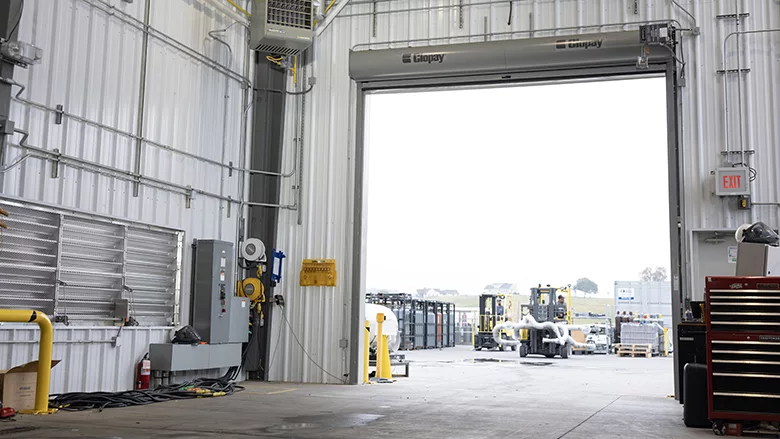
A warehouse manager walks the floor in the middle of winter and hears the same complaint: employees are cold. The heating system is running, the equipment is properly sized, and energy bills suggest plenty of heat is being produced. Yet, workers on the ground remain uncomfortable while warm air collects near the ceiling.
It's a scenario contractors encounter regularly in warehouses, manufacturing facilities and distribution centers. Increasingly, those experiences are changing the way commercial heating projects are approached. Rather than immediately adding more capacity, contractors are taking a closer look at airflow, heat distribution and how air moves through large, open environments.
Challenges such as temperature stratification, high ceilings, dock traffic and changing facility layouts can create comfort and performance issues even when heating systems are properly designed. As a result, distributors are seeing growing demand for solutions that improve circulation, reduce energy waste and deliver more consistent temperatures throughout a facility.
Supply House Times spoke with Jamie Tuinstra of Modine Heating about the trends driving commercial heating demand, the performance challenges contractors are facing, and why airflow is becoming one of the most important considerations in today's large-space heating applications.
What are you seeing right now in terms of demand for commercial heating in large spaces like warehouses and manufacturing facilities? What’s driving that activity?
We’re continuing to see strong demand in large commercial and industrial spaces like warehouses, manufacturing facilities, distribution centers, and retrofit applications. A lot of that is being driven by continued warehouse expansion, evolving facility usage, and increased focus on employee comfort and energy efficiency.
Building owners are also taking a harder look at operating costs. They want heating solutions that deliver more consistent temperatures throughout the space without simply increasing energy consumption. That’s leading to more conversations around airflow, heat distribution, and overall system performance instead of just heating capacity alone.
You’ve noted that contractors are moving away from simply increasing capacity. What’s pushing that shift in thinking?
Contractors have realized that simply adding more BTUs doesn’t always solve the problem in large open spaces. In many cases, the issue isn’t lack of heating capacity — it’s getting the heat where it needs to be.
High ceilings, stratification, dock traffic, and changing building layouts all impact comfort and performance. Because of that, contractors are paying much closer attention to airflow, circulation, and how the entire system works together to maintain consistent temperatures throughout the building.
Where are systems falling short today, even when they’re properly sized and installed?
One of the biggest issues is temperature stratification in high-bay facilities. Heat naturally rises, which can leave warmer air trapped near the ceiling while employees and work areas at floor level remain uncomfortable.
We also see challenges related to airflow management, air circulation around racking systems, and changing building layouts. Even a properly sized system can struggle if airflow patterns aren’t optimized for the application. In many facilities, the issue isn’t generating heat — it’s effectively moving and maintaining that heat throughout the occupied space.
How are airflow and heat distribution changing the way contractors approach these large, open environments?
Airflow and heat distribution have become a much bigger part of the conversation, especially in high-bay applications. Contractors are looking beyond the heater itself and taking a more complete approach to how air moves throughout the building.
There’s growing awareness that improving circulation and reducing stratification can help improve comfort at floor level while also helping heating equipment operate more efficiently. That’s changing how systems are designed, laid out, and specified from the start of a project.
What are some of the most common mistakes contractors make when heating high-bay or large open spaces?
One common mistake is focusing strictly on heating capacity without fully considering airflow and air distribution. Another is overlooking how building features like racking, dock doors, ceiling height, or process equipment impact overall heat movement within the space.
We also see situations where facilities are heated unevenly because equipment placement wasn’t optimized for the building layout. In large open environments, proper air circulation can be just as important as the heating equipment itself when it comes to achieving comfort and efficiency.
How is this shift influencing the types of equipment or system solutions contractors are asking for today?
Contractors are increasingly interested in integrated solutions that improve overall system performance rather than simply replacing equipment one-for-one. There’s growing demand for products that support better airflow management, improved temperature consistency, and higher operating efficiency.
We’re also seeing more interest in solutions designed specifically for high-bay and large open applications, including destratification technologies and systems that can help reduce energy waste while improving occupant comfort. Flexibility, controllability, and ease of installation are also becoming more important considerations.
For contractors looking to improve performance in these applications, what’s one thing they should be doing differently on their next project?
One of the biggest opportunities is evaluating airflow and heat distribution earlier in the design process. In large open spaces, comfort issues are often tied more to air movement than heating capacity alone.
Contractors that take the time to look at ceiling height, building layout, occupancy patterns, and circulation strategies upfront are typically seeing better performance, more consistent temperatures, and fewer comfort complaints after installation.
Looking for a reprint of this article?
From high-res PDFs to custom plaques, order your copy today!