Maximizing changes
Twelve reasons why a fire sprinkler contractor could bid high or low on a job.
Fire sprinkler contractors face factors common to all trades. Among those factors affecting a bid are competition to win the job, scope interpretation, applicable codes, unfamiliar technologies, premature bid package materials and incomplete water-supply data. These factors not only affect the cost to complete the job, but the time to complete it, as well as the performance and appearance of the system. Here are 12 reasons from a fire protection engineer’s perspective why a fire sprinkler contractor’s bid could be affected.
|
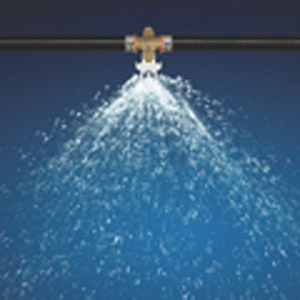
| Specific technologies may be required by scope, but could be overlooked or misunderstood by a bidder on a fire sprinkler installation job. Photo courtesy of Viega |
Competition
Being the lowest bidder may win the job, but at what cost? Who pays for items and time missed in the initial estimate? In an unstable economy, contractors will pursue work, profitable or not, just to keep their doors open and to retain skilled employees. Unprofitable work can still lead to a beneficial future business relationship.
Misinterpretation of scope
New construction vs. renovation or combination construction projects can hold many subtle cost additions. This could be something as simple as the client’s desire to have all exposed sprinklers painted to match an exotic color. As this would likely be a custom order from the sprinkler manufacturer, the bid should include it as well.
Incorrect code application
Stakeholders — including the user, client and landlord — and site location will affect what codes are applicable. Beyond National Fire Protection Association standards, common building code sources are Unified Facilities Criteria for U. S. government facilities and International Building Code for commercial facilities, as well as state, city and county codes with deviations from IBC. For example, the sprinkler design area per UFC requirements is twice the IBC/NFPA design area. This difference directly impacts fire-water capacity and water pipe infrastructure serving the system.
Suppression requirements
Clean-agent suppression systems, preaction systems, dry pipe zones, attic sprinklers, extended coverage sprinklers, special application sprinklers and rack storage sprinklers are examples of specific technologies that may be required by scope, but could be overlooked or misunderstood by the bidder. Interior environmental conditions and structural design will have an impact on how these technologies are applied, if at all. The other side is the scope might require a technology not appropriate for the application. A skilled contractor should be able to spot the difference or enlist advice before submitting a bid. If an issue is unclear, the bidder should request clarification. In the bid package, the bidder should try to include assumptions that support your bid.
Multiple (carbon-copy) buildings
One generic drawing set supplied for bidding on multiple buildings but mistaken for one building in scope is a common pitfall in the bidding game. Further complications arise from one generic floor plan supplied for bidding a multistory building but mistaken for a single-story or smaller building.
Understanding bid packages
Bidding on preliminary/60% design drawings instead of final “Issued For Construction” sets can lead to many misunderstandings. If a bid is forced to be based on a preliminary set of design drawings, the bidder should include a caveat to cover changes on all future design drawing sets.
Early-stage absentee bidders
Visits and pictures are worth “a thousand words,” or several thousand dollars in a bid. Some existing conditions are too complicated to be adequately relayed on design drawings. The contractor may see a more efficient approach during the site visit that was not apparent to the designer of the bid drawings. When a pre-bid walk-through is required or recommended, bidders are advised to make the trip.
Inadequate water source data
This could mean the difference between including a diesel fire pump in the bid vs. no pump requirement. Such a package add-on easily can exceed $100,000 and affect building space, exterior ventilation needs and sound abatement.
Water infrastructure
Does a new water main need to be run to the site? How deep does it have to be for freeze and crush prevention? Is the area made of sand or solid rock? Can the main be plastic? Will the main be dedicated or a combined fire and domestic supply? A dedicated fire main may have a fire pump off-site, which would save building real estate for other uses. Also, a dedicated fire main would not require a backflow preventer at service entry to a building. This reduces pressure losses through a backflow preventer as well as the space needed for equipment at the point of service entry.
Are any current or future water main or elevated water tank upgrades planned that will impact water supply flow and pressure to the site? A new loop connection in the main, change in water main pipe material, or a taller water tower installation can make a big difference in water flow and pressure to the project site.
What are the future construction projects planned in the region of the project site and how might that impact water supply? Codes do not generally require design for multiple fires or simultaneous fires in multiple buildings. What would affect fire-water supply is a significant domestic demand in another building connected to the same water main.
Existing equipment to be reused
What existing tank and pump equipment is to remain and support the new sprinkler system? Is current data available on tank materials, tank volume, pump capacity, orientation, pipe sizes, manufacturers’ manuals, maintenance records, and inspection and testing records? Will this equipment provide capacity for domestic systems? For example, residential domestic water demands may exceed sprinkler water demands in a dormitory. Coordination with the plumbing contractor for the domestic systems would be beneficial in this situation. However, the project scope should be clear on these conditions.
Backflow preventer requirements
What are the state and local requirements for backflow preventers? Double-check, single-check or reduced pressure zone principle? These variables can impact the pressure lost though the device, as well as how much space and cost is required for the device.
Specific equipment requirements
Are pressure reducers prohibited? Some municipalities and entities prohibit them. Are certain types of pipe and fitting materials prohibited or required? Are installed water meters permissible as a means of testing fire pump performance?
Is seismic system bracing required? This can be significant because every seismic brace is required to have an individual supplied calculation. Such calculations require designers’ time and concentration on discrete conditions of each brace location. Individual brace assemblies also can be costly, so an accurate count is useful.
The goal is to get the project, make money and get more work from a satisfied client. Using a checklist can prevent several of these issues from being overlooked in bidding fire suppression system work.
Looking for a reprint of this article?
From high-res PDFs to custom plaques, order your copy today!


