Connected Plumbing: An Intelligent Choice
Smart plumbing technology helps improve efficiency, conserve water, and simplify maintenance
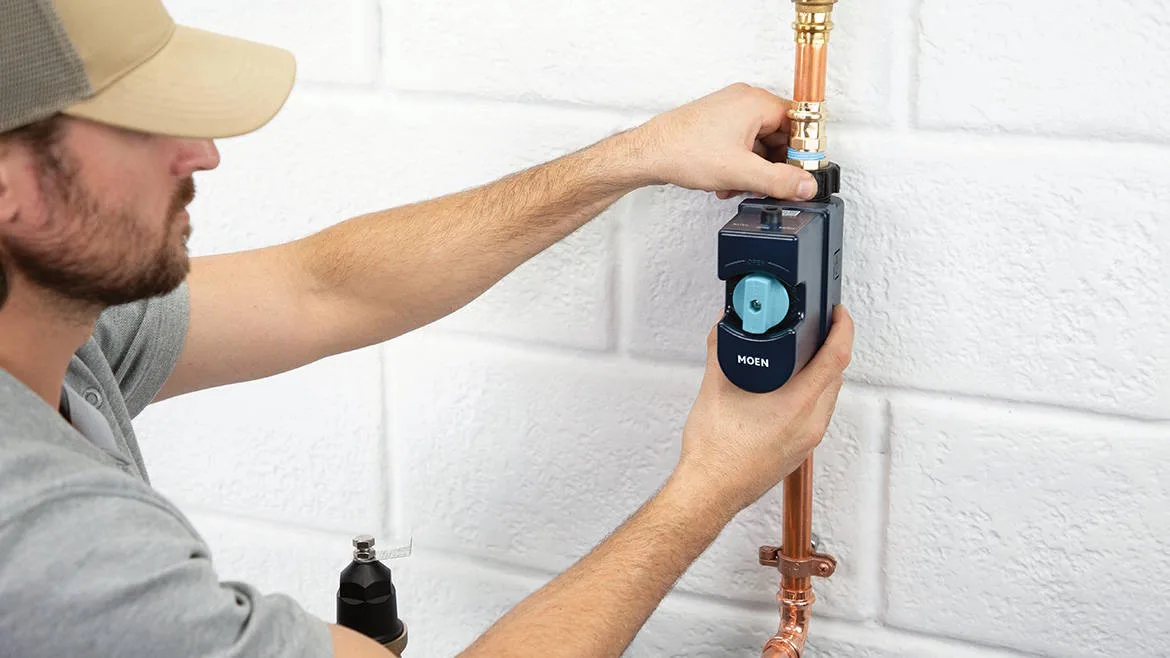
Connected plumbing technologies, including smart leak detection, faucets, water heaters, and water management systems, give contractors and building owners real-time insights that improve maintenance, conserve water, and enhance the user experience.
For a while now, building owners — and the trades that serve them — have benefited from connected systems. HVAC and lighting technologies are two examples, enabling both contractors and end users to remotely monitor, troubleshoot, program, or tweak configurations when a component fails or needs replacing. Now the plumbing industry has gotten on board with the development of intelligent tech that helps with the conservation, management, and protection of arguably the most valuable resource on the planet: water.
Eric Byrd, senior manager for connected success at Zurn Elkay, a water management systems developer with headquarters in Milwaukee, Wisconsin, observes that smart plumbing technology transforms a reactive maintenance and management process into a proactive one. For example, access to device-level data through a dashboard or app provides valuable information about system failures to technicians prior to them having to roll a truck. As a result, they can ensure they’re stocked with the right replacement parts and knowledge to solve the issue on site — the first time around.
Byrd notes that this is important in a climate where skilled labor is limited. “Customers are looking for ways to reduce, or do more with less,” Byrd said.
A Better Built Environment
A proactive approach to maintenance and repair contributes to a more comfortable building regardless of whether it’s a commercial or public space, or someone’s home.
“I like the automation and the ease of [connected plumbing],” said Amanda Kunst, northern district manager at Gerhard’s Kitchen, Bath & Lighting Store, operated by First Supply, a building products wholesale distributor with headquarters in Madison, Wisconsin. “The easier, more seamless user experience is what I’m most excited about.”
Kunst also observes that smart plumbing tech has gotten much more intuitive to integrate than it was when it first came onto the market.
“It’s easier for the plumber install it, and it’s set up so it’s relatively easy for the homeowner to personalize it themselves,” Kunst said. This contributes to a better user experience overall.
Kunst’s colleague, Rob Severson, corporate channel manager in the plumbing division at First Supply, relays that commercial buildings, hospitals, and schools are taking advantage of connected plumbing to manage water usage and to better troubleshoot and maintain their systems.
“Building owners want that data for them to [provide] a good user experience,” said Severson.
These days, the electronics are such that maintenance teams can identify, down to the sink, when there’s a problem in a large facility, for example.
“Because the one thing that drives people crazy is going into that airport restroom and that electronic faucet doesn’t work,” Severson said. “What’s exciting to me is [we have] the information to make sure that the user has the experience that you want them to have, whether it’s in a public restroom, a hospital, a university, or in our own homes.”
Smart water also makes for a safer built environment. Byrd cites bottle filling stations as an example: connected technology with device-level visibility will automatically send alerts when filters require changing. He argues that this is much more hygienic than swapping out parts based on an arbitrary schedule and manual process that doesn’t really account for how much these stations are being used.
Connected Plumbing: What’s in Style
At commercial and residential building products supplier Ferguson, with headquarters in Newport News, Virginia, Brittany Merritt, senior director of counters, observes that intelligent leak detection systems are in high demand, as well as smart water heaters, faucets, toilets, and showers. She notes that AI is an increasing presence in leak detection systems and water heaters, and highlights the remote temperature control functionality some tankless water heaters provide.
Severson adds digital thermostatic mixing valves, digital mixing valves that can detect legionella bacteria, smart backflow preventers, and flush valves that monitor water usage to the list. He also highlights the demand for smart showers that integrate with intelligent speakers, such as Alexa.
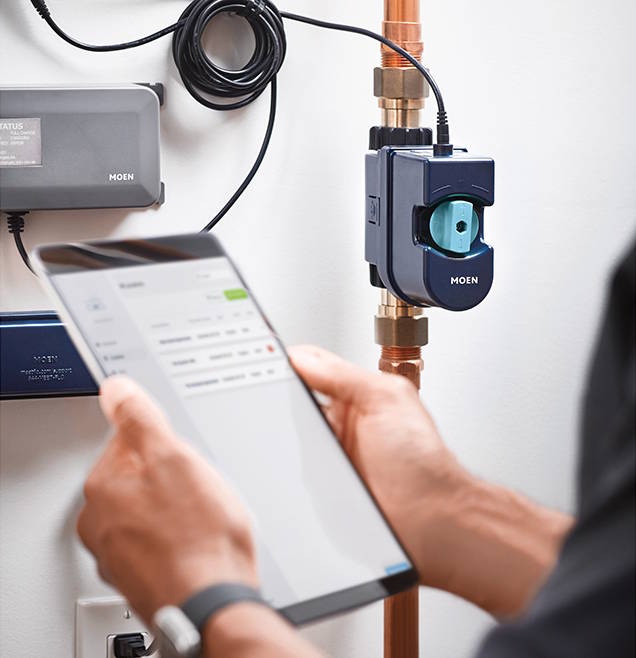
As connected plumbing technologies become more common in residential and commercial buildings, smart water management tools are helping improve efficiency, support preventive maintenance, and simplify system oversight. Photo courtesy of Moen Flo.
“The driver [behind this demand] is twofold: water and power conservation, and hygiene and safety,” Severson said.
Merritt believes that the demand for connected plumbing is consistent with how we live in general.
“I think what’s driving this innovation is that homeowners are increasingly expecting some level of connectivity within their homes, and plumbing is no exception,” Merritt said.
People like the convenience of being able to set precise temperature levels, receive real-time alerts, and use smart faucets.
“As someone who gardens and cooks often, I really appreciate the touch-free options to help keep my kitchen and utility spaces cleaner,” Merritt said.
Leak Detection
For Gabe Halimi, general manager of Moen Flo, a brand operating under the Deerfield, Illinois-based faucet manufacturer Moen, intelligent leak detection responds to the financial challenges many homeowners are facing today. These systems can monitor flow rates, pressure, and water temperature, and will automatically cut water off when they identify an issue. When a leak is stopped because it can cause significant damage, there is no need to make an insurance claim.
This is important as people continue to grapple with the high cost of living. Halimi cites the 2026 Insuring the American Homeowner Report published earlier this year by online insurance marketplace Insurify, based in Cambridge, Massachusetts, which found that insurance rates grew by 12 percent in 2025 — and have almost doubled since 2020. He adds that household water and sewer bills are also on the rise.
“Homeowners are looking for ways to push back on those costs, and smart plumbing is one of the few home investments that can actually do that,” Halimi said. “That financial reality, alongside growing water consciousness and strong interest from the insurance industry in incentivizing prevention, is accelerating adoption in a meaningful way.”
Halimi adds that some insurance carriers are offering reduced premiums for houses equipped with intelligent leak detection.
Specifying Smart Plumbing Tech
When selecting systems for a project, it’s necessary to have a clear understanding of where they are being installed. Merritt lists the following factors that wholesale distributors and their contractor customers should take into consideration:
1. Wi-Fi connectivity.
If the connection isn’t strong enough, it is difficult for these systems to operate on a consistent basis. Merritt also advises the specification of systems with manual override capabilities. “The last thing a homeowner wants is a system that cannot operate if Wi-Fi goes down or the power goes out,” she said.
2. Electrical outlet availability.
Merritt points out that many systems will require a nearby power source.
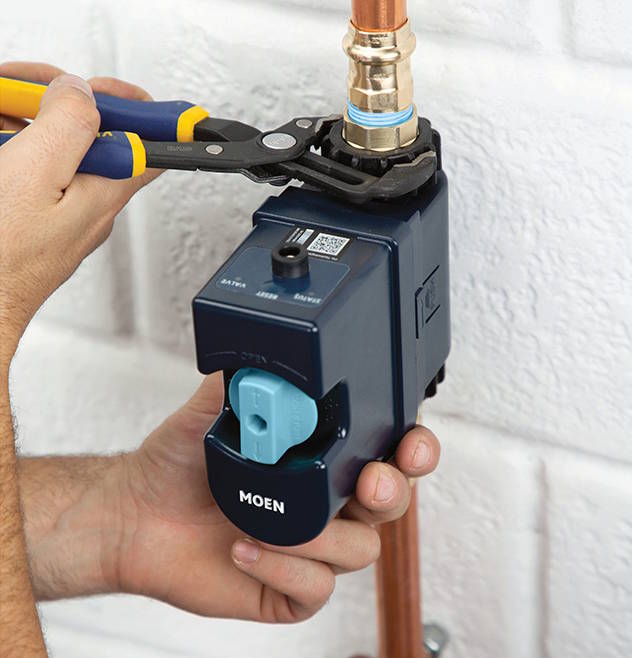
Connected plumbing systems help contractors and facility managers monitor water usage, identify maintenance needs, and respond to issues before they become costly disruptions. Photo courtesy of Moen Flo.
3. Vendor terms.
It’s important for wholesale distributors and contractors to understand how end customers may access the features they’re interested in. In some cases, Merritt notes, it’s necessary to sign up for a subscription to benefit from certain functions. There may also be compatibility requirements related to a mobile app or other smart systems.
Severson notes that facilities with integrated Building Management Systems (BMS) can be challenging due to incompatibility between these platforms and some connected plumbing tech.
“Multiple, different technologies in a building can cause issues between them, with crosstalk or interference,” Severson said. These deployments, he underlines, require qualified technicians that can resolve these issues.
At Zurn Elkay, Byrd observes that distributors should be prepared to answer the following questions: how does the technology communicate, and how secure is it? What ongoing costs are associated with this system? And, if the customer no longer wishes to utilize the smart features embedded in the tech, does this mean that they must replace their entire plumbing system?
One of the biggest barriers to entry, Byrd highlights, is when IT departments deem connected plumbing too risky. This is why they prefer systems that don’t need to be on the corporate network.
“If you don’t have to use their Wi-Fi or be, in any way whatsoever, involved with their infrastructure at a building level, the technology is going to be more accepted,” Byrd said.
Connected Plumbing, Connected Customers
At the residential level, Halimi argues that smart water management systems help strengthen the relationship between suppliers, their contractor customers, and homeowners.
“When a contractor installs a connected system, they are essentially putting a hand on the pulse of that home’s plumbing,” Halimi said. “The contractor can become the expert they call first, not just when something breaks.”
Halimi encourages suppliers and contractors to make the effort to establish themselves as the go-to source for these systems — if they’ve made the effort to get to know this tech inside and out. He argues that those who can teach homeowners how to use this tech effectively stand to enjoy an ongoing, long-term relationship with those customers.
“They become the trusted expert on that home,” Halimi said. “That relationship pays dividends for years, but it only happens if you know the product well enough to teach it.”
Looking for a reprint of this article?
From high-res PDFs to custom plaques, order your copy today!