Supply House Times logo Supply House Times
search
cart
facebook instagram twitter linkedin youtube
  • Sign In
  • Create Account
  • Sign Out
  • My Account
Supply House Times logo Supply House Times
  • NEWS
    • ASA NEWS
    • Company News
  • PRODUCTS
    • Interactive Spotlights
  • COLUMNS
    • Natalie Forster: From the Editor
    • Alicia Branham: Marketing Matters
    • Brad Williams: Succession Planning
    • Melissa Rasico: Luxury Plumbing Lounge
    • Letter from ASA President
    • Guest Columnists
    • Safety Columnists
  • MARKETS
    • Codes & Legislation
    • Heating & Cooling
    • Industrial PVF
    • Plumbing
    • Radiant & Hydronics
    • Solar Thermal | Geothermal
    • Technology
    • Women in Industry
  • BATH & KITCHEN PRO
    • Bath & Kitchen News
    • Bath & Kitchen Products
  • SPECIAL EDITIONS
    • B.I.G. Book Directory
    • Premier 150
    • Rep Locator Directory
  • MEDIA
    • Podcasts
    • Videos
    • eBooks
    • Webinars
  • RESOURCES
    • Radiant Comfort Report
    • Industry Calendar
    • Industry Links
    • Custom Content & Marketing Services
    • Market Research
    • Supply House Times Store
  • EMAG
    • EMAGAZINE
    • ARCHIVE ISSUES
    • CONTACT
    • ADVERTISE
  • SIGN UP!
Market SectorsColumnistsPlumbingHeating & CoolingGuest Columnists

Guest Column | Fred Simpson

Blending knowledge and advancements: How to successfully adopt new HVAC technologies.
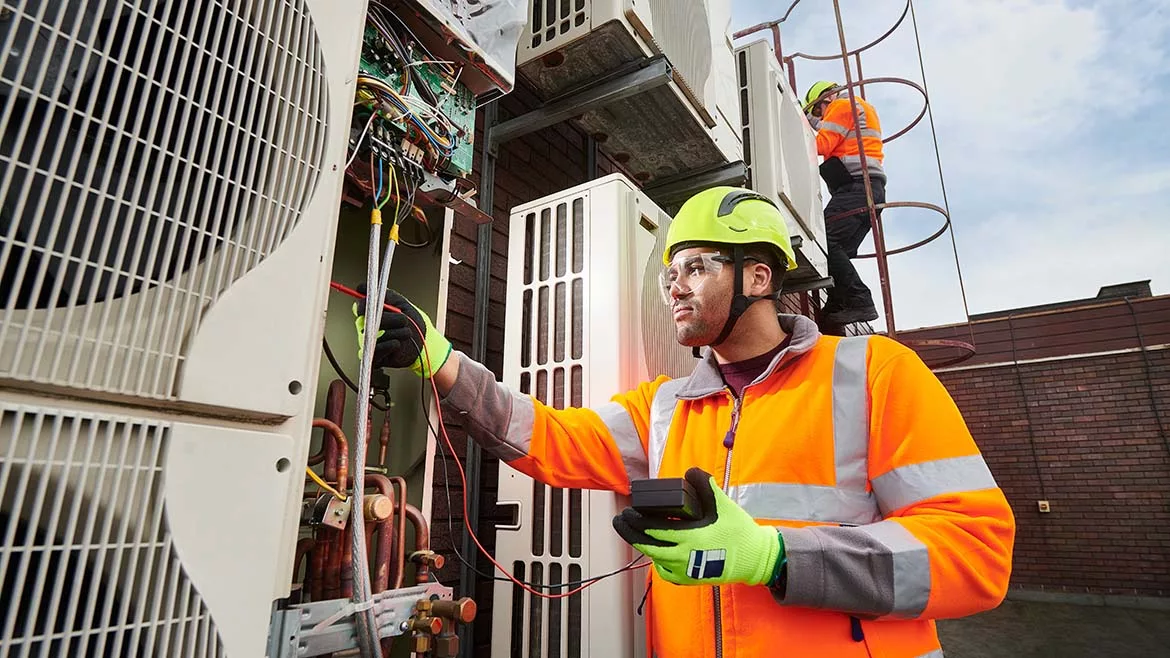
By Fred Simpson
Maintenance Engineer
sturti / E+ / Getty Images
March 18, 2026

It was Day 3 when my phone finally rang.

A stumped technician was on the other end of the line – and at the end of his wits. He had arrived at the jobsite two days earlier, called out to do a simple maintenance checkup.

The furnace seemed to be in perfect working order, the technician explained, except for one thing: All of the readings on his gauges were off. Day after day, he had tried all sorts of repairs to the furnace, but nothing brought those readings back to a normal range.

“What kind of gauge are you using?” I asked him.

“It’s a new digital gauge,” he answered.

I wanted him to test out my theory, so I suggested checking the furnace with his old analog gauge. Indeed, everything tested perfectly.

It turned out the technician had spent three days chasing a repair on a furnace that was in good working order. It was his gauge that had the problem.


The future of PHVAC is here

There’s an allure to new technology that calls us to use it.

Advancements are constantly rolling out to the HVAC industry, and even the most seasoned professionals are fascinated by the way they help us do our jobs more efficiently while keeping our customers more comfortable.

Take, for example, the growing popularity of digital communication systems. Because I work primarily with American Standard and Trane dealers, I’m most familiar with that manufacturer’s Link thermostat system, which gives remote access to both the end user and technician.

That means a homeowner could be out of town but get an alert that their furnace stopped working. In the past, that person might return home to a frigid house – or worse, a flood caused by a frozen pipe. But with Link technology, they learn about the problem and can proactively manage it right away.

And even though they might be hundreds of miles away, that homeowner can arrange for a technician to run diagnostics on their furnace without ever stepping foot in the empty home. In fact, the technician can pull a significant number of data points from the furnace, remotely checking everything from pressures and temperatures to blower activity. Then, he will have a good idea what the problem is and can bring the appropriate repair parts with him for an efficient, first-time fix.

With today’s digital communication systems, we are so far beyond the day of homeowner simply connecting to their thermostat remotely. This elevates HVAC technology to a whole new level, one that benefits both the homeowner and technician through time savings and energy efficiency.


Embrace the Future, Retain the Past

As AI technology continues to change the landscape of HVAC repair, the attentive service tech will need to consciously return to the basics of our craft.

For me, the basics began when I entered the field in 1982. We didn’t have the advantage of Chat CPT or Google to help us diagnose a problem or order quick-delivery parts. So, we were forced to rely on our training and understanding of the units before us.

It will always be tempting to rely more on gadgets than on our own training, but there’s a fine line between repairing equipment and troubleshooting technology. If a technician doesn’t have a solid HVAC foundation, it can be easy to begin chasing down a rabbit hole of diagnostic problems.

That’s why I suggest technicians use these advancements as a tool, not a crutch. Here’s how:

Avoid tunnel vision. An open mind allows you to balance information from the homeowner with the data coming from the unit, along with your own physical assessment, when making a diagnosis.

Verify your theory with data. Once you have a good idea of what the problem might be, use the data you’ve collected to support or reject that theory.

Keep your expectations realistic. Too often, we fall in love with new technology and expect it to be the perfect solution for every situation.

That’s precisely what happened on a case I was brought in to help resolve. Trying to prioritize efficiency, the technician replaced a large HVAC system with one that ended up being too small for the home’s capacity. Once the weather grew cold, the homeowners were left chilly and unhappy with their purchase.

Rapidly growing advancements in our field require extra attention to details and dedication to remaining up-to-date. Our industry has the opportunity to deliver better service than ever before with HVAC systems that are more intuitive, comfortable, efficient and sustainable than we could have imagined.

Let’s embrace it, and double-check it.

KEYWORDS: contractors HVACR PHCP-PVF plumbing

Share This Story

Looking for a reprint of this article?
From high-res PDFs to custom plaques, order your copy today!

Fred simpson
Fred Simpson is an HVAC Trainer for O’Connor Company, providing continuous education and troubleshooting assistance to technicians throughout the Midwest. O’Connor is a distributor of premium HVAC equipment and parts with seven locations in Oklahoma, Kansas, Iowa, Missouri and Nebraska.

Recommended Content

JOIN TODAY
to unlock your recommendations.

Already have an account? Sign In

  • Stock financial index show successful investment on property business and construction industry with graph and chart for presentation and report background.

    2025 predictions: Twelve trends supply houses should know

    As 2024 ends, I’ll review last year’s predictions and...
    PHCP and PVF Technology & Operations
    By: Brad Williams
  • Background of aerial view of Industrial container port part of shipping in nighttime with a blue overlay.

    2025 Next Gen ALL-STARS: Top 20 Under 40 PHCP-PVF Professionals

    The future of the PHCP-PVF industry is being shaped by a...
    Plumbing
    By: Natalie Forster
  • Premier 150: The top PHCP-PVF Distributors of 2026

    Premier 150: The Top PHCP-PVF Distributors of 2026

    Combined revenue across this year’s Premier 150 once...
    Premier 150
    By: Natalie Forster
Manage My Account
  • eMagazine
  • Newsletters
  • Manage My Preferences
  • Online Registration
  • Subscription Customer Service

More Videos

Popular Stories

Jeff Dice

Built to Scale, Designed to Stay Local: Lessons From Winsupply at 70

Commercial outlook tech looking at pipes

Commercial Market Outlook: Retrofit Projects Lead the Way

A graphic showing an arrow moving upward, with "PHCP-PVF Price Increases" written above it.

PHCP-PVF Price Increases May 2026

2026 Premier Rankings

Events

December 30, 2030

Webinar Sponsorship Information

For webinar sponsorship information, visit www.bnpevents.com/webinars or email webinars@bnpmedia.com.

View All Submit An Event

Poll

Identifying Daily Time Loss Areas for Your Team

Where does your team lose the most time each day?
View Results Poll Archive

Products

The Water Came To A Stop

The Water Came To A Stop

See More Products

Download the FREE 2025 Water Conservation, Quality & Safety eBook

Download the Fifth annual Bath & Kitchen Pro eBook

Related Articles

  • Hands, calculator, and various data charts and graphs on a white background.

    New year, new strategies: How to kickstart your marketing goals

    See More
  • Aerial shot of nuclear power plant in California.

    A $62 billion opportunity for industrial water: How to break into the market

    See More
  • How to heat old churches

    See More
×

Stay in the know on the latest PHCP-PVF industry trends.

Get tailored content delivered your way.

JOIN TODAY!
  • RESOURCES
    • Advertise
    • Contact Us
    • Directories
    • Store
    • Want More
    • Plumbing & Mechanical
  • SIGN UP TODAY
    • Create Account
    • eMagazine
    • Newsletter
    • Customer Service
    • Manage Preferences
  • SERVICES
    • Marketing Services
    • Reprints
    • Market Research
    • List Rental
    • Survey/Respondent Access
  • STAY CONNECTED
    • LinkedIn
    • Facebook
    • Instagram
    • YouTube
    • X (Twitter)
  • PRIVACY
    • PRIVACY POLICY
    • TERMS & CONDITIONS
    • DO NOT SELL MY PERSONAL INFORMATION
    • PRIVACY REQUEST
    • ACCESSIBILITY

Copyright ©2026. All Rights Reserved BNP Media, Inc. and BNP Media II, LLC.

Design, CMS, Hosting & Web Development :: ePublishing