RF, RFID, WMS, VDP, PTL: Warehouse Benefits Beyond The Technobabel
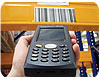
If you think that RF and RFID are the same, welcome to the group of the confused. If VDP and PTL are unfamiliar terms, you are a member of an even larger group. These acronyms refer to warehouse technologies that are explained here. Some of them boost accuracy and productivity more than bar code reading - and should be seriously considered. These technologies can be implemented without using a warehouse management system (WMS). None of these are cheap, and all require that a warehouse (and yard, for PVF distributors and others) be arranged and operated properly, or these technologies could make things worse.
RF
Radio Frequency, more commonly called “RF,” refers to reading bar codes to capture data (and, when picking in a warehouse, to the validation of what is being picked vs. what should be picked). RF has been in use for a long time, so no further explanation of its operation is warranted.RF reading devices are still expensive, as is the equipment that communicates with the devices and with the ERP system. The use of RF increases picking accuracy, and sometimes can increase productivity. Its limitations are described next.
RFID
Radio Frequency IDentification (no, the capital I and D are not a mistake) does not involve bar codes. It refers to the reading of data stored in a memory chip that is embedded in or attached to a box, piece of equipment, etc.; or embedded in a self-adhesive label. In addition to an item’s code number, a chip, or “smart label,” can store unit- or carton-specific data such as date of manufacture, manufacturer’s Web site address, serial number, etc. A “read/write” chip allows data to be added or updated by each user (e.g., date of receipt), which allows tracking items at every stage of a supply chain.Expensive, wireless devices send a signal toward a chip, which then transmits the data to the device. The data is then transmitted by the device to the computer system that communicates with all the devices; the data is then verified on the main system. These devices don’t need a direct line of sight to read, nor do items have to be standing still. And, several chips can be read simultaneously, cutting the time for tasks like taking physical inventory.
Chips can withstand high temperatures and humidity, and are unaffected by dust, dirt, etc. - conditions that have made many bar codes unreadable.
The benefits are so huge that Wal-Mart has mandated that all of its suppliers place RFID chips on pallets and some cases, and the U.S. military has started to use them. But the cost of chips is still so high that most manufacturers aren’t considering using them; most distributors won’t get the benefits of them for years.
VDP
Voice Directed Picking refers to a “voice recognition and synthesized-voice-response” system. Each user wears a device that he or she has “taught” to recognize his/her speech patterns. To each device is attached earphones and a microphone. The main ERP system transmits to the VDP server data about each order ready to pick, and the server stores this data. Based on the VDP software determining which person is available at any time, the VDP server transmits data to a specific device. The device transforms the data into that user’s voice, telling him/her the location to go to, the SKU number involved, and the quantity. As the user picks, he/she “tells” the device the SKU number involved and the quantity and task performed; the speech is transformed into data, which is transmitted by the VDP server back to the main system (for verification). A similar sequence of steps is used for put away.VDP is more expensive than RF, requiring a second computer, transceiver devices, the equipment that communicates with the devices and with the second system, and interfacing to the main system. Yet VDP is used in many sizeable warehouses because it enables reading-free and hands-free picking, which clearly saves time. And it overcomes language problems and any problems using the small keypad on an RF gun.
PTL
Pick To Light involves one LCD display device located next to the pick slot for each item. The main ERP system transmits to the PTL server data about each order ready to pick, and the server stores this data. When a picker presses a button to indicate that he/she is ready, the PTL server turns on a light on the display for each item involved in the order and in that picker’s zone; the quantity to pick is displayed on each LCD. Each device also contains buttons that a picker uses to confirm the pick (and turn off the light), and buttons he/she can use to enter the actual quantity picked if that quantity differed from the quantity displayed. With PTL, several pickers are usually involved in picking any given order, but the pickers work independently of each other. Each LCD display unit is snapped on to a special cable that must run through the front of all bins/slots. There may also be a device mounted at the end of each aisle and used by a picker to indicate that all picks in that aisle are complete.PTL is the fastest method of picking, sometimes reducing a workforce by 50%. But the cost of the second system, the display devices and the special cable, and their installation, make this the most expensive technology.
WMS
Warehouse Management System refers to special software that can be installed without devices, but almost always is installed with RF or VDP.A WMS does things that RF, VDP, etc., can’t do: In real-time, it tracks the location(s) of every item in the warehouse, and the quantity stored in each location; during receiving, it verifies what is being received vs. what was ordered; during put away, if slot locations are “floating,” it determines which slot to use for each item; it determines when it’s time to pull overflow/bulk down, how much to pull, and where to put it (especially if pick slots float); for picking, it determines how much to pick from pick slots and how much to pick from bulk/overflow. Locations are real-time selected to minimize travel time, subject to constraints such as requiring temperature control or bonded storage. For fixed-location slots, a WMS can be used regularly to determine how to re-slot a warehouse to reduce labor effort.
Savings from a WMS result from spending less time putting away or picking items. Costs include the software, training, (usually) a separate computer, and interfacing with the main system.
Looking for a reprint of this article?
From high-res PDFs to custom plaques, order your copy today!


