Sloan’s filtration solutions help schools and public facilities qualify for grants and comply with legislation
These products address concerns with lead and PFAS contamination.
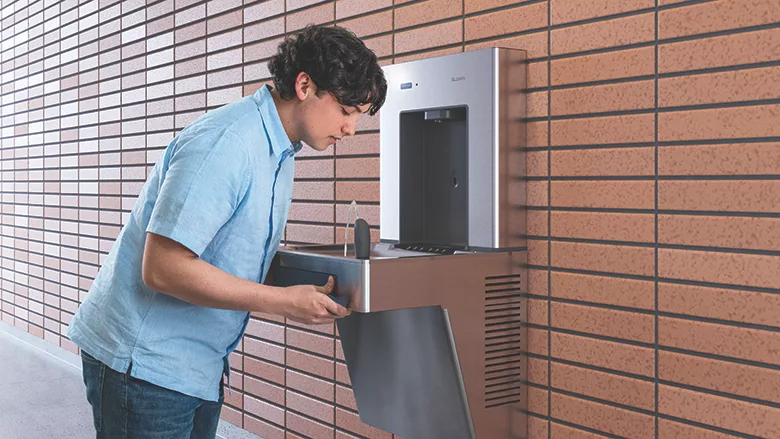
Sloan is helping schools and other public facilities in Michigan, New Jersey, Maryland, and other states nationwide qualify for grants and comply with legislation that focus on safe, clean drinking water in schools, daycare facilities and other locations.
Sloan's DropSpot Bottle Fillers and Water Coolers are designed to deliver safe, clean water with every use, addressing growing concerns about lead and Perfluoroalkyl and Polyfluoroalkyl Substances (PFAS) contamination in drinking water systems. Sloan has provided numerous schools and other public facilities with DropSpot Bottle Fillers and Water Coolers that meet and exceed standards through NSF/ANSI 53 and 42 certifications for lead and particulate reduction.
“When schools and other public facilities make clean drinking water a top priority, they trust Sloan for solutions that meet and exceed the strictest standards,” said Adam Myers, Sloan product line manager for bottle fillers and accessories. “Our products help ensure that drinking water is not just filtered but comprehensively treated for the broadest spectrum of potentially harmful chemicals, going beyond standard PFAS reduction and providing enhanced peace of mind.”
Many municipalities across the country have taken steps to filter PFAS from drinking water, but all filtration is not the same. Many filters reduce only the two most common PFAS compounds, PFOA and PFOS, leaving thousands of compounds unfiltered. Beyond basic compliance, Sloan's filtration technology addresses PFAS contamination through Total PFAS filtration that reduces all individual PFAS compounds, not just the most common ones. These 3,000-gallon, IAPMO-certified filters also reduce lead, microplastics, cysts, Class 1 Particulates, chlorine, and other contaminants while complying with NSF-42, 53, and 401 standards to make healthier water available to schools and other public facilities.
Michigan's Filter First Initiative, which took effect in October 2023, protects children from exposure to lead in drinking water by requiring K-12 school districts and childcare centers to install lead-reducing filters on all consumptive fixtures. Many Michigan school districts operate in buildings constructed before the 2014 Federal Safe Water Drinking Act, making compliance essential for student safety.
New Jersey’s Securing Our Children’s Future Bond Act, administered by the state’s Department of Education, is offering over $94 million in grants. That equates to $6,000 per water outlet in a school that has any level of water contamination that can be used toward purchasing bottle fillers and water coolers with enhanced filtration and associated installation expenses. New Jersey Schools must apply for the grant by October 31, 2025.
Maryland’s House Bill 277, which took effect on October 1, 2025, requires that new buildings – or buildings undergoing renovation where water coolers are already needed – must include at least one water bottle filling station or a combined bottle filler and water cooler. This law is designed to simplify access to clean drinking water and to fill reusable water bottles instead of using plastic water bottles or single-use cups.
Looking for a reprint of this article?
From high-res PDFs to custom plaques, order your copy today!