Heating Help
Dan Holohan: Seeing the world in a different way
Embracing new perspectives can make history.
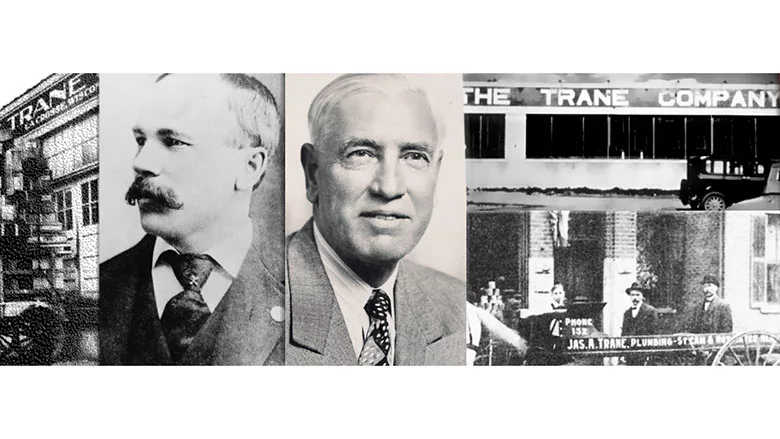
I was listening to James Trane the other day. He was speaking from Chicago in 1902, telling me that his system of steam heating using small pots of mercury was the best way to go.
Mercury.
That got me thinking about how my classmates and I used to play with mercury while our science teacher smiled as he wandered the room, watching us poke the dangerous stuff with our adolescent fingers. Life in the ‘50s sure was interesting.
Science had known since 1865 that mercury vapors can cause altered sensations in the face, tunnel vision, deafness, loss of coordination, impaired speech and other sad things. But in spite of this knowledge, the world didn’t get around to actually controlling mercury until 2009. In fact, in 1914, they were dusting crops with the stuff. That didn’t work out so well. And by the time I was in grade school in the ‘50s, medical science knew even more about mercury poisoning, but there I was poking a palmful of silvery globs as Mr. Criscola smiled down on me.
So it’s understandable that Mr. Trane was confident at the time because hardly anyone was seeing mercury as anything but cute in 1902. Here’s what he had to say to me:
“In introducing to the heating engineer, architect and owner the Jas. A. Trane Gravity Vacuum System of Steam Heating, we do so only after making careful tests of our system and arriving at the conclusion that vacuum heating procures for the user more than we have for years dared to claim for it.
“Vacuum heating is not new, but, on the contrary, has been employed for many years. Nearly all the large buildings in this country are warmed by the vacuum system of heating.
“In presenting the Jas. A. Trane Vacuum System, we bring before the public the first vacuum system that is perfectly automatic, and which relieves the user heretofore necessary to employ a competent man to manage the apparatus.
“At the present, there are many Trane Vacuum Systems in actual operation, and it is only after ascertaining its capabilities and advantages over all other modern methods of heating that we introduce to you our Mercury Seal - the long-sought-for solution to this important problem.”
James Trane then goes on for 27 pages to explain how the system works. To keep it short, what he did was replace the air vents on a one-pipe steam system with small-diameter tubes that dipped down a mercury pot, placed under each radiator. The steam would shove the air through the pipes, into and out of the radiators, down the vent tube, and through the mercury. Once the air had escaped the system, steam would enter the radiators, give up its latent heat, condense and shrink dramatically back into a liquid state. And since air couldn’t work its way back through the mercury seals in the little pots, a considerable vacuum would form within the steam system. And since water boils at a much lower temperature when under a vacuum, the folks in the building could burn much less coal.
Other folks were doing similar things with mercury at the time. Mark Honeywell comes to mind. His Heat Generator for hot-water systems also contained a pot of mercury, and these iron beasts are still lurking in some old basements, so please know what you’re looking at on your travels. And if you should see something you don’t recognize, please put your hands in your pockets and go ask questions.
What strikes me in all of this is how James Trane built a fine heating company by seeing things in a different way. He yearned to make steam heating better, and in his time, he did. He invented and patented a number of devices - valves, traps, fittings, and controls, each a bit different from what was already out there. But to me, his greatest accomplishment was that he was father to Reuben Trane.
Reuben was born in 1886, the same year James started his plumbing-and-heating company in La Crosse, Wisconsin. At the time, the shop was the largest P&H building in the state; and old photos of the large and very classy showroom show that James was a fine marketer.
Reuben grew up in the business and graduated from college in 1910 with a degree in Mechanical Engineering. He worked for a while in sales for a Milwaukee tool manufacturer, and then joined his father in 1913 to incorporate The Trane Company and manufacture the steam-heating items James had been busily inventing. It was time to move away from jobbing.
Now this is the part of the story that fascinates me most.
In 1923, Reuben came up with the idea of what we today call a convector. He was looking for something lightweight that could replace the heavy, cast-iron radiators of the time. His convector (we use that name but he didn’t) consisted of a cabinet containing a copper coil that could work with either steam or hot water.
He shopped his idea around the industry, visiting all the major manufacturers of cast-iron radiators, and as you might expect, they all told Reuben to take a hike. They didn’t want to kill the golden goose. But that wasn’t a problem for Reuben. He just shrugged and decided to kill the goose for them.
I listened to Reuben talking about his convectors in 1927. Here’s what he had to say:
“Replace that unsightly radiator with efficient heating furniture. This is a radical improvement, yet based on sound heating principles. The Trane Heating Cabinets are the long-awaited successor to the radiator. Architects, engineers, and the public are quickly responding to this new achievement. They recognize that here, at last, is the opportunity to escape the limitations of existing methods - to attain new standards of heating efficiency - to make heating a constructive factor in the planning of beautiful interiors.
“Trane Heating Cabinets have all the decorative possibilities of the finest furniture. This is not a modified radiator. It’s a new type of equipment, heating by convection.”
When you consider a product you suspect consumers and the trade are not liking, such as bulky, cast-iron radiators with very hot surfaces, and you then define what you have to offer as furniture, not as just another radiator, you are going to get attention.
And keep in mind this is happening in the 1920s, a time when free-standing, cast-iron radiators have lost their Victorian magic. The radiators of the ‘20s were Art Deco, lacking all that elegant, metal scrollwork. They were modern and geometric, and they were in the way.
Now consider all the convectors you’ve seen in your life. Each of those convectors began as a piece of furniture in the consumer’s mind, and that is simply brilliant when it comes to marketing.
Reuben and the Trane folks grabbed hold of that furniture and ran with it. A few years later, they added a fan to the convector cabinets and created fan-coil heating, which became an entirely new market, one that allowed the company to survive the Great Depression.
And then the serendipity of a worldwide pig-iron shortage as war loomed in the ‘30s, made Trane’s copper-based convectors even more appealing to contractors and the public. Trane grew and moved into air-conditioning and so much more, but I smile when I think that it all began with a fella in Wisconsin who liked to mess around with small pots of mercury. Anything must have seemed possible to him, and to his son.
They each saw the world in a different way. And just look at what they accomplished.
Looking for a reprint of this article?
From high-res PDFs to custom plaques, order your copy today!