The latest on U.S. imports-exports
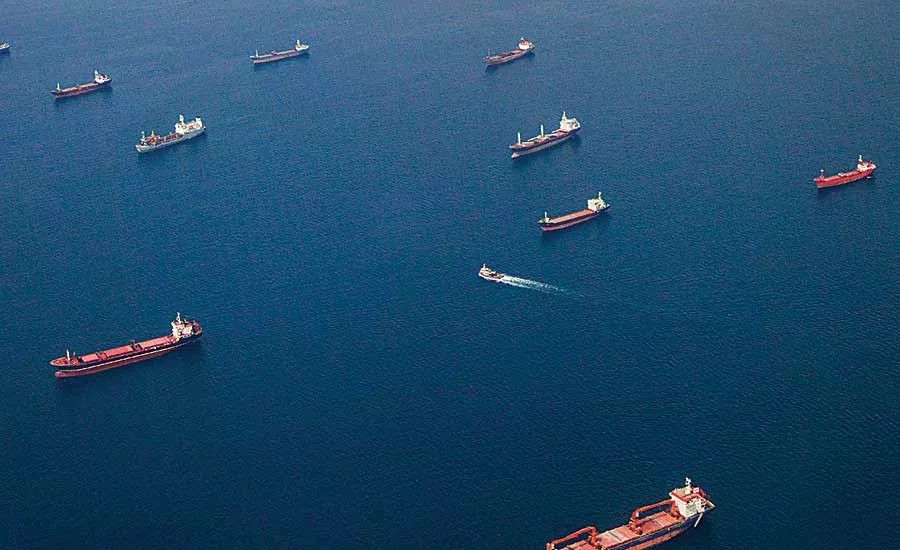
While U.S. oil and natural gas production has generated record numbers in the past five years, with demand reaching more than 20 million barrels a day, the preceding Obama administration kept its doors wide open to imports from Saudi Arabia, Venezuela and to a lesser extent from Middle East countries in general.
Some of this is due to the world-leading 140-plus sophisticated refineries the U.S. has built to handle the massive Brent crude available from most global oilfields, with the exception of the U.S. itself, along with Nigeria and Angola in Africa. These produce the light type of oil available from practically all America’s oil shales, primarily in Texas, and neighboring Southwestern oil shales, such as found in Louisiana, Oklahoma and some nearby states.
While keeping its import doors open, with more than half its 20 million barrels per day available to foreign imports, the U.S. has been the only “economic sucker player” to aid and abet foreign production without any benefit from equal export allowance from other world energy-producing nations.
This can be attributed to the desire of the Obama administration, and to some extent, the preceding two terms of George W. Bush, to wean the U.S. away from fossil fuels (oil, natural gas, coal) without any quid pro quo in return.
This anti-U.S. production policy to enhance renewables and kill off domestic energy production has left the U.S. as the lone world energy producer to fulfill its “questionable global energy purity” status, while the OPEC producers, etc., continue to go forward full blast. They fraudulently sign off on various “purity hoaxes,” while letting “Uncle Sucker” hold the bag. The rejected Trans-Pacific Partnership and the Paris global purity plan, which President Trump rejected, stand as valid examples of these anti-American treaties’ attempts to reduce America to an increasingly smaller producer, while simultaneously setting records in consumption.
This is one of the reasons leading GOP senators have joined with the Democrats to kill off the fast-growing U.S. energy producers, explorers, refiners and derivative end-use products in favor of foreign countries that falsely sign off on their “high-minded treaties,” while letting the U.S. and its superior production facilities hold the bag with “foreign hypocrisy” getting the benefits.
The current confrontation by members of the GOP and most Democrats is due to President Trump’s attempt to return the U.S. into a beneficiary of import-export trade leadership, while his predecessors had supported the backing of world agencies (United Nations, World Bank, International Monetary Fund, etc.), as America’s so-called partners. These have left the United States’ economic leaders and workers carrying the freight.
2018 U.S. export outlook
While 2018 is destined for the rebuilding of America’s manufacturing production, the U.S.’s exports of oil and natural gas may provide a major thrust in reversing the export/import trend of the last 16 years.
Much of this turnaround will be provided by record outward-bound shipments of America’s West Texas Intermediate oil and a prospective record-setting natural gas outlay. The latter is being readied to achieve an all-time high international record breakthrough. These optimistic projections are based on the following certainties and probabilities now under development:
1) An almost certain business-friendly new tax structure, the first in 30 years.
2) The likely imposition of an “import embargo” on oil and natural gas, which currently is reaching record production levels, only covering 50% of U.S. demand of oil- and natural gas-developed derivatives, exceeding 20 million barrels per day.
3) A current record U.S. investment reserve ready to be invested in both independent businesses, as well as conglomerate units, finding the U.S. ever more attractive for placement of American-based units, rather than the decades-long shrinkage of the recent past.
4) Enhancement of training programs by commercial and industrial U.S. firms, providing the crafts and building skills necessary to provide the manpower to fill the needs of new and/or enlarged factories to match the domestic and export needs that are available and forthcoming.
These likely are to grow in the months ahead as a more rational tax structure and the reversal of the Environmental Protection Agency’s power back to the individual states; rather than the job-reducing past 16 years, which used EPA, Dodd/Frank and the overrated climatology propaganda to turn the U.S. into a 68% consumption economy.
5) Also awaiting manpower and grandiose plans are the long-delayed upgrading of the nation’s infrastructure, which has not been actively approached for the past 50 years.
This has resulted in the prevention of America’s overall geography, especially pipelines, highways, bridges and dams, from even being upgraded to a bare subsistence level. Fifty-five-thousand dangerous bridges are a sad testimonial to America’s too-long-delayed infrastructure rebuilding, excelled even by China and Russia, according to knowledgeable observers.
Continuing resistance to this dire necessity is especially strong in California, Illinois and New York, where ultra-liberal governments place long-term climatological purity ahead of bringing the world’s greatest nation back up to snuff.
Will the U.S. retain No. 1 global economic standing?
As the early emersion of 2018 gains its tentative footing, America’s varied problems and opportunities question its capability of maintaining the world’s No. 1 position. It’s a global standing that arose from its post-World War I League of Nations leadership under President Woodrow Wilson, but it reached its peak at the end of World War II when only the U.S. and the Soviet Union remained as superpowers on the world scene.
While the U.S. remained as a military and fearsome aggressive power structure, the U.S. dwarfed both World War II winners and losers in the economic arena, as well as the overwhelming military superpower; and as the rebuilder of Europe’s economic superstructure to a mainstay of global economic development. This required both Western world global economic stability as well as a target for America’s post-World War II growth and Western European society’s re-stabilization.
Furthermore, the U.S. population practically tripled from its 120 million individuals in 1945 due to a massive worldwide immigration. Although much of this has become a political football due to its more recent numbers of Mexican immigrants, many had come from Asia, Europe and South America. Such immigration is particularly important due to an increasing shortage of employees in the agricultural and broad-based labor sectors, while domestic replenishments are decreasing as U.S. family sectors are lessening family sizes.
Although the U.S. gross domestic product sector is still world No. 1 at $18.75 trillion per annum, the gap with runner-up China is closing. With the bulk of U.S. GDP based on a record-high consumption segment (68%), President Trump’s reversal of America’s manufacturing and production sector diminution may not come in time or be strong enough to stem the tide of China’s almost unlimited growth.
America’s manufacturing employment drop from 20 million to less than 10 million in the last 20 years is no match for the doubling of Beijing’s manufacturing/technical employment during the same period. At the current rate of development in both the U.S. and China’s one/two positions, the latter may well become the world leader within the next five years if significant U.S. reversals are not being implemented in a timely fashion.
Much of America’s No. 1 defensive position lies in the cutback of its vast overpayments for the United Nations, International Monetary Fund, World Bank and NATO. Only a realistic reinstatement of U.S. global expenditures, cutback of overstaffed agencies and a more rational tax system, motivating the return of 2 trillion U.S. dollars generated in American factories overseas, will maintain America in the global top spot.
Looking for a reprint of this article?
From high-res PDFs to custom plaques, order your copy today!