2015 International Plumbing Code features several changes
That’s right, ICC just completed the 2015 Plumbing Code — emphasis on the year 2015. Yes it appears to be a little early for completing the 2015 Code, but that is how the new three-year cycle works with ICC. The only changes that can be made to the 2015 Plumbing Code are to the administrative section of the code located in Chapter 1.
|
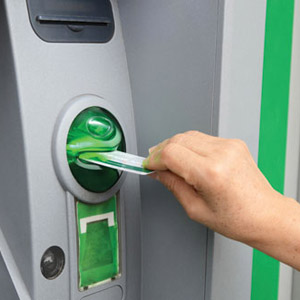
| A new requirement in the 2015 IPC states a quick transaction facility with a customer area less than 300 sq. ft. (such as an ATM in a small area of a building) does not require public toilet facilties. Photo Credit: IStockphoto.com/dombili |
The final voting occurred at ICC’s recent annual meeting in Portland, Ore., and presented some interesting results. The hearing drew a crowd of about 1,000 people onsite and many more watching online. When electronic voting took place there was constantly more than 200 votes cast by jurisdictional members.
Water shockers
One of the biggest surprises is the approval of the new rainwater sizing requirements resulting from the ASPE Research Foundation’s study. The new sizing method will require manufacturers to provide flow data to plumbing engineers for sizing storm drainage piping. A plumbing engineer will be required to calculate the ponding level at the roof drain during a 100-year storm of 60 minutes in duration. As one colleague commented after reading the report, the results will either be smaller or same-size drains and larger pipe. That’s an accurate overview of that change.
Another major change is the rewrite of the graywater and rainwater collection chapters. Currently, there is only Chapter 13 entitled “Gray Water Recycling Systems.” That chapter has been renamed “Non-Potable Water Systems.” A new Chapter 14 is entitled “Subsurface Landscape Irrigation Systems.” In effect, the old Chapter 13 is divided into two chapters with greatly expanded requirements. Nonpotable water can now be provided from any source other than wastewater containing urine or fecal matter. The chapter contains requirements for storage, filtering, disinfection and materials.
One area always subject to a lot of discussion is fixture requirements — how many, where they are located and what type. Many of the changes that received public comments were denied by the membership. The approved changes include a new exception for public fixtures in quick transaction buildings. As the code currently reads, if you have an ATM available to the public inside a small area of a building, toilet facilities must be provided. The new requirement states that a quick transaction facility with a customer area less than 300 sq. ft. does not require public toilet facilities. This would also include dry cleaners, pizza takeout, newspaper stands and similar facilities.
Bottled water dispensers were added as equivalent to a drinking fountain. However, a minimum of 50% of the fixtures must be drinking fountains. With the added definition of “water dispenser,” even a dispenser on a refrigerator would count toward the requirement for drinking fountains.
A new standard has been added for accessible fixture coverings. Most of the major manufacturers of trap and riser protective covers already are listed to ASME A112.18.9.
Green thumbs down
A number of green issues were denied by the ICC membership. The concern was to not put too much green in the plumbing code when it cannot be justified as protecting public health, safety or welfare. One change that was defeated is a proposal to require a water-supplied fixture to be located upstream of non-water urinals. This was placed in the Green Code, but not the Plumbing Code. A follow-up code change will now be submitted to the Green Code to remove the requirement.
All changes to the hot water recirculation requirements also were defeated. One change would have restricted the pump on recirculating systems to be operated by the user of the fixture, a flow switch or similar activation. The concern is the requirement would not permit the continuous operation of a pump.
Also denied was the lowering of plumbing fixture flow rates. With the removal of the federal pre-emption, this was the first attempt to add more water conserving requirements to the Plumbing Code since the early 1990s. While the flow rates were not lowered, the sizing requirements were changed to reflect lower water uses. The design of the water distribution system can now take into account lower water supply rates. This will allow plumbing engineers to use more realistic values for sizing the distribution system.
Pipe comings and goings
There were some shocking results for drain-waste-vent requirements. The temperature limitation of 140° F was removed from the code. Any temperature of waste can discharge to the drainage system. However, when the waste temperature is greater than 140°, the piping material must be rated for the higher temperature. Many thought the limitation of 140° was based on the use of plastic pipe. The requirement predates plastic pipe and was originally added to the code based on the temperature in which the galvanizing is removed from steel pipe. Both PVC and ABS can handle temperatures higher than 140°.
A new code section was added for replacement of underground sewers by pipe-bursting methods. The material required for the replacement is high molecular weight polyethylene.
Another plastic pipe change removes the requirement to prime PVC joints for non-pressure DWV installations. For many old-timers in the audience, the use of primer always elicited hours of testimony in past years. Many thought primer would never be removed for PVC joints. However, testimony was overwhelmingly in support of this change with no real opposition.
A new requirement for food-handling sinks requires each sink drain to discharge independently to a waste receptor (indirect waste). This has been standard practice in plumbing engineering for many years, but it was never a code requirement.
Trap seal protection was revised and allows one of four methods of protecting the trap seal. The methods previously allowed were the water-supplied trap seal primer and the waste-supplied trap seal primer. Added to the allowable methods are a reclaimed water trap seal primer and a barrier-type trap seal protection device. The latter must conform to ASSE 1072.
The new code will not be published for another year-and-a-half. As previously mentioned, the administrative section will be up for review in the 2013 code change cycle.
I would like to wish all of you a very Merry Christmas, Happy Hanukkah, Happy Holidays and a Happy New Year.
Enjoy your family and forget about codes and standards for a few days.
Looking for a reprint of this article?
From high-res PDFs to custom plaques, order your copy today!