Making Money By Mining Technology
J & K Sales finds a mother lode right beneath their noses.

Information technology is expected to boost productivity and reduce costs. What makes this a man-bites-dog story is that the dazzling efficiencies realized by J & K Sales Associates (Manchester, NH) don’t rely upon arcane, customized software programs geared to a select business audience.
No, the most interesting thing about J & K’s system is that it’s available to almost all of us right under our noses. The key driver is Microsoft Outlook, which many of you reading this have loaded on your own computers. Odds are you use it for email and a few other simple functions while ignoring capabilities we non-techies tend to refer to a little scornfully as “bells and whistles.” The folks at J & K figured out that those bells and whistles constitute a mother lode of precious resources waiting to be mined.
“Anyone can do what we do,” said Carolyn Crummey, who heads up operations for the rep firm. “It’s just a matter of reading all the instructions and figuring out how to apply the capabilities to benefit your business.”
She’s way too modest. Read enough instructions and maybe some of us could pilot a space shuttle. But how many people outside of the astronaut corps have the patience and aptitude to figure it all out?
“This is the person who makes it go,” offered J & K owner Karl Grabowski, pointing at Crummey. She has led the way implementing the system step-by-step for more than 10 years. One of her not-so-secret “secrets” is taking advantage of Outlook’s ability to mesh with other Microsoft programs such as Word and Excel templates to create a system of seamless documentation and cross-referencing. They also meld other non-Microsoft programs such as Kodak Image viewer and Adobe into the system.
Perfecting the system required getting all personnel involved to scrutinize internal procedures so that documents get handled efficiently without sacrificing customer service and vendor support. The result is virtually a paperless business. About the only paper J & K regularly generates are invoices from the warehouse, which they could live without but which most customers want.
Compared to the hurly-burly of most rep offices, J & K’s resembles a library. People sit quietly at their desks tracking down information in seconds what would send counterparts in other offices scurrying every which way. Thanks to subject lines that follow precise protocols, information gets retrieved in short order from a variety of menus. Sales orders, for instance, can be looked up by customer name, by manufacturer, or by P.O. number. Orders placed five years ago can be retrieved within seconds without anyone moving from their desk. People don’t waste time in meetings since virtually all internal company business gets dealt with online, including a single daily memo containing everything that’s newsworthy to J & K employees. Salespeople in the field access the system in real time via laptops. J & K operates buy-sell with many lines, and it only takes a few mouse clicks for anyone in the field or office to check inventory.
They can’t tell their customers how to run their business, of course, so many orders and correspondence still come through via old-fashioned faxes. J & K doesn’t even own a fax machine, but uses a fax server that converts faxes into electronic files.
J & K does not employ a single IT staffer per se, but everyone there has a feel for technology as a condition of employment. Grabowski compares it to the military, where everyone learns basic soldiering skills before moving on to an occupational specialty. In J & K’s army, soldiers master computer skills like close order drill.
“You can’t do anything without good people,” he reminded. “We like to hire smarts over experience. Resumes aren’t important to us.”

The communications platform is the most elaborate. It features an open architecture in which people track multiple windows on a single screen. One window is for individual e-mail, which is accessible only to that person. Other windows appear that are relevant to the job at hand, be it management, customer service, technical service, sales administration, A/R and purchasing. Two people in the office are designated as “quarterbacks” charged with initial routing of incoming files. Management has the capability of “ghosting” individual computer screens to protect sensitive information; otherwise, most information is accessible to everyone so that all staffers can see who is handling what at any moment.
Let’s say it’s a customer order. The QB who takes charge forwards the email with a label consisting of manufacturer’s code, customer name and PO#. She then routes it to an “incoming orders” section. When someone in the company handles it, that person’s initials appear on screen next to the file showing that it is being worked upon. When filled it goes to a completed order section in another window. Different types of faxes or emails might be routed to public sections identified as “customer correspondence … technical correspondence, etc.”
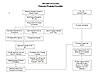
Hundreds of process flow procedures have been hammered out with input from all participating employees. The procedures then get codified into simple flow charts (see example below right on this page) that tell everyone in the loop step-by-step how to proceed with handling various documents. This makes it easy for any newcomer to pick up the system quickly. It also prevents orders or requests from getting lost under a stack of papers on someone’s desk. “It’s a complete check-and-balance system,” Grabowski noted.
The communications platform also draws from Outlook’s calendar function that coordinates staffing and material requirements for the scores of trade shows, open houses, counter days and other events attended by J & K personnel in the course of the year. Every staffer’s whereabouts get tracked day by day, week by week. If they need literature, poster signs or other materials for the event, a simple click of a button suffices.
Printed in large red letters on each call report is a slogan developed by Grabowski: A salesperson’s value is determined by the amount of information they gather rather than the information they dispense. “It’s more important to me what they learned than what they sold,” he insists.
The idea is to get salespeople thinking about the purpose of each call and what they hope to accomplish. A notes section at the bottom of the form invites salespeople to contribute observations and insights. Grabowski reads scores of these reports each day, and routinely forwards copies to J & K principals as a way of keeping them abreast of market intelligence. “Most reps spend a lot of time on the phone with manufacturers to discuss what’s happening, and that gets very time-consuming when you have a dozen lines,” he said. “This keeps those phone calls to a minimum.”
Technical support call reports entail different parameters but are similarly detailed. All of it is geared toward satisfying customer needs and gathering strong market intelligence for vendors.
This time they did have to go outside the company and splurge on extraneous software. It cost them all of $149 plus tax at Staples to purchase a “Front Page” off-the-shelf Web site development program to produce their Intranet.
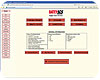
When J & K staffers log on to their computer, it defaults to the Intranet lead page, which looks much different from what outsiders see. J & K’s log on leads to the logos of all of their manufacturers, linked to their respective Web sites. This suffices for many information needs. Other points and clicks take them to literature requests, pricing and technical binders or other repetitive types of information. (Shown on screen shots pictured here.)
Within J & K’s Intranet is stored every document sent by any of its manufacturers over the past 10 years. Staffers can retrieve those documents within five seconds, and within another five seconds fax or email it anywhere.
As with the communications and activities platforms, the Intranet is uniform in appearance and function. New people can be productive right out of the gate in responding to customer requests.
Being so dependent on technology, J & K’s system is loaded with redundancy and backups. They run five servers with swappable drives, with an eight-disk auto changer backing up more than 350GB of data nightly. Tapes are removed daily and tapes from the previous night are stored off site, a standard precaution in case of fire or some other catastrophe at the office. “We have not had any scary moments with our current configuration - knock on wood!” said Crummey.

The answer lay in the fact that J & K’s employment is at 23 people. That’s five fewer than existed years ago when their IT push got started and their agency handled much less volume. They haven’t laid people off, but as the staff diminished through normal attrition they discovered no need to replace the departed personnel. Estimate what it costs in salary and benefits to employ five people of talent and you’ll get an inkling of the dollars involved.
“We reps are in what I describe as a hamster-wheel revenue trap,” said Grabowski. “Historically manufacturers reps have looked at two avenues in order to create additional revenues - increase sales of our existing product lines or add more lines. The problem is, the more sales we add for our core lines, the greater the need to add staff to support this sales increase. This tends to work out as a revenue wash. Meantime, the option of adding new lines is attractive in theory, but in practice we end up diluting our efforts with our core manufacturers and tend to add overhead to our businesses.
“There is a third way for reps to escape this hamster wheel of revenue generation. It is the compression of internal transaction costs. This system is our agency’s way of compressing our costs and creating a revenue stream that we exclusively control,” he said.
Grabowski sees a lot of trends beyond his control that are not aligning in favor of independent reps. Consolidation, commoditization, buying groups and margin pressures at all stages of the supply chain point to a future in which the rep’s role will entail more service than selling. So he has taken many of the cost-compressed dollars his company has accrued to build up the engineered product sector of J & K’s business. To illustrate, he whipped out a four-inch thick binder stacked with technical call reports conducted by J & K staff in recent times. “This is our way of building value in the channel,” he pronounced.
He left with a tip for fellow reps. “I can document more than $1 million worth of revenue that we’ve saved thanks to ideas picked up through AIM/R during our 12 years of participation,” said Grabowski of the independent rep organization on whose board he serves as vice president of membership. “If any rep is looking for a big payoff on investment, give me a call.”
Karl can be reached at 800-654-0415, karl@jandksales.com.
Information technology is expected to boost productivity and reduce costs. What makes this a man-bites-dog story is that the dazzling efficiencies realized by J & K Sales Associates (Manchester, NH) don’t rely upon arcane, customized software programs geared to a select business audience.
No, the most interesting thing about J & K’s system is that it’s available to almost all of us right under our noses. The key driver is Microsoft Outlook, which many of you reading this have loaded on your own computers. Odds are you use it for email and a few other simple functions while ignoring capabilities we non-techies tend to refer to a little scornfully as “bells and whistles.” The folks at J & K figured out that those bells and whistles constitute a mother lode of precious resources waiting to be mined.
“Anyone can do what we do,” said Carolyn Crummey, who heads up operations for the rep firm. “It’s just a matter of reading all the instructions and figuring out how to apply the capabilities to benefit your business.”
She’s way too modest. Read enough instructions and maybe some of us could pilot a space shuttle. But how many people outside of the astronaut corps have the patience and aptitude to figure it all out?
“This is the person who makes it go,” offered J & K owner Karl Grabowski, pointing at Crummey. She has led the way implementing the system step-by-step for more than 10 years. One of her not-so-secret “secrets” is taking advantage of Outlook’s ability to mesh with other Microsoft programs such as Word and Excel templates to create a system of seamless documentation and cross-referencing. They also meld other non-Microsoft programs such as Kodak Image viewer and Adobe into the system.
Perfecting the system required getting all personnel involved to scrutinize internal procedures so that documents get handled efficiently without sacrificing customer service and vendor support. The result is virtually a paperless business. About the only paper J & K regularly generates are invoices from the warehouse, which they could live without but which most customers want.
Compared to the hurly-burly of most rep offices, J & K’s resembles a library. People sit quietly at their desks tracking down information in seconds what would send counterparts in other offices scurrying every which way. Thanks to subject lines that follow precise protocols, information gets retrieved in short order from a variety of menus. Sales orders, for instance, can be looked up by customer name, by manufacturer, or by P.O. number. Orders placed five years ago can be retrieved within seconds without anyone moving from their desk. People don’t waste time in meetings since virtually all internal company business gets dealt with online, including a single daily memo containing everything that’s newsworthy to J & K employees. Salespeople in the field access the system in real time via laptops. J & K operates buy-sell with many lines, and it only takes a few mouse clicks for anyone in the field or office to check inventory.
They can’t tell their customers how to run their business, of course, so many orders and correspondence still come through via old-fashioned faxes. J & K doesn’t even own a fax machine, but uses a fax server that converts faxes into electronic files.
J & K does not employ a single IT staffer per se, but everyone there has a feel for technology as a condition of employment. Grabowski compares it to the military, where everyone learns basic soldiering skills before moving on to an occupational specialty. In J & K’s army, soldiers master computer skills like close order drill.
“You can’t do anything without good people,” he reminded. “We like to hire smarts over experience. Resumes aren’t important to us.”
J&K owner Karl Grabowski and Carolyn Crummey,
in front of an Intranet screen showing all their manufacturers.
A Three-Legged Platform
Grabowski describes the underlying architecture of his company’s system as “a three-legged stool,” resting upon: 1. communications; 2. activity management; 3. Intranet.The communications platform is the most elaborate. It features an open architecture in which people track multiple windows on a single screen. One window is for individual e-mail, which is accessible only to that person. Other windows appear that are relevant to the job at hand, be it management, customer service, technical service, sales administration, A/R and purchasing. Two people in the office are designated as “quarterbacks” charged with initial routing of incoming files. Management has the capability of “ghosting” individual computer screens to protect sensitive information; otherwise, most information is accessible to everyone so that all staffers can see who is handling what at any moment.
Let’s say it’s a customer order. The QB who takes charge forwards the email with a label consisting of manufacturer’s code, customer name and PO#. She then routes it to an “incoming orders” section. When someone in the company handles it, that person’s initials appear on screen next to the file showing that it is being worked upon. When filled it goes to a completed order section in another window. Different types of faxes or emails might be routed to public sections identified as “customer correspondence … technical correspondence, etc.”
Hundreds of process flow procedures have been hammered out with input from all participating employees. The procedures then get codified into simple flow charts (see example below right on this page) that tell everyone in the loop step-by-step how to proceed with handling various documents. This makes it easy for any newcomer to pick up the system quickly. It also prevents orders or requests from getting lost under a stack of papers on someone’s desk. “It’s a complete check-and-balance system,” Grabowski noted.
The communications platform also draws from Outlook’s calendar function that coordinates staffing and material requirements for the scores of trade shows, open houses, counter days and other events attended by J & K personnel in the course of the year. Every staffer’s whereabouts get tracked day by day, week by week. If they need literature, poster signs or other materials for the event, a simple click of a button suffices.
One of many procedural flow charts developed by
J&K, this one is for handling exception pricing.
Activity Management
The activity management platform pertains to the sales and technical support functions of the rep business. Outside salespeople are responsible for filling out detailed call reports, although the task has been simplified so that much of the information requires nothing more than clicking some boxes. The report template is divided into five segments that Grabowski identifies as the “sales cycle,” labeled: Purpose … Probe … Intro/Demo …Proposal … Followup. “All of it can happen within five minutes, or it can take years,” he said of the sales cycle.Printed in large red letters on each call report is a slogan developed by Grabowski: A salesperson’s value is determined by the amount of information they gather rather than the information they dispense. “It’s more important to me what they learned than what they sold,” he insists.
The idea is to get salespeople thinking about the purpose of each call and what they hope to accomplish. A notes section at the bottom of the form invites salespeople to contribute observations and insights. Grabowski reads scores of these reports each day, and routinely forwards copies to J & K principals as a way of keeping them abreast of market intelligence. “Most reps spend a lot of time on the phone with manufacturers to discuss what’s happening, and that gets very time-consuming when you have a dozen lines,” he said. “This keeps those phone calls to a minimum.”
Technical support call reports entail different parameters but are similarly detailed. All of it is geared toward satisfying customer needs and gathering strong market intelligence for vendors.
Retrieving manufacturer information is
simplified by screen setups like this.
Internet vs. Intranet
Visit the company’s Web site at www.jandksales.com and you’ll find a rather humdrum electronic brochure listing their manufacturers, a little bit of company background and contact info. Grabowski doesn’t think the Internet is an important marketing tool to a rep firm, although it may be for manufacturers and distributors. So he and Crummey determined their Web site could be more valuable internally than externally.This time they did have to go outside the company and splurge on extraneous software. It cost them all of $149 plus tax at Staples to purchase a “Front Page” off-the-shelf Web site development program to produce their Intranet.
When J & K staffers log on to their computer, it defaults to the Intranet lead page, which looks much different from what outsiders see. J & K’s log on leads to the logos of all of their manufacturers, linked to their respective Web sites. This suffices for many information needs. Other points and clicks take them to literature requests, pricing and technical binders or other repetitive types of information. (Shown on screen shots pictured here.)
Within J & K’s Intranet is stored every document sent by any of its manufacturers over the past 10 years. Staffers can retrieve those documents within five seconds, and within another five seconds fax or email it anywhere.
As with the communications and activities platforms, the Intranet is uniform in appearance and function. New people can be productive right out of the gate in responding to customer requests.
Being so dependent on technology, J & K’s system is loaded with redundancy and backups. They run five servers with swappable drives, with an eight-disk auto changer backing up more than 350GB of data nightly. Tapes are removed daily and tapes from the previous night are stored off site, a standard precaution in case of fire or some other catastrophe at the office. “We have not had any scary moments with our current configuration - knock on wood!” said Crummey.
This screen tracks correspondence with each of the
agency’s manufacturers.
The Payoff
One needs to sit through a three-hour demo, as I did, to fully appreciate how systematic and comprehensive J & K’s system is. But where’s the payoff? I asked.The answer lay in the fact that J & K’s employment is at 23 people. That’s five fewer than existed years ago when their IT push got started and their agency handled much less volume. They haven’t laid people off, but as the staff diminished through normal attrition they discovered no need to replace the departed personnel. Estimate what it costs in salary and benefits to employ five people of talent and you’ll get an inkling of the dollars involved.
“We reps are in what I describe as a hamster-wheel revenue trap,” said Grabowski. “Historically manufacturers reps have looked at two avenues in order to create additional revenues - increase sales of our existing product lines or add more lines. The problem is, the more sales we add for our core lines, the greater the need to add staff to support this sales increase. This tends to work out as a revenue wash. Meantime, the option of adding new lines is attractive in theory, but in practice we end up diluting our efforts with our core manufacturers and tend to add overhead to our businesses.
“There is a third way for reps to escape this hamster wheel of revenue generation. It is the compression of internal transaction costs. This system is our agency’s way of compressing our costs and creating a revenue stream that we exclusively control,” he said.
Grabowski sees a lot of trends beyond his control that are not aligning in favor of independent reps. Consolidation, commoditization, buying groups and margin pressures at all stages of the supply chain point to a future in which the rep’s role will entail more service than selling. So he has taken many of the cost-compressed dollars his company has accrued to build up the engineered product sector of J & K’s business. To illustrate, he whipped out a four-inch thick binder stacked with technical call reports conducted by J & K staff in recent times. “This is our way of building value in the channel,” he pronounced.
He left with a tip for fellow reps. “I can document more than $1 million worth of revenue that we’ve saved thanks to ideas picked up through AIM/R during our 12 years of participation,” said Grabowski of the independent rep organization on whose board he serves as vice president of membership. “If any rep is looking for a big payoff on investment, give me a call.”
Karl can be reached at 800-654-0415, karl@jandksales.com.
Looking for a reprint of this article?
From high-res PDFs to custom plaques, order your copy today!