50 Green Building Trends For The Future
When Supply House Times published its first issue, green was a color, not a movement. Not even Kermit the Frog was on the scene yet to tell us that being green isn’t always easy.
Looking ahead to the next 50 years, being green will not only get easier, it will be all that we know. Regardless of how one might feel about predictions of climate change and global warming, one prediction is certain: Sustainable homes and buildings are the present and the future, just one of 50 green building trends we expect to see before Supply House Times celebrates its 100th birthday in 2058.

It’s not a fad and it’s not going away. The business and investment opportunities, coupled with healthier living and a healthier planet, will only grow. The National Association of Home Builders (NAHB) reports that sustainable homes will represent 5-10% of all housing starts by 2010.
2. Sustainable green.
That’s not a redundancy. Sustainable green means products and performance that meet the expectations of building owners and consumers, as well as installers and technicians. This includes issues of affordability, performance and labor requirements to meet the growing market. The first 1.6-gpf toilets, rushed to market under legislative timing, are a good example of green that was not sustainable.
3. Increased awareness that SUVs aren’t the culprit.
Green living is often associated with trading SUVs for hybrids, but homes - and especially buildings - impact the environment far more than what we drive. The EPA reports that energy use by buildings and plants accounts for nearly half of all U.S. energy consumption.
4. Green from green.
Jeffrey Immelt, GE chairman and CEO, hasn’t committed his corporation to sustainability just to be a nice guy. He believes it’s the right thing to do for shareholders as well as the earth. Innovators in the building industry will be similarly rewarded.
5. Less green to go green.
As innovations are pioneered, prices for sustainable technologies are already coming down and will continue to do so, saving not only on operating costs, but initial purchase and installation costs as well.
6. Eco-Moms (and Eco-Dads, Eco-Kids, etc.).
A recent New York Times article profiled groups of “Eco-Moms” who support each other in finding ways to live more sustainable, yet realistic lives. Whether driven by climate change concerns, rising utility bills or even religious conviction, demand will grow for building professionals to provide solutions that work for this generation and those to follow.
7. Not so big houses.
As many Hollywood stars are finding, it’s hard to ask others to be green while living in 10,000+-sq.-ft. homes.
Greenwashing is the term for products that are over-hyped, yet under-deliver on true sustainability. Look for third parties such as the EPA with its WaterSense and EnergyStar programs to gain prominence in analyzing and certifying green claims. Independent scientific testing will be used to verify marketing claims and solidify the trust of specifiers, installers and homeowners.
9. National, non-competing standards.
This may be a wish as much as a prognostication. Although regional issues such as droughts may be the impetus for change, manufacturers will need national standards in order to innovate and deliver new technologies efficiently, rather than by state or even by county.
10. General acceptance of high-efficiency flushers.
While the general public - and more than a few plumbers - are still wary of toilets that use less water, California’s new law mandating HETs by 2010 will likely be followed across the country as trust builds in the proven performance.
11. Less water, same experience.
Faucets and showerheads that use up to 40% less water than code are here today, with engineered solutions that meet the definition of sustainability by being enjoyable and satisfying to use.
12. Greywater reclamation.
Greywater reclamation systems can reuse water from sinks, washing machines, showers and bathtubs to flush toilets and irrigate landscaping.
13. Runoff Reduction.
Paved surfaces in cities and suburbs mean rainwater sweeps up everything from oil to pesticides to animal waste for a polluted mix that eventually ends up in streams and rivers. Look for more porous alternative paving materials, as well as a concentrated effort to build more green space into new communities.
14. Reusable rainwater.
Related to runoff reduction is capturing and reusing rainwater, through specially designed roofing and paving. Contractors will be in the forefront of systems to move water from collecting cisterns to where it’s needed in homes and buildings.
15. Right-sizing for high-efficiency comfort.
Heating and cooling systems use the most energy in homes and buildings. Systems can’t deliver on promised efficiencies if they aren’t properly sized.
16. Simpler “plug and play” installation.
Newer technology won’t be widely accepted in a tight labor market that limits the time available to train installers and technicians. Manufacturers are pioneering more “plug and play” solutions that make it easier for installers and technicians to master complex systems.
Water heating accounts for the second largest energy use in homes. Tankless water heaters are the standard in most of the world, except the U.S., yet the operating costs are 25-40% less than conventional tank water heaters. Tankless water heaters have the added advantage of being small enough to be installed near the point of use, reducing waste while waiting for hot water.
18. Here comes the sun no. 1.
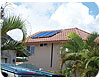
Prices and complexity of solar thermal technologies will come down, making it easier to integrate solar water heating. Passive systems can be designed for water to flow naturally from the collection tank to point of use, although pump systems mechanically delivering water are still the most popular in North America.
19. Here comes the sun no. 2.
More homes and buildings will be built to make the most of existing light through placement of high R-value windows and skylights to reduce reliance on electrical power.
20. Mold-resistant products.
Products engineered to resist mold will improve health and indoor air quality.
21. Hydronic comfort.
The Hydronic Heating Association notes that any given volume of water holds almost 3,500 times as much heat as the same amount of air, for the same temperature rise. Water-based heating and cooling systems also contribute to improved indoor air quality, as particulates and allergens are not blown through the home or building.
22. Fewer VOCs.
Volatile organic compounds (VOCs) found in paint, wallcoverings, floor coverings, cabinets and furniture can trigger breathing issues, allergies and worse. Early replacement options left a lot to be desired in performance, but newer technologies are hard to distinguish from the original products.
23. Fresh air, clean air.
Energy-recovering ventilators and whole-house air cleaners will be as desirable as Sub-Zero refrigerators when Eco-Moms shop for new homes.
24. Planning for building orientation.
One of the showhouses at this year’s International Builders’ Show was built to take advantage of the natural cross-currents from a nearby body of water to help keep the home cool and comfortable.
Installers are being trained right now on new forced-air systems that will use the more ozone-friendly R-410A refrigerant, which will be mandated in all systems manufactured after Jan. 1, 2010. Older systems will not be permitted at all after 2030.
26. One size doesn’t fit all.
Making the most of the local environment and climate means different building technologies and landscape solutions for different regions.
27. Local sourcing.
Exotic stones and materials from overseas will become less luxurious than tapping into local materials that use less energy to transport.
28. Government mandates/rebates.
Many states - think California - are already there, with more states to follow. Many cities and utilities encourage the use of sustainable products through rebates.
29. Sophisticated controls for homes and buildings.
Controls that manage and monitor lights, heating, cooling and even water leaks are already available for remote monitoring and alerts to facilities managers, contractors and homeowners. The most sophisticated systems predict problems before they cause problems.
30. Smart ventilation.
Smart ventilation technologies will sense an overabundance of moisture in crawlspaces and other mold-producing zones and efficiently provide fresh air, only as needed.
31. Sensors for lights, plumbing fixtures.
Sensor technologies are coming down in price to be affordable for most homeowners. Instead of waiting for dads to yell, “Turn off the lights!” simply leaving the room will do the job, saving energy and reducing heartburn.
Compact fluorescent light bulbs are at the top of many people’s consciousness as they are more efficient and longer-lasting than incandescent bulbs. Safe disposal has yet to be addressed, however, since the presence of mercury in millions of bulbs is not a sustainable addition to landfills.
33. Appliance innovations drive related technologies.
As appliance manufacturers pioneer new advancements in efficiencies, related industries need to keep pace. An example is high-efficiency washing machines, which require different wash chemistries and ongoing research into interaction with textile innovations.
34. Get off the lawn, kids.
Lush green lawns are not really green if copious amounts of water and toxic chemicals are needed to maintain the appeal. New developments will move towards less square footage for lawns and more creative landscaping treatments that work with the local environment, not against it.
35. What’s that growing on your roof?
In Europe and eventually across North America, more homes and buildings will adopt “green roofs” with thin layers of soil and indigenous vegetation which reduce the heating and cooling load, while adding green space to over-built cities and suburbs. Retrofitting requires sturdy construction to accommodate the load-bearing requirements.
36. Work/live/play communities.
Planning to reduce traffic gridlock reduces stress on the environment, as well as the inhabitants.
37. Home wiring/home offices.
Telecommuting will be more of the norm, especially as businesses seek a more flexible contract labor force to come together on specific initiatives.
38. Leave the trees.
Expect fewer developments to remove all vegetation in favor of smarter planning that leaves more natural vegetation, shade and reduction in runoff.
39. Reuse/recycle.
Less waste to landfill is the mantra affecting packaging design, reclamation programs and manufacturing processes. Small changes can make a big difference when repeated over time or implemented on a large scale. The U.S. Green Building Council’s Leadership in Energy Efficiency and Design (LEED) rating has been a factor in this process, offering points toward certification for reducing construction waste.
It’s becoming more prevalent to recycle or otherwise divert building materials from landfills, especially in commercial building or when certifications like LEED are being sought. Beyond recycling is closed-loop manufacturing, where manufacturers will take back products they sold in order to use them as raw materials for new products. Carpet manufacturers including Milliken and Interface are in the forefront of this movement, which depends on builders and contractors returning materials, rather than taking them to the landfill.
41. Living buildings.
More buildings will be self-sustaining, generating their own energy and reusing waste for operating needs.
42. Extended product life-cycles.
Our throw-away society will shift to products that have long life spans, engineered for durability. Proper maintenance will be key for fewer replacements.
43. Self-cleaning technologies.
Assuming the manufacture of such advancements is sustainable, more products will be available to reduce the need for harsh cleaning chemicals and make it easier to maintain products for long life.
44. Expanded use of renewable materials.
Recycled content is ever increasing in building materials - the use of high-quality, renewable materials stands to become more prevalent. Bamboo flooring is one example.
45. Renewable energy.
Availability of renewable energy options will become more prevalent for residents, with the options becoming more localized and direct than they are currently.
46. Brownfield development.
Brownfields are industrial/commercial sites that are no longer in use and can have levels of contaminants that discourage redevelopment. Federal and state assistance programs can help developers clean up and reclaim those sites, reducing the need to clear forests for new buildings.

NAHB’s ToolBase Services reports that waste from coal burning, as well as slag from iron production, can be used in place of cement in concrete mixes, which are energy-intensive to create and import.
48. Easier recycling.
Many kitchen cabinet configurations come with options that make it easier to separate trash for recycling vs. the landfill. New home and office designs will have more integrated solutions to make recycling the norm instead of a hassle.
49. Straw bale construction.
Straw can be used for insulation and even for load-bearing walls. Straw bale construction is renewable and affordable, available in abundance from agriculture. According to NAHB’s Toolbase Services, straw bales have R-value ratings averaging about 28. Resistant to pests and a plentiful resource in North America, the increased use of straw will require changes to the configuration of mechanical systems.
50. Contractors as technical consultants.
The 49 predictions here just scratch the surface of changes that are here today and will be coming to residential and commercial construction. Contractors have an unprecedented opportunity in both earnings and prestige to help building owners and homeowners navigate the complex issues surrounding efficient, healthy mechanical systems.
Links
Looking for a reprint of this article?
From high-res PDFs to custom plaques, order your copy today!


