2008 Wholesaler Of The Year: Wilson
A World-Class Supplier Of Energy & Industrial PVF & MRO Materials

The dark liquid that spurts out of the earth to power the modern world has long been nicknamed black gold in recognition of its value. Except after a century and a half of extraction, it seldom spurts without a lot of coaxing. Squeezing oil and gas out of geologic nooks and crannies requires technological sophistication and equally competent supply chains.
This is the world of Wilson, our 2008 Wholesaler of the Year. The company is a subsidiary of publicly-traded Smith International (NYSE: SII), a major player in North American and global oil and gas drilling. Smith’s three operating segments - M-I/SWACO, Smith Oilfield and Distribution - provide virtually all of the tools, equipment, hardware, fluids, motors, services and, not least, pipe, valves and fittings needed to put black gold into the service of civilization.
This magazine’s chief concern is its Distribution segment, represented by wholly-owned Wilson and Canada’s CE Franklin, Ltd., of which Smith is majority owner. Together they operate some 225 locations throughout the U.S. and Canada. Their combined revenues in 2007 surpassed $2.1 billion, of which Wilson accounted for more than 75%. The Distribution unit is sure to zoom well past that figure this year after posting revenues of $1.94 billion through the three quarters of 2008 ended Sept. 30. Operating income through three quarters came in at $128.1 million, a handsome 6.6% operating profit margin that bespeaks an exceptional year in demand and pricing.
Volume tells only part of the Wilson story. Like its parent company, Wilson is an organization dedicated to operational excellence in every facet of the business, most pointedly in those areas that make a difference to customers.

Each segment requires humongous quantities of pipe, valves and fittings of different characteristics. The drilling stage uses very specific drilling products and services. Midstream revolves around miles upon miles of line pipe, while downstream applications require heavy-duty industrial PVF capable of withstanding production processes of extreme temperatures, pressures and corrosiveness. The upstream, midstream and downstream segments of Wilson’s business account for about 90% of PVF sales, other industrial PVF the rest.
The most dramatic differences, however, are not in the products, which are variations on a theme, but in the distinct customer needs of each market segment. To that end Wilson has devised an organizational structure that keys on market segmentation.
Wilson’s President and CEO John Kennedy is a native of England who hails from the financial side of the business, having served as Smith’s CFO prior to taking on leadership of Wilson. Kennedy departs from the stereotype of a numbers cruncher with a reputation among Wilson staffers as a people person. “He actually believes that the health and well-being of employees is number one, and that happy employees will do the best work,” Director of Marketing Melea Nieto told me. “John is very approachable and his door is always open.”
Reporting to Kennedy is a staff of 10 executives heading various operational and administrative functions. Executives involved with the PVF sector of our industry include: Jim Dowhin, in charge of downstream and industrial PVF sales; Jim Owsley, VP of Material Sourcing, a role that involves purchasing, contract bids and the company’s vaunted quality control program (more later); and Charlie Tresselt, VP of Business Development, whose duties encompass large contracts for midstream line pipe deliveries, and Wilson’s automated valve business.
“We are a centralized company organizationally, but very decentralized operationally,” said Owsley, a familiar figure in the industry who serves on ASA’s Industrial Piping Division Council. “Wilson’s philosophy is to put the power of decision close to the customer, giving our branches a lot of leeway to determine their needs.”
Dowhin, a PVF industry veteran dating back to 1970, served as president of Newmans’ Newco valve line prior to joining Wilson in 2005. He calls this company “one of the best supply chain solution providers in the world. We are able to tap into what brings value to the customer.”
On the upstream side of the business, drilling contractors and E&P companies are the bread-and-butter customers and present special challenges. They operate in some of the world’s most desolate environments - places where even GPS systems get lost! These outposts are beyond the pale of UPS and FedEx, but you’ll find Wilson personnel almost every day out there delivering not only PVF, but TVs, coolers, drinking cups, paper towels and anything else that drilling crews need to bring fossil fuels to the surface and maintain tolerable working conditions. “If they have a pond and need fish food to feed the fish in that pond, we’ll go get it,” Owsley quipped, leading me to believe they have actually fulfilled such a need.
Dowhin’s industrial PVF sector derives most of its business from downstream and industrial MRO accounts such as refineries, petrochemical plants and power generation. Branches in the Midwest and East service a variety of industrial customers beyond the energy sector, and Dowhin sees more diversification as a prime avenue of future growth. Although fish food is not likely to be among their demands, these customers present their own special challenges related to critical operations, and there is no shortage of competition for their business.

Account managers build relationships with end users and procurement departments under the direction of a regional manager. Their compensation is derived from a combination of salary and incentives based on customer service and financial performance. A branch’s financial performance is of course primarily controlled by the branch manager, but, said Dowhin: “We expect our account managers to understand their role in contributing to the branch’s profitability. It’s not the major portion of their compensation formula, but important enough to get everyone pulling in the same direction.”
The BDM negotiates MRO (maintenance, repair, operations) contracts with high-ranking executives of large corporations, particularly in the energy field. A single contract might take months to iron out. These are not merely material contracts for the most part. Wilson provides a wide range of integrated supply and vendor-managed inventory programs offering some of the most elaborate services this reporter has ever encountered in the PHCP distribution field. These include:

Wilson’s DC spans 450,000 sq. ft., and the company is in the process of acquiring another 50,000 sq. ft. for expansion. It houses the entire 90,000 SKUs of inventory and ships more than 3.4 million pieces per month - some 190 items per minute, to put it into sharper perspective. The facility utilizes a warehouse management system called MOVE, which ties in with radio-frequency inventory control and automated hand-held scanners. Between the La Porte DC and a 100-acre pipe yard on the east side of town, the company draws from about $120 million worth of inventory. Over 160,000 tons of pipe are stored at the DC and yards.
The La Porte facility has 100 truck docks. One on the far end of the building leads into an expansive aisle wide enough for tractor-trailers to drive inside, load up with pipe and head out the opposite bay door. Another dock is reserved for “hot shot” emergency orders. All Wilson branches get weekly replenishment deliveries from the DC, but if a branch needs something immediately, they can simply call ahead and it will be waiting at the hot shot bay when the branch’s pickup vehicle arrives.
The hot shot station gets a lot of usage, according to DC Manager Tony Glynn. “Something is always breaking on a drilling site, so our customers never know what they’ll need from day to day,” he explained. “We’ll do our best to get whatever they need to them quickly.”
The gigantic warehouse employed 204 people at last count, 30 in support services, the rest operational. At the time of my visit in October, they were running two shifts with operations running from 6:30 a.m. till 11:00 p.m. An on-call rotation enabled them to deliver service 24/7. Glynn told me the after-hours calls have become so routine, they were in the process of setting up a permanent on-call station whereby the people on duty will live after-hours and weekends in an on-site trailer with various creature comforts such as Direct TV.
Glynn, who managed a huge Wal-Mart grocery warehouse before being hired to run Wilson’s new DC, is particularly proud of having gone the entire year without a reportable accident. This owes to a vigorous Wilson safety program. One aspect is a drawing for a 42-inch flat screen TV held each month in which there are no lost-time accidents. There has been a drawing every month so far in 2008.
Their program bears the trademarked label of IMPACT, derived from the first initials of parameters that include: Increase employee competency; Maintain accurate inventory; Provide quality products; Always deliver on time; Continually improve; Total customer satisfaction.
Wilson’s DC is ISO 9001:2000 certified and the branch standard operating procedures are leveraged on the ISO certification. Wilson’s supplier evaluation program includes ISO 2859 QA/QC Receiving Inspection performed daily, supplier site audits, and third-party lab tests of selected products. This includes periodic destructive testing on material pulled at random from the DC and branches to make sure it falls in line with all standards and certifications. Wilson maintains a quality performance management online reporting system for customer feedback, which is analyzed for opportunities for improvement, lessons learned and best practices. They also conduct customer satisfaction surveys and sponsor an employee award program for exceeding customer expectations in service and product quality.
Colwell reports directly to John Kennedy with an operational line to Jim Owsley, who maintains that it’s common for Wilson to catch mistakes most suppliers miss. “We inform the suppliers of any problems, and most appreciate this because they say no one else in the industry calls them on it. It enables them to correct things, whether it’s adjusting the thread gauge on machines, or dealing with distortion or calibration issues. The important thing is we catch it so that product never makes it to the customer, which is better for all of us,” said Owsley.
Striving for continuous improvement, the company works closely with distribution programs in universities such as Texas A&M and Penn State not only in a search for talent, but collaborating for various research and development studies on logistics topics. Wilson sends personnel to leadership and supply chain courses at these universities, and Wilson’s people have been asked to address students from time to time to give them a real-world feel for the distribution field.

“I’m guardedly optimistic,” Dowhin commented, “but we’ve seen a few projects scheduled for next year pushed out. We’ve not seen the effects of the bailout yet and, let’s face it, we haven’t seen anything like this situation before.”
“It’s been quite a year with commodity prices and currencies fluctuating so wildly,” said Owsley. “Trying to match the supply with the demand side has been quite a challenge, one that I don’t think anyone has ever seen in our industry.”
Asked what kind of year Wilson’s management team anticipates for 2009, Owsley replied with a grin, “We’ve been spending a lot of time trying to figure that out!”
Longer term, the future looks about as bright as it can be both for domestic business growth and to realize Wilson’s long-term vision to develop into a truly global supply chain leader. Wilson’s export business encompasses various energy-producing nations spanning Africa, the Middle East, Europe and South America. Wilson has 17 offices in Europe, 11 in Russia alone.
According to Charlie Tresselt, “Some of the supply chains overseas don’t resemble U.S. supply chains, so we’ve had to go in and set up our own branches from scratch.” A prime example is Russia, where Wilson established a joint venture several years ago and had to work entirely with Russian-based suppliers and hire and train Russian employees.
Wilson’s affiliation with Smith International gives the PVF distributor an advantage in doing business with countries such as Russia and some West African nations that have difficult, sometimes hostile, business environments. “There are a lot of risks with local cultures and laws, but the remainder of Smith International does about 60% of its business in these environments, so we have a pretty good idea of what things will be like going in,” said Tresselt. There is a lot of uncertainty regarding the global economic climate in 2009. “Whatever the market conditions, there will be opportunity. Our people and operating model will enable us to take advantage of those opportunities,” Tresselt added.
“We have great people!” said Wilson CEO Kennedy. Looking at the big picture, it’s hard to envision a better place for a PVF distributor to be than in Wilson’s shoes. Smith International Chairman and CEO Doug Rock gave this assessment in Smith’s latest quarterly report.
“Looking toward 2009, we feel the negative investment sentiment towards the oil and oil service industry is characteristic of panic rather than reason. Oil prices at $60 a barrel are more than six times their 1998 low point and natural gas prices are nearly three and a half times their 1998 low point. There’s plenty of profit potential at today’s industry price structure, which is why capital will continue to flow into the oil and gas industry in proportionate and available quantities,” predicted Smith’s CEO.

The brunt of storm damage to Wilson was borne by branches in the Texas coastal towns of Freeport and Beaumont, which were shut down completely. Several other branches were impacted to various degrees, and Wilson’s headquarters near downtown Houston was without power for eight days after the storm. All were back up and running normally by the time of my visit more than five weeks after Ike had hit.
Wilson’s La Porte Distribution Center, despite being in a hard-hit area at the edge of Houston’s Shipping Channel, sustained only minor damage to a few overhead doors and some roof leaks from blown-out plastic skylights. “Being a new building, it was designed to withstand hurricanes. Had it been 50 years old, we wouldn’t have fared as well,” commented Allan Rogers, the company’s director of transportation and distribution services. “The rest of the city didn’t have power, but we did.”
With the DC functioning throughout, Wilson was able to continue providing materials to customers with minimal disruption. The company’s IT systems are housed at the corporate headquarters of Smith International, in a data center designed to withstand a Category 4 hurricane. They operated without a glitch throughout. Soon after the storm, a notice went up on the company’s Web site to customers in heavily stricken areas telling them how to obtain critical supplies. “We knew which areas were likely to lose power or suffer damage, so we moved our people situated there to the closest safe area,” said Director of Marketing Melea Nieto. “Customers could deal with the same people they knew in the affected branches without missing a beat.”
Galveston and nearby coastal areas in the hurricane’s bull’s-eye suffered from a storm surge that flooded roads and made getting around impossible for many days afterward. Situated approximately 45 miles inland, Houston proper realized little flooding, partly because the storm moved rapidly and did not linger. Hurricane-force winds blew out many windows in buildings around town, but the biggest problem faced by most Houstonians was the lingering loss of power.
Except it wasn’t much of a problem for Wilson staffers, thanks to their disaster planning. The plan revolved around a series of what-if scenarios assessing areas of biggest risk and offering alternative work sites for people in facilities knocked out. Employees who worked in branches that were shut down by the storm reported for work in the nearest operational branch. Some employees were issued laptops to work from home.
The alternative site for Wilson headquarters staff was Smith’s headquarters about 15 miles further inland near Bush International Airport. Smith suffered minimal power disruptions as it has its own electrical substation in place. Owsley recalled that on the Monday after the Friday hurricane, about 30 Wilson staffers showed up for work at Smith headquarters, and within a couple of days there were 150 people in the office, with others working from home. “Basically we were up and running by day one and fully operational by day two,” Owsley said. “The Smith people were of tremendous help, and vendors, customers and employees from outside Houston couldn’t tell if Wilson was based here or there.”
Besides taking care of customers, Wilson placed a lot of emphasis on helping employees. Owsley said the company had about 50 or 60 generators left over from reaction to the 2005 hurricanes, which they loaned out to employees who had lost power at home. So widespread was Ike’s damage, the company ended up buying about 200 more for its employees. “We also provided fuel, so employees could come to work with containers and bring home gasoline to power their generators,” said Owsley. He added that about 20 employees had lost their homes completely to the hurricane. Wilson helped them find temporary housing and set up a fund to assist them in the long term.
So smoothly were things running for Wilson, when the Salvation Army put out a call for warehouse space on the day after the hurricane, Wilson was the only business in the area in a position to help. They had space to spare from a former DC that was vacated when the La Porte facility went into service earlier this year. So they donated that warehouse to the Salvation Army. The charitable organization was still operating from it at the time of my visit in late October, having shifted from emergency response to a recovery mode in helping people obtain crucial household supplies.
According to Owsley, the company’s disaster plan includes contingencies for emergencies impacting different regions. Even if a catastrophe were to knock out Smith’s headquarters, they have two emergency sites in other parts of the country capable of taking over if needed.
“Our people have built this company. When disasters occur, we have an obligation to help those that need it. It’s not a question of whether to help, it’s a question of how,” said CEO John Kennedy.

Greg Cain, Wilson’s director of material sourcing for valves and energy products, is one of the company’s many long-serving employees, having joined in 1989 upon the acquisition of Mid-Continent Supply. “At the time I came to work for Wilson, it was still a fairly small family-owned business with 20 or 30 branches and a focus on drilling contractors,” Cain remembers.
The company’s initial foray from oilfield into the industrial PVF sector came with the acquisition of Tyler Dawson in 1991. Two years later they expanded with the purchase of another industrial firm, Wallace Co., which had been a recipient of the prestigious Malcolm Baldrige Award for business excellence. “Wallace was entrenched in the industrial market with large MRO contracts and played a huge role in our growth,” said Cain.
The company made a few other noteworthy acquisitions while still a privately-held company, and in 1997 expanded into the Valve Actuation & Controls business. At the time the company was headed by Wally Wilson, a second generation of the founding family. He sold the company to publicly-traded Smith International in 1998, and the company has experienced a tremendous growth surge ever since, fueled both by acquisitions and internal growth.
“Wally Wilson is a true gentleman and a respected member of the Houston community,” said current CEO Kennedy. “We’ve been able to build upon the foundation that the Wilson family established and maintained the core values regarding our people, customers, suppliers and community,” he added. No Wilson family members remain with the company, according to Cain.
The dark liquid that spurts out of the earth to power the modern world has long been nicknamed black gold in recognition of its value. Except after a century and a half of extraction, it seldom spurts without a lot of coaxing. Squeezing oil and gas out of geologic nooks and crannies requires technological sophistication and equally competent supply chains.
This is the world of Wilson, our 2008 Wholesaler of the Year. The company is a subsidiary of publicly-traded Smith International (NYSE: SII), a major player in North American and global oil and gas drilling. Smith’s three operating segments - M-I/SWACO, Smith Oilfield and Distribution - provide virtually all of the tools, equipment, hardware, fluids, motors, services and, not least, pipe, valves and fittings needed to put black gold into the service of civilization.
This magazine’s chief concern is its Distribution segment, represented by wholly-owned Wilson and Canada’s CE Franklin, Ltd., of which Smith is majority owner. Together they operate some 225 locations throughout the U.S. and Canada. Their combined revenues in 2007 surpassed $2.1 billion, of which Wilson accounted for more than 75%. The Distribution unit is sure to zoom well past that figure this year after posting revenues of $1.94 billion through the three quarters of 2008 ended Sept. 30. Operating income through three quarters came in at $128.1 million, a handsome 6.6% operating profit margin that bespeaks an exceptional year in demand and pricing.
Volume tells only part of the Wilson story. Like its parent company, Wilson is an organization dedicated to operational excellence in every facet of the business, most pointedly in those areas that make a difference to customers.
From left: VP of
Material Sourcing Jim Owsley; VP of Business Development Charlie Tresselt
(standing); Director of Material Sourcing/Valve & Energy Products Greg Cain
Business overview
The oil and gas marketplace is characterized by three segments insiders refer to as “upstream, midstream, downstream.” The upstream sector consists of all the drilling apparatus and equipment at the well site associated with exploration and production. Midstream encompasses the line pipe and other products that go into transmitting oil and gas from point of extraction to the downstream refineries and petrochemical plants that turn the raw resources into gasoline and other usable products.Each segment requires humongous quantities of pipe, valves and fittings of different characteristics. The drilling stage uses very specific drilling products and services. Midstream revolves around miles upon miles of line pipe, while downstream applications require heavy-duty industrial PVF capable of withstanding production processes of extreme temperatures, pressures and corrosiveness. The upstream, midstream and downstream segments of Wilson’s business account for about 90% of PVF sales, other industrial PVF the rest.
The most dramatic differences, however, are not in the products, which are variations on a theme, but in the distinct customer needs of each market segment. To that end Wilson has devised an organizational structure that keys on market segmentation.
Wilson’s President and CEO John Kennedy is a native of England who hails from the financial side of the business, having served as Smith’s CFO prior to taking on leadership of Wilson. Kennedy departs from the stereotype of a numbers cruncher with a reputation among Wilson staffers as a people person. “He actually believes that the health and well-being of employees is number one, and that happy employees will do the best work,” Director of Marketing Melea Nieto told me. “John is very approachable and his door is always open.”
Reporting to Kennedy is a staff of 10 executives heading various operational and administrative functions. Executives involved with the PVF sector of our industry include: Jim Dowhin, in charge of downstream and industrial PVF sales; Jim Owsley, VP of Material Sourcing, a role that involves purchasing, contract bids and the company’s vaunted quality control program (more later); and Charlie Tresselt, VP of Business Development, whose duties encompass large contracts for midstream line pipe deliveries, and Wilson’s automated valve business.
“We are a centralized company organizationally, but very decentralized operationally,” said Owsley, a familiar figure in the industry who serves on ASA’s Industrial Piping Division Council. “Wilson’s philosophy is to put the power of decision close to the customer, giving our branches a lot of leeway to determine their needs.”
Dowhin, a PVF industry veteran dating back to 1970, served as president of Newmans’ Newco valve line prior to joining Wilson in 2005. He calls this company “one of the best supply chain solution providers in the world. We are able to tap into what brings value to the customer.”
On the upstream side of the business, drilling contractors and E&P companies are the bread-and-butter customers and present special challenges. They operate in some of the world’s most desolate environments - places where even GPS systems get lost! These outposts are beyond the pale of UPS and FedEx, but you’ll find Wilson personnel almost every day out there delivering not only PVF, but TVs, coolers, drinking cups, paper towels and anything else that drilling crews need to bring fossil fuels to the surface and maintain tolerable working conditions. “If they have a pond and need fish food to feed the fish in that pond, we’ll go get it,” Owsley quipped, leading me to believe they have actually fulfilled such a need.
Dowhin’s industrial PVF sector derives most of its business from downstream and industrial MRO accounts such as refineries, petrochemical plants and power generation. Branches in the Midwest and East service a variety of industrial customers beyond the energy sector, and Dowhin sees more diversification as a prime avenue of future growth. Although fish food is not likely to be among their demands, these customers present their own special challenges related to critical operations, and there is no shortage of competition for their business.
Wilson President/CEO John Kennedy
Selling materials & services
The sales organizations are divided into regions. Each has its own multi-tiered sales force that begins with inside sales, working up through account manager (outside sales), a regional manager and, at a level above even regional sales management, is a business development manager (BDM).Account managers build relationships with end users and procurement departments under the direction of a regional manager. Their compensation is derived from a combination of salary and incentives based on customer service and financial performance. A branch’s financial performance is of course primarily controlled by the branch manager, but, said Dowhin: “We expect our account managers to understand their role in contributing to the branch’s profitability. It’s not the major portion of their compensation formula, but important enough to get everyone pulling in the same direction.”
The BDM negotiates MRO (maintenance, repair, operations) contracts with high-ranking executives of large corporations, particularly in the energy field. A single contract might take months to iron out. These are not merely material contracts for the most part. Wilson provides a wide range of integrated supply and vendor-managed inventory programs offering some of the most elaborate services this reporter has ever encountered in the PHCP distribution field. These include:
- Fully integrated supply with Wilson acting as the single
point of contact for ordering, receiving, distribution and payment for all MRO
materials.
- E-business. Wilson offers a
variety of supply chain technologies for procurement, logistics and
distribution. Customers can access Wilson’s entire 90,000 items via an online
catalog, as well as tap into assistance for forecasting and planning, contract
pricing, real-time inventory and customer-specific requirements. Electronic
transactions are rapidly becoming more the rule than the exception with both suppliers
and customers.
- Field
audits on customer inventories to identify, count, classify and value
materials. Wilson also provides the resources to put data into a format
acceptable for entry into surplus inventory systems.
-
Where applicable, warehouse management services to assist customers in managing
their warehouses.
-
Project management assistance to customers’ engineering, operations and
construction departments to aid in preparation, costing, sourcing, procurement
services, expediting, staging, shipping and receiving.
- Safety services that include product and regulatory training, as well as sales and maintenance services on a variety of safety-related gear and equipment that is of critical importance to energy customers that operate in high-hazard environments such as refineries and petrochemical plants.
VP of Downstream & Industrial PVF Sales Jim Dowhin
Central distribution
Earlier this year Wilson merged what had been five central distribution facilities into a single dazzling Distribution Center in the Houston suburb of La Porte. Strategically located near the nation’s second largest shipping port (Port of Houston), the facility also houses the company’s Battleground Branch office. It’s named after the nearby Battle of San Jacinto, which gave Texas hero and city namesake Sam Houston his claim to fame.Wilson’s DC spans 450,000 sq. ft., and the company is in the process of acquiring another 50,000 sq. ft. for expansion. It houses the entire 90,000 SKUs of inventory and ships more than 3.4 million pieces per month - some 190 items per minute, to put it into sharper perspective. The facility utilizes a warehouse management system called MOVE, which ties in with radio-frequency inventory control and automated hand-held scanners. Between the La Porte DC and a 100-acre pipe yard on the east side of town, the company draws from about $120 million worth of inventory. Over 160,000 tons of pipe are stored at the DC and yards.
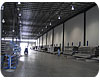
The La Porte facility has 100 truck docks. One on the far end of the building leads into an expansive aisle wide enough for tractor-trailers to drive inside, load up with pipe and head out the opposite bay door. Another dock is reserved for “hot shot” emergency orders. All Wilson branches get weekly replenishment deliveries from the DC, but if a branch needs something immediately, they can simply call ahead and it will be waiting at the hot shot bay when the branch’s pickup vehicle arrives.
The hot shot station gets a lot of usage, according to DC Manager Tony Glynn. “Something is always breaking on a drilling site, so our customers never know what they’ll need from day to day,” he explained. “We’ll do our best to get whatever they need to them quickly.”
The gigantic warehouse employed 204 people at last count, 30 in support services, the rest operational. At the time of my visit in October, they were running two shifts with operations running from 6:30 a.m. till 11:00 p.m. An on-call rotation enabled them to deliver service 24/7. Glynn told me the after-hours calls have become so routine, they were in the process of setting up a permanent on-call station whereby the people on duty will live after-hours and weekends in an on-site trailer with various creature comforts such as Direct TV.
Glynn, who managed a huge Wal-Mart grocery warehouse before being hired to run Wilson’s new DC, is particularly proud of having gone the entire year without a reportable accident. This owes to a vigorous Wilson safety program. One aspect is a drawing for a 42-inch flat screen TV held each month in which there are no lost-time accidents. There has been a drawing every month so far in 2008.
The La Porte DC features this aisle large enough for a tractor-trailer to pull through for pipe loading.
Quality counts
The dangers inherent to Wilson’s warehouse pale next to those encountered by many of Wilson’s PVF customers. This puts a premium on material quality. Wilson’s quality program, under the direction of Director of Quality Lynn Colwell, is among the distribution industry’s most sophisticated.Their program bears the trademarked label of IMPACT, derived from the first initials of parameters that include: Increase employee competency; Maintain accurate inventory; Provide quality products; Always deliver on time; Continually improve; Total customer satisfaction.
Wilson’s DC is ISO 9001:2000 certified and the branch standard operating procedures are leveraged on the ISO certification. Wilson’s supplier evaluation program includes ISO 2859 QA/QC Receiving Inspection performed daily, supplier site audits, and third-party lab tests of selected products. This includes periodic destructive testing on material pulled at random from the DC and branches to make sure it falls in line with all standards and certifications. Wilson maintains a quality performance management online reporting system for customer feedback, which is analyzed for opportunities for improvement, lessons learned and best practices. They also conduct customer satisfaction surveys and sponsor an employee award program for exceeding customer expectations in service and product quality.
Colwell reports directly to John Kennedy with an operational line to Jim Owsley, who maintains that it’s common for Wilson to catch mistakes most suppliers miss. “We inform the suppliers of any problems, and most appreciate this because they say no one else in the industry calls them on it. It enables them to correct things, whether it’s adjusting the thread gauge on machines, or dealing with distortion or calibration issues. The important thing is we catch it so that product never makes it to the customer, which is better for all of us,” said Owsley.
Striving for continuous improvement, the company works closely with distribution programs in universities such as Texas A&M and Penn State not only in a search for talent, but collaborating for various research and development studies on logistics topics. Wilson sends personnel to leadership and supply chain courses at these universities, and Wilson’s people have been asked to address students from time to time to give them a real-world feel for the distribution field.
Allan Rogers (left), Wilson's director of transportation & distribution services, and DC Manager Tony Glynn.
Positioned for growth
Ask Wilson’s leaders what the near future holds after some historic years of prosperity, and you get the same quizzical looks as anywhere else in these times of economic uncertainty. Even the best forecasters have trouble grasping a year in which oil skyrocketed to tickle $150 a barrel before dropping by more than half in the space of a few months.“I’m guardedly optimistic,” Dowhin commented, “but we’ve seen a few projects scheduled for next year pushed out. We’ve not seen the effects of the bailout yet and, let’s face it, we haven’t seen anything like this situation before.”
“It’s been quite a year with commodity prices and currencies fluctuating so wildly,” said Owsley. “Trying to match the supply with the demand side has been quite a challenge, one that I don’t think anyone has ever seen in our industry.”
Asked what kind of year Wilson’s management team anticipates for 2009, Owsley replied with a grin, “We’ve been spending a lot of time trying to figure that out!”
Longer term, the future looks about as bright as it can be both for domestic business growth and to realize Wilson’s long-term vision to develop into a truly global supply chain leader. Wilson’s export business encompasses various energy-producing nations spanning Africa, the Middle East, Europe and South America. Wilson has 17 offices in Europe, 11 in Russia alone.
According to Charlie Tresselt, “Some of the supply chains overseas don’t resemble U.S. supply chains, so we’ve had to go in and set up our own branches from scratch.” A prime example is Russia, where Wilson established a joint venture several years ago and had to work entirely with Russian-based suppliers and hire and train Russian employees.
Wilson’s affiliation with Smith International gives the PVF distributor an advantage in doing business with countries such as Russia and some West African nations that have difficult, sometimes hostile, business environments. “There are a lot of risks with local cultures and laws, but the remainder of Smith International does about 60% of its business in these environments, so we have a pretty good idea of what things will be like going in,” said Tresselt. There is a lot of uncertainty regarding the global economic climate in 2009. “Whatever the market conditions, there will be opportunity. Our people and operating model will enable us to take advantage of those opportunities,” Tresselt added.
“We have great people!” said Wilson CEO Kennedy. Looking at the big picture, it’s hard to envision a better place for a PVF distributor to be than in Wilson’s shoes. Smith International Chairman and CEO Doug Rock gave this assessment in Smith’s latest quarterly report.
“Looking toward 2009, we feel the negative investment sentiment towards the oil and oil service industry is characteristic of panic rather than reason. Oil prices at $60 a barrel are more than six times their 1998 low point and natural gas prices are nearly three and a half times their 1998 low point. There’s plenty of profit potential at today’s industry price structure, which is why capital will continue to flow into the oil and gas industry in proportionate and available quantities,” predicted Smith’s CEO.
Wilson ended up loaning about 250 generators to employees in the aftermath of the storm.
Wilson's Disaster Plan Proves Its Worth
Back-to-back Hurricanes Katrina and Rita provided a boisterous wakeup call to many Gulf Coast residents and businesses in 2005. So when Hurricane Ike took dead aim at Houston on Friday evening, Sept. 12, the people at Wilson reacted with eyes wide open. They had a disaster plan in place that had been devised in the aftermath of Katrina and Rita and, sooner than they would’ve liked, “We had a chance to work on execution of the plan!” said VP of Material Sourcing Jim Owsley.The brunt of storm damage to Wilson was borne by branches in the Texas coastal towns of Freeport and Beaumont, which were shut down completely. Several other branches were impacted to various degrees, and Wilson’s headquarters near downtown Houston was without power for eight days after the storm. All were back up and running normally by the time of my visit more than five weeks after Ike had hit.
Wilson’s La Porte Distribution Center, despite being in a hard-hit area at the edge of Houston’s Shipping Channel, sustained only minor damage to a few overhead doors and some roof leaks from blown-out plastic skylights. “Being a new building, it was designed to withstand hurricanes. Had it been 50 years old, we wouldn’t have fared as well,” commented Allan Rogers, the company’s director of transportation and distribution services. “The rest of the city didn’t have power, but we did.”
With the DC functioning throughout, Wilson was able to continue providing materials to customers with minimal disruption. The company’s IT systems are housed at the corporate headquarters of Smith International, in a data center designed to withstand a Category 4 hurricane. They operated without a glitch throughout. Soon after the storm, a notice went up on the company’s Web site to customers in heavily stricken areas telling them how to obtain critical supplies. “We knew which areas were likely to lose power or suffer damage, so we moved our people situated there to the closest safe area,” said Director of Marketing Melea Nieto. “Customers could deal with the same people they knew in the affected branches without missing a beat.”
Galveston and nearby coastal areas in the hurricane’s bull’s-eye suffered from a storm surge that flooded roads and made getting around impossible for many days afterward. Situated approximately 45 miles inland, Houston proper realized little flooding, partly because the storm moved rapidly and did not linger. Hurricane-force winds blew out many windows in buildings around town, but the biggest problem faced by most Houstonians was the lingering loss of power.
Except it wasn’t much of a problem for Wilson staffers, thanks to their disaster planning. The plan revolved around a series of what-if scenarios assessing areas of biggest risk and offering alternative work sites for people in facilities knocked out. Employees who worked in branches that were shut down by the storm reported for work in the nearest operational branch. Some employees were issued laptops to work from home.
The alternative site for Wilson headquarters staff was Smith’s headquarters about 15 miles further inland near Bush International Airport. Smith suffered minimal power disruptions as it has its own electrical substation in place. Owsley recalled that on the Monday after the Friday hurricane, about 30 Wilson staffers showed up for work at Smith headquarters, and within a couple of days there were 150 people in the office, with others working from home. “Basically we were up and running by day one and fully operational by day two,” Owsley said. “The Smith people were of tremendous help, and vendors, customers and employees from outside Houston couldn’t tell if Wilson was based here or there.”
Besides taking care of customers, Wilson placed a lot of emphasis on helping employees. Owsley said the company had about 50 or 60 generators left over from reaction to the 2005 hurricanes, which they loaned out to employees who had lost power at home. So widespread was Ike’s damage, the company ended up buying about 200 more for its employees. “We also provided fuel, so employees could come to work with containers and bring home gasoline to power their generators,” said Owsley. He added that about 20 employees had lost their homes completely to the hurricane. Wilson helped them find temporary housing and set up a fund to assist them in the long term.
So smoothly were things running for Wilson, when the Salvation Army put out a call for warehouse space on the day after the hurricane, Wilson was the only business in the area in a position to help. They had space to spare from a former DC that was vacated when the La Porte facility went into service earlier this year. So they donated that warehouse to the Salvation Army. The charitable organization was still operating from it at the time of my visit in late October, having shifted from emergency response to a recovery mode in helping people obtain crucial household supplies.
According to Owsley, the company’s disaster plan includes contingencies for emergencies impacting different regions. Even if a catastrophe were to knock out Smith’s headquarters, they have two emergency sites in other parts of the country capable of taking over if needed.
“Our people have built this company. When disasters occur, we have an obligation to help those that need it. It’s not a question of whether to help, it’s a question of how,” said CEO John Kennedy.
Wilson's vast business of today grew from small roots as an oilfield supplier.
A History of Wilson
Wilson, named after its founding family, dates all the way back to 1921. For about two-thirds of its existence it remained a fairly small, closely-held oilfield supplier. Its first acquisition didn’t occur until 1986, when it bought Franklin Supply, since expanded into Canada’s CE Franklin organization that along with Wilson makes up parent Smith International’s Distribution business unit.Greg Cain, Wilson’s director of material sourcing for valves and energy products, is one of the company’s many long-serving employees, having joined in 1989 upon the acquisition of Mid-Continent Supply. “At the time I came to work for Wilson, it was still a fairly small family-owned business with 20 or 30 branches and a focus on drilling contractors,” Cain remembers.
The company’s initial foray from oilfield into the industrial PVF sector came with the acquisition of Tyler Dawson in 1991. Two years later they expanded with the purchase of another industrial firm, Wallace Co., which had been a recipient of the prestigious Malcolm Baldrige Award for business excellence. “Wallace was entrenched in the industrial market with large MRO contracts and played a huge role in our growth,” said Cain.
The company made a few other noteworthy acquisitions while still a privately-held company, and in 1997 expanded into the Valve Actuation & Controls business. At the time the company was headed by Wally Wilson, a second generation of the founding family. He sold the company to publicly-traded Smith International in 1998, and the company has experienced a tremendous growth surge ever since, fueled both by acquisitions and internal growth.
“Wally Wilson is a true gentleman and a respected member of the Houston community,” said current CEO Kennedy. “We’ve been able to build upon the foundation that the Wilson family established and maintained the core values regarding our people, customers, suppliers and community,” he added. No Wilson family members remain with the company, according to Cain.
Looking for a reprint of this article?
From high-res PDFs to custom plaques, order your copy today!