2008 AHR Expo Part 2
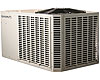
There will be no drop-in replacements for R22 in residential air conditioners and heat pumps.
The biggest news having to do with the coming R22 refrigerant phaseout came from a DuPont press conference at the 2008 AHR Expo in New York City, where we were told that the next federally mandated production cut (in 2010) will bring the production levels down to the line of the anticipated demand for the product. So we can surmise that there will soon be another huge price jump and shortages in many areas.
Yet we learned at the conference that 60% of all HVAC equipment being sold today still uses R22! And the statement that I made in a previous article (and which was challenged) still stands: There will be no drop-in replacements for R22 in residential air conditioners and heat pumps (this was reaffirmed by DuPont, Honeywell and Copeland representatives at the expo), and recovery of the refrigerant is still hovering at the extremely low amount of less that 3% nationally. So now may be the best time to take on extra stock of the product!

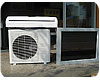
On the product side, there was amazing interest and huge crowds at one tiny booth where a small line of ductless split systems and solar panels were on display. Why so much interest? The posted product pricing (which was very low) was the center of attention. And although the low pricing of their (Chinese made) ductless split systems was very impressive, what caught my eye was the technology and pricing of their solar panels and inverters. The company, American Mini Splits Inc. (www.americanminisplits.com), was touting snap-together solar panels that tie directly (with no battery banks) into the home electrical system, so the installation is fast, simple and relatively inexpensive. And, as the representative (and owner) pointed out, during sunny periods of low consumption, the solar panel electricity could even cause electric company meters to run backwards! So perhaps there is some future for solar power in North America.
Another product that caught my eye is a new lubricant for use with non-chlorinated refrigerants (such as R410A). Although this may or may not be useful to supply houses, the technology may be very important. The patented lubricant is polyvinylether from Idemitsu Lubricants America Corp. (www.pag-idemitsu-usa.com). The company rep told me this product is a bit more tolerant to low amounts of moisture in an HVAC system (it doesn’t break down), and it can tolerate being mixed with small amounts of mineral oil (unlike polyolesters). These two features are very important in our industry where poor servicing techniques and hard-to-replace refrigerant line sets are so common.
A great idea for a heat pump was introduced by Hallowell International (www.gotohallowell.com). It’s a new form of split-system heat pump that uses two compressors in series to keep their heat pumps heating at temperatures down to 0°F! This seems to be a particularly good option for people living in the Northeast who want to replace aging fuel-oil furnaces because the price of fuel is rising dramatically and supply may not always be assured.
Although I realize that products from Lennox International aren’t sold through independent distribution, they were touting something new at the expo that is worth discussing. It is a coil that is added downstream from the evaporator coil and is piped to the entering liquid line (then on to the evaporator) to slightly raise the relative humidity of the discharge air (while lowering the evaporator temperature), in order to create greater in-home dehumidification. I first saw this concept coming from a small St. Petersburg, FL, company some eight years ago. However, all they sold was the coil. Lennox has added solenoid valves and electronics, so that the dehumidification process is only performed when needed. This is probably one of the most energy-efficient and comfortable residential dehumidification methods currently available.
Another great (and simple) idea that I found worthy of mention is the Airshare Room-to-Room Ventilator from Tjernlund (www.tjernlund.com). A small fan with a diffuser cover mounts between wall studs and sends air from a conditioned room, between the studs, to a diffuser in an unconditioned room … for use where one room has a window air conditioner and the other doesn’t. This idea also seems to be a possible answer to a common problem, where one room (such as a master bedroom) has no usable air return and the occupants want privacy, so a simple un-powered through-the-wall diffuser connection is undesirable. And of course, since both the entering and discharge diffusers may be located anywhere between the wall studs, the height and location of either diffuser can be set by the installer.
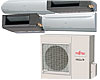
“When is a 16-SEER 98-AFUE HVAC system not a 16-SEER 98-AFUE system?” I was asked by a representative of Fujitsu General America (www.fujitsugeneral.com) during the expo. “When it is connected to a standard system of ductwork,” came the reply. “And this is the missing equation that doesn’t show up when looking at the rated efficiencies of ductless split systems.”
Yes, I’ll admit that duct losses can be quite considerable, and it does make sense that a ductless system that is rated the same as a ducted system is actually more efficient. However, I doubt that wall-mounted ductless systems will ever be accepted as readily in North America, because most people don’t want some appliance hanging on their walls, no matter how stylish or attractive. But small, ducted airhandlers mounted above each room do make a lot of sense, as long as the duct runs are short. “And,” came the explanation, “one of our single-compressor four-airhandler systems can be every bit as first-cost effective when compared to a single airhandler with its extensive ductwork. Plus, each zone has its own thermostat, and our systems take up very little attic space!”
That was a very good argument, and one that I hadn’t thought of before. But, of course, the point he was making is that the listed ratings of Fujitsu’s Halcyon line of R410A inverter multi-zone air conditioners and heat pumps (up to 16.5 SEER and 9 HSPF) don’t truly reflect their operating efficiencies, since duct losses on their 2- and 3-ton systems are minimal, and the temperatures of up to four zones (and more rooms when ducted) can be individually controlled.
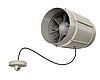
Another type of product that I saw at the Expo, which can easily be applied to turn existing ducted systems into zone control, is the Flow Zone Wireless from the ZoneFirst Co. (www.zonefirst.com). This is a slick little device that consists of a (networkable) thermostat that can communicate wirelessly with duct-mounted dampers. And the reason why the dampers require no power connections is because they generate their own power via air flow!
Of course, the way to improve duct efficiency is to minimize air leaks. And a new method for doing this was pointed out to me by the president of Lindab USA (www.lindabusa.com), a spiral-duct manufacturer. It’s a system of corrugated, reinforced spiral ducts with fittings that snap together into sections of their ducts with rubber seals, virtually eliminating air leaks. “What we have developed is sort of a ‘Lego’ building-block approach to assembling ductwork,” he said. “And because we work with very close tolerances, duct assembly is very fast and easy, with no requirement for sheet-metal screws and no air leaks.” The company also manufactures a tool for on-site use to cut lengths of their spiral ducts and to add the snap-lock configuration.
Another slick idea that I saw at the Expo was the Silver-Liner Plenum/Coil from AllStyle Coil Co. (www.allstyle.com). It is a combination plenum and evaporator-coil box that mounts on the leaving side of a furnace. It’s a long A-style coil that divides the air output evenly across its surface, so that duct connections can be made directly from the coil box, which saves both space and money. “But, why would anyone buy your coil assembly when its lack of a rated match to the condensing unit doesn’t meet many local codes?” I asked. “Well, you provide us with the ARI rating on the condensing units, and we will supply you with the matched efficiency ratings,” came the reply.
Finally (although I could go on for pages), there were two more items that I saw at the Expo, which I felt were interesting enough to tell you about:
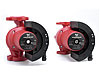
The first is the Magna speed-controlled, wet-rotor circulating pump from Grundfos (http://www.grundfos.com/web/homeus.nsf). Having worked in the commercial building control business for several years, I can testify to the fact that controlling and varying the speed of circulator pumps provides a swift payback in energy savings. However, such control used to require a building automation system and an inverter drive. This new Grundfos pump comes with all the controls and the drive (with three program settings) built into it. All that’s required is the pump!

The second was a new tool from Klenk Tools (www.klenktools.com), the 4-in-1 Multi-Socket. This small, palm-sized “nut driver” has four heads for driving hex nuts and screws (1/4-, 3/8-, 5/16-, and 7/16-inch) … just one tool to remove most HVACR service covers!
Looking for a reprint of this article?
From high-res PDFs to custom plaques, order your copy today!