Youth Does The Serving
Western Water Works has grown 10-fold since 1995 with a work force averaging 31.5 years in age.
You don’t expect a firm, vigorous handshake from a 19-year-old. You don’t expect him to look you in the eye while he’s doing it, address you by name and flash a smile that would make Dale Carnegie proud. Most of all, you don’t expect to find 19-year-olds wielding the kind of authority you find vested in the young people who pop up all over in positions of responsibility at Western Water Works Supply Co., headquartered in Chino Hills, CA.
Founded in 1945 and claiming to be the first waterworks distributor in the state, Western Water Works is headed by President Bruce Himes, a third-generation owner and great nephew of co-founder Ben Duke. At 43, Himes is the second oldest employee of the company. The oldest is Director of Marketing Richard Campbell, who is just beginning to sprout gray hair at 44. Jim McDowell, vice president of sales, is 42. So much for the geezers. Operations Manager Eric Loudon, who oversees purchasing and all other operations for two of the company’s four distribution centers - their term for branches - is all of 28. The operations manager of the other two facilities, Bobby Sunderland, is 33. And so it goes. The average age of the company’s 51 employees is 31.5.
 Despite their youth, they work for an eminently
successful company that has seen revenues explode from $5 million in 1995 to
nearly $50 million in the most recent fiscal year. That coincides with the
stewardship of Bruce Himes and, until he retired in 2006, his father Don Himes.
Do some simple arithmetic and you’ll find that their sales per employee number
puts them at a rarefied level of productivity in the waterworks PVF
industry.
Despite their youth, they work for an eminently
successful company that has seen revenues explode from $5 million in 1995 to
nearly $50 million in the most recent fiscal year. That coincides with the
stewardship of Bruce Himes and, until he retired in 2006, his father Don Himes.
Do some simple arithmetic and you’ll find that their sales per employee number
puts them at a rarefied level of productivity in the waterworks PVF
industry.
The U.S. military is the only other organization that comes to mind as routinely giving so much responsibility to young people, and they share some common characteristics. Western relies on young people to voluntarily join the staff, and then trains them from scratch in its own systems and philosophies. The company prefers this M.O. instead of hiring people with distribution experience but who may have picked up bad business habits along the way. “We are very serious about growing our own,” commented Himes. “Culture means everything.”
 Also like our military, Western’s personnel tend
to be working class kids with a decent amount of talent but, even more important,
exceptional drive to “be all they can be.” The company has no special academic
or background requirements and no magical recruitment secrets. “We’ve tried the
same thing as everyone else has working with high schools and so on,” said
Himes. “In the end it’s simply a matter of keeping our eyes open for young
people whose values match ours and are looking for a place to
land.”
Also like our military, Western’s personnel tend
to be working class kids with a decent amount of talent but, even more important,
exceptional drive to “be all they can be.” The company has no special academic
or background requirements and no magical recruitment secrets. “We’ve tried the
same thing as everyone else has working with high schools and so on,” said
Himes. “In the end it’s simply a matter of keeping our eyes open for young
people whose values match ours and are looking for a place to
land.”
According to him, they never run a hiring ad. People come to Western via referrals, or by just walking through the door after hearing from someone that it’s a good place to work. Sometimes Western’s managers notice the right stuff in restaurant workers and the like and invite them to apply.
 Western’s president told the story of one
invitee, Danny Gamboa, who was working on a landscape crew at the Himes
residence at the age of 15. “I noticed the guy who owned the company put him in
charge of other men even at that young age,” Himes recalled. “Plus, I watched
him work and was impressed enough to invite him to come in and see us when he
reached age 18.” Gamboa did and, by age 19, had been promoted to assistant
warehouse manager.
Western’s president told the story of one
invitee, Danny Gamboa, who was working on a landscape crew at the Himes
residence at the age of 15. “I noticed the guy who owned the company put him in
charge of other men even at that young age,” Himes recalled. “Plus, I watched
him work and was impressed enough to invite him to come in and see us when he
reached age 18.” Gamboa did and, by age 19, had been promoted to assistant
warehouse manager.

Sales are the responsibility of Western’s account managers, who are analogous to what in most wholesaler organizations would be inside sales staff but elevated somewhat in responsibility and prestige. Western has done away with outside sales titles. Field visits are performed as needed by the account managers or a company executive, but the account managers spend most of their time in the office and manage all aspects of the client relationship for the accounts they handle. This includes pricing, quotations, submittals, troubleshooting and any other services a client might need. Western employs a dozen account managers working out of its Service Center in Chino Hills, which supports distribution center locations in the Southern California communities of Chino, Adelanto, South El Monte and Norwalk. Accounts are categorized into two departments: the public team, consisting of utilities and public works contractors, and the private team, servicing private residential and nonresidential contractors.
 It takes years to move into an account manager
position. Before doing so they must demonstrate mastery of waterworks product
knowledge and business principles, as well as the company’s computer system.
In-house training focuses on product knowledge and what they call “Waterworks
101.”
It takes years to move into an account manager
position. Before doing so they must demonstrate mastery of waterworks product
knowledge and business principles, as well as the company’s computer system.
In-house training focuses on product knowledge and what they call “Waterworks
101.”
Product training is a painstaking process. “No trade school teaches waterworks,” said Campbell. “There is no manual out there, and the products used in Chino Hills might have different specs than what’s called for in Chino right next door.”
Western has all the local specification books online and available with a few mouse clicks. They put a lot of emphasis on their account managers knowing the local specs inside-out or at least being able to access the information quickly. It’s one of the most important customer services they render and a crucial aspect of another company priority that entails eliminating mistakes. The better someone knows the products and specs, the more sensitive their “smell test” capabilities become. They can bail customers out of potential jams simply by recognizing that Hydrant A doesn’t go with Specification B.
 Himes identifies product knowledge as the biggest
challenge facing his organization - “but also the biggest opportunity.” That’s
because every competitor faces the same obstacles as Western in the race for
talent. Nobody grows up itching to work in the PVF industry and nobody has
figured out a way to glamorize it or shortcut the product learning curve. So
the company that can offer the best jobs has a substantial edge, and that is
Western’s goal.
Himes identifies product knowledge as the biggest
challenge facing his organization - “but also the biggest opportunity.” That’s
because every competitor faces the same obstacles as Western in the race for
talent. Nobody grows up itching to work in the PVF industry and nobody has
figured out a way to glamorize it or shortcut the product learning curve. So
the company that can offer the best jobs has a substantial edge, and that is
Western’s goal.
New recruits start out the old-fashioned way by working in the warehouse to muster hands-on product knowledge. This gets supplemented by regular classroom sessions held on Saturdays in a training room at the Chino distribution center. These are voluntary sessions, but typically attended by more than half the company.
Their “Waterworks 101” training covers basic business principles and operations with an emphasis on customer service. It’s a strategy for employee development that includes assigning them to read top business books such as How To Win Friends & Influence People, Think & Grow Rich and Good to Great, among others. The curriculum addresses both technical issues and the interpersonal aspect of building business relationships.
Most important, it aims to instill a common set of values in all Western personnel. The company defines those core values as discipline, innovation, integrity and professionalism.

Himes is a proponent of open book management, which goes a long way towards instilling such attitudes. Every employee is given a monthly report detailing four key metrics: sales, gross margin percent, return on sales and accounts receivable days. They discuss it with supervisors and among themselves, constantly looking for ways to improve. There’s also a company-wide annual meeting, as well as an annual review of management by employees to “see how well we’re doing meeting their needs,” said Himes.
That last comment jarred the senses. The business world operates in accordance with an unspoken rule that employees are obliged to meet the needs of their bosses. You don’t find many who see it as a two-way street.
It fits right in with the company’s youth culture, however. Various surveys have shown that today’s workforce of so-called “Gen Xers” and “Millennials” rank things like opportunity and being treated with respect as their top job concerns.
According to Himes, it’s not that they don’t want older people around. When he first joined the company in 1991 he was one of the youngest employees, but it was a much smaller company and a few retirements and departures pushed down the demographic as hiring criteria shifted from experience to attitude and potential. Despite their relative youth, some veterans have been with Western since the 1980s and it’s anticipated that many of the staff will grow old working there. The key aspect is they will have been shaped by the desired corporate culture.
Himes admits that youth has some drawbacks. “One of our weaknesses is on the relationship-building side of the business,” he said. “Some competitors have stronger relationships with customers because their people have been around in the marketplace longer than ours. Over time that will change, but it’s something we’ve focused on as a need to get stronger.”

We featured Western’s “Grand Guarantee” as one of our 50 Wholesaler Best Practices in last month’s 50th Anniversary issue. The name refers to the promise of a $1,000 reward they pay to any “Grand Guarantee” customer if they make a mistake in one of four areas identified by customers as most important to them:
To be eligible for the “Grand Guarantee Club,” customers must meet certain volume requirements and pay their bills on time. The program puts pressure on Western’s staff to avoid mistakes, and they claim a 99.5% accuracy rate.
That’s not perfect, nor will they ever be, so they have ended up giving back some money in fulfillment of the promise. They chalk it up as a marketing expense. Each of the company’s four operating branches posts a large sign in back of the pickup counter announcing how many days have passed since that branch was guilty of a “Grand Guarantee” infraction. Western’s employees beam with pride when the mistake-free running tally goes high, and they get real embarrassed when the number turns to zero. This humiliation turns out to be a more effective motivator than a chewing out.
“We like the concept of autopsies without blame,” said Himes. “Find out what went wrong and correct it, but without pointing fingers. Our people know they can make a mistake and not get butchered for it.”
I sat at a table with some of Western’s customers during Calloway’s presentation and heard several of them volunteer comments like “they’re the fastest … these guys are the best.” Visit the Western Web site at www.wwwsco.com and you’ll be treated to videos of customers singing similar praises.
As Calloway detailed in his program, great service requires a combination of attention to business basics and, most of all, a staff of people willing to go the extra mile. The basics at Western include things like clean and orderly warehouses, and overnight loading of trucks so they are ready to hit the road at 5 a.m. when the warehouse opens up - and which is about the only time in Southern California when traffic is bearable.
The extra mile comes from the heart. It’s people giving up Saturdays to learn product, and reading great business books, and stopping by customers just to talk up the business, and doing whatever it takes to achieve company success while at the same time advancing one’s own career prospects.
Waterworks, said Himes, “is a wonderful but sleepy industry. You don’t have to worry about our products becoming obsolete, because everyone needs water and they need our products to bring it to them. Water shortages are becoming a concern, especially here in the desert, and from our perspective that’s a positive thing because it forces us to get more creative with things like water reclamation,” said Himes.
“Also, many of the original waterworks in Southern California are reaching the end of their 25- to 50-year life span and are starting to break down. A staggering amount of dollars needs to be spent on this infrastructure, which for us spells challenges and opportunities.
“The scary thing is that if we as an industry don’t get serious about training our people, nobody will know what to do,” Himes warned.
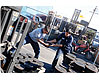
Erik Fuentes (left) and David Guardado work in
Western Water Works Supply's South El Monte location.
You don’t expect a firm, vigorous handshake from a 19-year-old. You don’t expect him to look you in the eye while he’s doing it, address you by name and flash a smile that would make Dale Carnegie proud. Most of all, you don’t expect to find 19-year-olds wielding the kind of authority you find vested in the young people who pop up all over in positions of responsibility at Western Water Works Supply Co., headquartered in Chino Hills, CA.
Founded in 1945 and claiming to be the first waterworks distributor in the state, Western Water Works is headed by President Bruce Himes, a third-generation owner and great nephew of co-founder Ben Duke. At 43, Himes is the second oldest employee of the company. The oldest is Director of Marketing Richard Campbell, who is just beginning to sprout gray hair at 44. Jim McDowell, vice president of sales, is 42. So much for the geezers. Operations Manager Eric Loudon, who oversees purchasing and all other operations for two of the company’s four distribution centers - their term for branches - is all of 28. The operations manager of the other two facilities, Bobby Sunderland, is 33. And so it goes. The average age of the company’s 51 employees is 31.5.
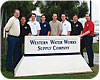
Western Water Works top management team includes, from left:
Jim McDowell, vp/sales; Dominic Scigliano, team leader Public Division; Scott
Clausen, controller; Eric Loudon, operations manager; Jordan Crowder, team
leader Private Division; Bobby Sunderland, operations manager; Richard
Campbell, director of marketing; and Bruce Himes, president.
The U.S. military is the only other organization that comes to mind as routinely giving so much responsibility to young people, and they share some common characteristics. Western relies on young people to voluntarily join the staff, and then trains them from scratch in its own systems and philosophies. The company prefers this M.O. instead of hiring people with distribution experience but who may have picked up bad business habits along the way. “We are very serious about growing our own,” commented Himes. “Culture means everything.”
Western Water Works President Bruce Himes
According to him, they never run a hiring ad. People come to Western via referrals, or by just walking through the door after hearing from someone that it’s a good place to work. Sometimes Western’s managers notice the right stuff in restaurant workers and the like and invite them to apply.
Assistant Manager Danny Gamboa was noticed at
age 15, hired at 18 and promoted a year later.
Director of Marketing Richard Campbell, the
company’s oldest employee at 44.
Western's Structure
Assistant manager is the first step of a management hierarchy that ascends to warehouse or department manager and then to account manager. Western’s warehouse managers are in charge of all the operations within those facilities except for sales.Sales are the responsibility of Western’s account managers, who are analogous to what in most wholesaler organizations would be inside sales staff but elevated somewhat in responsibility and prestige. Western has done away with outside sales titles. Field visits are performed as needed by the account managers or a company executive, but the account managers spend most of their time in the office and manage all aspects of the client relationship for the accounts they handle. This includes pricing, quotations, submittals, troubleshooting and any other services a client might need. Western employs a dozen account managers working out of its Service Center in Chino Hills, which supports distribution center locations in the Southern California communities of Chino, Adelanto, South El Monte and Norwalk. Accounts are categorized into two departments: the public team, consisting of utilities and public works contractors, and the private team, servicing private residential and nonresidential contractors.
Western Water Works' Chino Hills service center.
Product training is a painstaking process. “No trade school teaches waterworks,” said Campbell. “There is no manual out there, and the products used in Chino Hills might have different specs than what’s called for in Chino right next door.”
Western has all the local specification books online and available with a few mouse clicks. They put a lot of emphasis on their account managers knowing the local specs inside-out or at least being able to access the information quickly. It’s one of the most important customer services they render and a crucial aspect of another company priority that entails eliminating mistakes. The better someone knows the products and specs, the more sensitive their “smell test” capabilities become. They can bail customers out of potential jams simply by recognizing that Hydrant A doesn’t go with Specification B.
Rich Andrade (left) and Jordan Crowder discuss a
project over the “spec desk” at the Chino Hills headquarters.
New recruits start out the old-fashioned way by working in the warehouse to muster hands-on product knowledge. This gets supplemented by regular classroom sessions held on Saturdays in a training room at the Chino distribution center. These are voluntary sessions, but typically attended by more than half the company.
Their “Waterworks 101” training covers basic business principles and operations with an emphasis on customer service. It’s a strategy for employee development that includes assigning them to read top business books such as How To Win Friends & Influence People, Think & Grow Rich and Good to Great, among others. The curriculum addresses both technical issues and the interpersonal aspect of building business relationships.
Most important, it aims to instill a common set of values in all Western personnel. The company defines those core values as discipline, innovation, integrity and professionalism.
Paul Martinez, one of Western's drivers, has
been known to stop by customers’ places of business just to say hello, talk
about the company and bring back market intelligence.
Open Book Management
Esprit de corps or its absence can be detected in any office environment as readily as the air quality. It’s obvious people really like working for this company, and it results in their going an extra mile in the performance of their jobs. At one stop I was introduced to Paul Martinez, who drives a company truck but has been known to stop by customers’ places of business just to say hello, talk about the company and bring back market intelligence - in essence, an impromptu sales call. Paul spreads his enthusiasm for the company and the culture as he trains all of the new drivers, the entry level position with the company.Himes is a proponent of open book management, which goes a long way towards instilling such attitudes. Every employee is given a monthly report detailing four key metrics: sales, gross margin percent, return on sales and accounts receivable days. They discuss it with supervisors and among themselves, constantly looking for ways to improve. There’s also a company-wide annual meeting, as well as an annual review of management by employees to “see how well we’re doing meeting their needs,” said Himes.
That last comment jarred the senses. The business world operates in accordance with an unspoken rule that employees are obliged to meet the needs of their bosses. You don’t find many who see it as a two-way street.
It fits right in with the company’s youth culture, however. Various surveys have shown that today’s workforce of so-called “Gen Xers” and “Millennials” rank things like opportunity and being treated with respect as their top job concerns.
According to Himes, it’s not that they don’t want older people around. When he first joined the company in 1991 he was one of the youngest employees, but it was a much smaller company and a few retirements and departures pushed down the demographic as hiring criteria shifted from experience to attitude and potential. Despite their relative youth, some veterans have been with Western since the 1980s and it’s anticipated that many of the staff will grow old working there. The key aspect is they will have been shaped by the desired corporate culture.
Himes admits that youth has some drawbacks. “One of our weaknesses is on the relationship-building side of the business,” he said. “Some competitors have stronger relationships with customers because their people have been around in the marketplace longer than ours. Over time that will change, but it’s something we’ve focused on as a need to get stronger.”
One of the basic tenants at Western is a clean
and orderly warehouse.
Autopsies Without Blame
My visit coincided with a special conference put on for customers belonging to Western’s “Grand GuaranteeTM Club,” featuring a presentation by best-selling business author Joe Calloway (Becoming A Category Of One is his best-known work).We featured Western’s “Grand Guarantee” as one of our 50 Wholesaler Best Practices in last month’s 50th Anniversary issue. The name refers to the promise of a $1,000 reward they pay to any “Grand Guarantee” customer if they make a mistake in one of four areas identified by customers as most important to them:
- accurate shipments;
- invoicing that matches quote;
- products that meet job specifications;
- delivery when promised.
To be eligible for the “Grand Guarantee Club,” customers must meet certain volume requirements and pay their bills on time. The program puts pressure on Western’s staff to avoid mistakes, and they claim a 99.5% accuracy rate.
That’s not perfect, nor will they ever be, so they have ended up giving back some money in fulfillment of the promise. They chalk it up as a marketing expense. Each of the company’s four operating branches posts a large sign in back of the pickup counter announcing how many days have passed since that branch was guilty of a “Grand Guarantee” infraction. Western’s employees beam with pride when the mistake-free running tally goes high, and they get real embarrassed when the number turns to zero. This humiliation turns out to be a more effective motivator than a chewing out.
“We like the concept of autopsies without blame,” said Himes. “Find out what went wrong and correct it, but without pointing fingers. Our people know they can make a mistake and not get butchered for it.”
I sat at a table with some of Western’s customers during Calloway’s presentation and heard several of them volunteer comments like “they’re the fastest … these guys are the best.” Visit the Western Web site at www.wwwsco.com and you’ll be treated to videos of customers singing similar praises.
As Calloway detailed in his program, great service requires a combination of attention to business basics and, most of all, a staff of people willing to go the extra mile. The basics at Western include things like clean and orderly warehouses, and overnight loading of trucks so they are ready to hit the road at 5 a.m. when the warehouse opens up - and which is about the only time in Southern California when traffic is bearable.
The extra mile comes from the heart. It’s people giving up Saturdays to learn product, and reading great business books, and stopping by customers just to talk up the business, and doing whatever it takes to achieve company success while at the same time advancing one’s own career prospects.
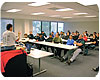
Saturday “Waterworks 101” training classes
typically are crowded.
Independent Outlook
Western is an enthusiastic participant in The Distribution Group, a waterworks buying group that enables independent distributors to stay competitive. Himes is an enthusiast about the role of independents in the industry, and although they’re not blood relatives, he sees the company’s current staff of youngsters being groomed as potentially the “fourth generation” of ownership. “They’re my exit strategy,” he stated.Waterworks, said Himes, “is a wonderful but sleepy industry. You don’t have to worry about our products becoming obsolete, because everyone needs water and they need our products to bring it to them. Water shortages are becoming a concern, especially here in the desert, and from our perspective that’s a positive thing because it forces us to get more creative with things like water reclamation,” said Himes.
“Also, many of the original waterworks in Southern California are reaching the end of their 25- to 50-year life span and are starting to break down. A staggering amount of dollars needs to be spent on this infrastructure, which for us spells challenges and opportunities.
“The scary thing is that if we as an industry don’t get serious about training our people, nobody will know what to do,” Himes warned.
Looking for a reprint of this article?
From high-res PDFs to custom plaques, order your copy today!