More About European Shower Valves
I've
received more feedback on last
month's discussion about U.S. vs. European approaches to shower valve
installation than any article to date. (Okay, so it was two emails and a
phone call, but hey, compared to previous issues, this was a flood of
responses.)
Some interesting background and explanation on the "great cultural plumbing divide" was provided in this message from Pat Jonte at Delta:
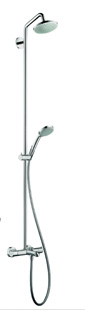
Thanks, Pat. Your explanation of the construction differences between U.S. and European interior walls touches on a rationale for resisting wall-mount shower valves I have heard over the years from U.S. design engineers. This argument begins with the assumption that our preferred concealed approach to shower valve installation provides firm anchoring of the valve body within the stick-built wall. So then, the reasoning goes, if we are not going to be anchoring the valve body securely within the framing of the wall, that means we are going to rely on some sort of fixing of the valve to the finished wall material itself (backer-board covered with tile, marble, solid surface, etc. - or fiberglass).
Yikes - is that really so scary?
First of all, anybody who thinks that concealed shower valves are consistently anchored well inside the wall by plumbers today is probably under a similar delusion that the entire piping system of the house always gets flushed. Secondly, how do you think we have been mounting concealed valves in the case of fiberglass enclosures and surrounds all these years? (Can you say "thin wall mounting kit?")
 But
let's get back to the concern about depending on the mounting integrity of a
conventional "non-fiberblass" wall. (To clarify one point here,
I'm assuming a typical pressure balance body that would come through the wall
as a single projection, not the European thermostatic variety that has separate
hot and cold supplies coming through.) At minimum, the most common
construction would give you a wall thickness of about 5/8" (3/8" for
the backer-board and 1/4" for the tile).
But
let's get back to the concern about depending on the mounting integrity of a
conventional "non-fiberblass" wall. (To clarify one point here,
I'm assuming a typical pressure balance body that would come through the wall
as a single projection, not the European thermostatic variety that has separate
hot and cold supplies coming through.) At minimum, the most common
construction would give you a wall thickness of about 5/8" (3/8" for
the backer-board and 1/4" for the tile).
The "receiver" for a wall-mount valve would be tightly clamped to this wall material, and since most installations would include a fixed showerhead similarly clamped onto the wall above, the connecting shower riser would provide even more stabilization. Do we really think some gorilla is going to yank one of these installations out of the wall? (If anything, it seems to me that this approach would assure a more consistent anchoring of the valve than is typically the case with concealed valves where the installer often saves himself 15 minutes by opting for his favorite half-assed shortcut. And hey, given a little creative engineering here, there is probably a way to anchor the back side of the valve body receiver to a cross-piece between the studs, anyhow.
This would also be the end of frantic calls for extension kits whenever valves get roughed in too deep to meet the trim. (On second thought, maybe that's a negative - there's a lot of money to be made selling those "desperation parts.")
Am I wrong here? I'd like to hear from more of you on this (maybe we can break the record and get four responses this time). Write me at: donarnold@earthlink.net
Some interesting background and explanation on the "great cultural plumbing divide" was provided in this message from Pat Jonte at Delta:
- “I
read your blog with interest. As the old saying goes, necessity is the
mother of invention. From experience (some would call it knowledge) working
with European Masco companies, the biggest reason on-wall and hand showers are
so popular in Europe is primarily due to construction methodology of typical
homes. You see most homes there are constructed of block or cement. My
guess is it goes back to the dark ages of stone castles where everyone wanted
to have their own "personal castle".
Anyway, traditionally most European homes are built to last many hundreds of years and, in many parts of Europe, the tradition has been that when you built a new home, err castle - when your kids or your kids-kids grew up, you'd make room for them by adding on. You'd even build rooms for your farm animals. As one grew old and eventually died, your relatives would assume ownership. With stone wall construction in-wall type plumbing is impossible so pipes were mounted to the surface of interior wall at first. This was the birth of the traditional on-wall valve, although probably for bathtubs. Europeans being sooo traditional have stuck with this construction method even up to today, albeit with a twist. Most homes now are constructed of prefab or poured cement walls like your basement - yes, interior walls, too. That's why you see these big tall cranes everywhere in residential areas in Europe.
Most of today's European homes have pipes (mostly iron) buried into the wall or in wall trenches and the supplies are stubbed out and permanently anchored in concrete. The wall is then tiled over never to be opened again. Now the shower valve can simply be mounted on the surface. OK, you say, what about the hand shower vs. shower head, why? Simple answer, most older European valves were derived from traditional tub fillers also on-wall mounted. All they'd need to do is flip the valve over and attach a hose, and voila - instant hand-shower valve.
Eventually someone got the bright idea of raising the thing up to allow more reach for the same length hose, and since we have this big ugly pipe running up the wall, we might as well make it useful and hang the hand shower on it. Europeans secretly scoff at our cheap tinder box method of home construction, citing poor noise isolation, flammability, lack of solid structure - but mostly the temporary nature of wood. Remember, European's frame of reference for history is 700+ years, and they also remember their parents’ homes/estates/castles being 200 years old. About the only thing we American boomers remember about our parents’ home(s) is how many of them we've lived in and how cheaply they were constructed. Good or bad, in my opinion things like this are a reflection of our cultural differences.”
Thanks, Pat. Your explanation of the construction differences between U.S. and European interior walls touches on a rationale for resisting wall-mount shower valves I have heard over the years from U.S. design engineers. This argument begins with the assumption that our preferred concealed approach to shower valve installation provides firm anchoring of the valve body within the stick-built wall. So then, the reasoning goes, if we are not going to be anchoring the valve body securely within the framing of the wall, that means we are going to rely on some sort of fixing of the valve to the finished wall material itself (backer-board covered with tile, marble, solid surface, etc. - or fiberglass).
Yikes - is that really so scary?
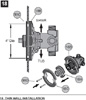
First of all, anybody who thinks that concealed shower valves are consistently anchored well inside the wall by plumbers today is probably under a similar delusion that the entire piping system of the house always gets flushed. Secondly, how do you think we have been mounting concealed valves in the case of fiberglass enclosures and surrounds all these years? (Can you say "thin wall mounting kit?")
Illustration of conventional concealed shower valve mounted onto
fiberglass wall courtesy of Price Pfister.
The "receiver" for a wall-mount valve would be tightly clamped to this wall material, and since most installations would include a fixed showerhead similarly clamped onto the wall above, the connecting shower riser would provide even more stabilization. Do we really think some gorilla is going to yank one of these installations out of the wall? (If anything, it seems to me that this approach would assure a more consistent anchoring of the valve than is typically the case with concealed valves where the installer often saves himself 15 minutes by opting for his favorite half-assed shortcut. And hey, given a little creative engineering here, there is probably a way to anchor the back side of the valve body receiver to a cross-piece between the studs, anyhow.
This would also be the end of frantic calls for extension kits whenever valves get roughed in too deep to meet the trim. (On second thought, maybe that's a negative - there's a lot of money to be made selling those "desperation parts.")
Am I wrong here? I'd like to hear from more of you on this (maybe we can break the record and get four responses this time). Write me at: donarnold@earthlink.net
Links
Looking for a reprint of this article?
From high-res PDFs to custom plaques, order your copy today!